


On May 23, 2023, while much of the world had begun moving on from the devastation caused by Cyclone Mocha in Myanmar, photojournalist Sai Zaw Thaike headed into the field in Rakhine state to carry out a routine assignment, to document the disaster's impact and gather stories of people who had lost homes, families and livelihoods.
That day became the turning point that changed his life when Myanmar’s military junta detained him in Sittwe.
After a period of remand detention and interrogation without access to a lawyer or family members, a military tribunal sentenced the journalist to 20 years in prison with hard labour in September 2023.
Nearly three years later, Sai (above) remains incarcerated in Yangon’s Insein Prison, which human rights groups long associate with the detention of political prisoners, activists and critics of Myanmar’s military government.
Behind those prison walls, the Committee to Protect Journalists (CPJ) revealed that Sai is no longer merely serving a prison sentence and enduring abuse, but also battling a life-threatening illness.
CPJ Asia-Pacific director Beh Lih Yi said Sai has been denied access to medical treatment.
“Now is the most dangerous time to be a journalist,” Beh said.
International human rights organisation Amnesty International has launched an online petition urging Myanmar’s military junta to immediately free Sai.
Challenges and risks
Sai’s story is not merely about one Myanmar journalist, Beh said, but reflects something much bigger: The challenges and risks facing media practitioners worldwide.
“We want to raise the alarm about Sai’s condition because the situation is urgent.
“He is seriously ill. He is suffering from kidney disease that requires urgent treatment, but that treatment has been denied,” she said when met at the 16th edition of N3Con 2026 at Thailand’s oldest university, Chulalongkorn University in Bangkok, held from May 21 to 23.
N3Con 2026, organised by the Asian American Journalists Association (AAJA) Asia chapter, comes at a time when the global media industry is navigating an era of difficult-to-interpret transformation.
While artificial intelligence (AI) is reshaping newsrooms and reading habits on digital platforms, and competition for audience attention grows increasingly intense, journalists in some parts of the world continue facing threats far more fundamental than technological disruption, such as imprisonment, intimidation and death.
Journalists’ safety
This year’s conference brought together representatives from international media organisations, including AFP, Bloomberg, BBC, Global Investigative Journalism Network (GIJN) and Lighthouse Reports, alongside investigative journalists and media freedom activists.
Conditions in Myanmar, Israel, Gaza, China, Russia, Vietnam and Ukraine, along with the safety of investigative journalists, repeatedly surfaced during discussions.
For Beh, these are not merely statistics in annual reports or figures presented on conference screens, but signs of a broader transformation taking place in global journalism.
“Over the past few years, we have seen unprecedented levels of journalists being killed or jailed because of their work,” Beh said.
More than 330 journalists are imprisoned worldwide because of their reporting, she added.
More than one-third of them are in Asia, a region racing to build its digital future while increasingly seeing journalists lose something more fundamental: freedom.
“Asia consistently ranks as the region with the highest number of jailed journalists.
“The figures are extremely high,” she said, referring to CPJ’s 2025 Prison Census, which recorded at least 110 journalists imprisoned in the region - more than 30 percent of the global total - led by China (50), Myanmar (30) and Vietnam (16).
Gaza and demands for accountability
Amid collapsed buildings, emergency sirens, bombardments and Gaza’s ever-burning front lines, journalists are not merely documenting war and devastation.
Some have been killed while doing something journalists routinely do, recording history as events unfold.
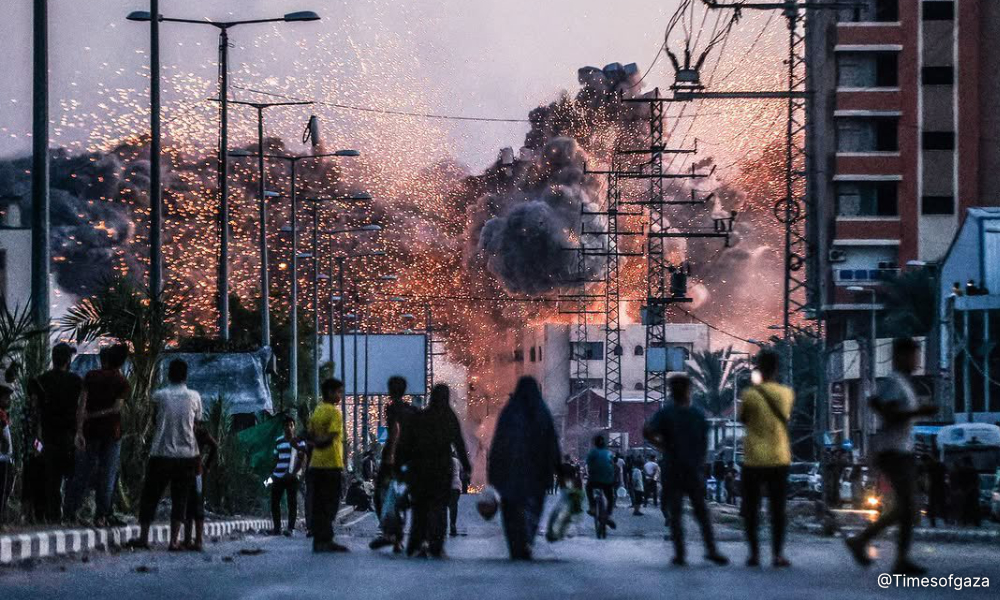
Asked about the war-torn territory, Beh said the world is witnessing an extraordinary number of journalists killed, particularly Palestinian journalists.
According to CPJ, the war in Gaza has become the deadliest conflict for journalists in the organisation’s modern monitoring history.
Since October 2023, at least 190 journalists and media workers have been killed, the majority Palestinian journalists who continue reporting while they themselves live under bombardment, forced displacement and humanitarian catastrophe.
“We continue calling for Israel to be held accountable for those killings.
“We continue demanding action and an end to the culture of impunity,” Beh said.
Pressure on media practitioners across different countries, she added, makes solidarity within the journalism community more important than ever.
‘Solidarity matters’
In some places, Beh noted, the threat comes in the form of prison. Elsewhere, bullets, shrapnel and war.
But when journalists are treated as enemies, she said the outcome is the same.
“Silenced voices. Truth becomes harder to find, and society’s ability to understand the world around it becomes increasingly constrained.
“Journalists are being jailed and killed because of their work at levels never seen before.
“As journalists and as a journalistic community, we must do a better job standing up for colleagues who are killed or imprisoned because of their work.
“The need to act cannot be denied. Solidarity matters,” Beh added. - Mkini

No comments:
Post a Comment
Note: Only a member of this blog may post a comment.