


An analyst says shifting political alignments made Malaysians more aware that elections and the formation of governments are separate processes.

Among the realignments which analyst Asrul Hadi Abdullah Sani found notable was that of former prime minister Dr Mahathir Mohamad sharing a platform with DAP stalwart Lim Kit Siang in 2016, and the “Sheraton Move” of 2020 which led to the collapse of the first Pakatan Harapan government.
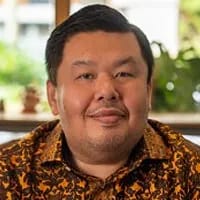
Asrul said such realignments have reinforced the distinction between elections and the formation of governments.
“What changed in 2018 was that it broke the mould of what Malaysians considered as acceptable coalition partners. Alliances that would once have been viewed as politically impossible have since become part of the political mainstream,” said Asrul, who is the vice-president at the Asia Group.
However, although voters were now more accepting of such alliances, it did not mean they had become more tolerant of political pragmatism, Asrul told FMT. He said voters had simply seen enough reversals to understand that moral lines in Malaysian politics were often “negotiable.”
He said the next general election (GE16) is still likely to be driven primarily by party politics, although parties will keep their post-election options open in anticipation of another hung parliament.
Asrul’s comments came in response to remarks by civil society group Projek Sama which said that no major coalition can credibly claim the moral high ground, as most parties have cooperated with rivals at one time or another.
However, Asrul said voters were still expected to cast ballots largely based on party loyalty and bread-and-butter issues.

Wong Chin Huat of Sunway University said coalition governments had become an inevitable reality in Malaysia’s fragmented political landscape.
“One condition for a party to convince voters of its moral high ground against a pragmatic coalition is openly declaring that it would stay in the opposition rather than joining a coalition government with parties it despises,” he said.
Wong said parties in the 2022 general election criticised one another but stopped short of explicitly ruling out post-election cooperation.
“These parties knew their supporters wanted them in government but they hoped to cheat voters who didn’t realise that a coalition government was inevitable.”

He said the room for moral grandstanding would shrink as voters became more politically aware and understood how coalition politics worked.
Azmil Tayeb of Universiti Sains Malaysia said many voters still struggled to accept the fact of long-time rivals working together because years of political attacks had created deep distrust “and it doesn’t go away when their leaders agree with each other”.
He said voters were increasingly focused on outcomes rather than rhetoric and results rendered claims of moral high ground irrelevant. - FMT

No comments:
Post a Comment
Note: Only a member of this blog may post a comment.