


Residents of Petaling Jaya and the surrounding areas are elated that their long-awaited hospital will finally see the light of day.
After years of the “no money, no land” excuse, and expedited by his government losing support, Selangor Mentri Besar Amirudin Shari suddenly found both the land and the money.
The proposed site, he said, had been accepted by the Health Ministry and will cater to the needs of the district’s residents in terms of accessibility, capacity, land cost, and proximity to local communities.
But there is no reason to celebrate just yet. Have we forgotten the abandoned projects and runaway contractors who pocket fees before vanishing, leaving behind half-built shells and unpaid workers?
Have we forgotten the much-delayed, bloated hospital next door in Shah Alam - a monument to mismanagement that stood as a ghostly carcass for nearly a decade?
That project was supposed to be a flagship of healthcare delivery, yet it became a flagship of failure. Awarded in 2007, it was meant to open its doors by 2011.
Instead, it became a cautionary tale of cronyism and incompetence: contracts handed out through direct negotiation, middlepersons siphoning millions without laying a single brick, and taxpayers footing the bill for redesigns, lawsuits, and endless extensions.
By the time the government terminated the original contract, only 27 percent of the work had been completed, yet nearly RM140 million had already been paid.
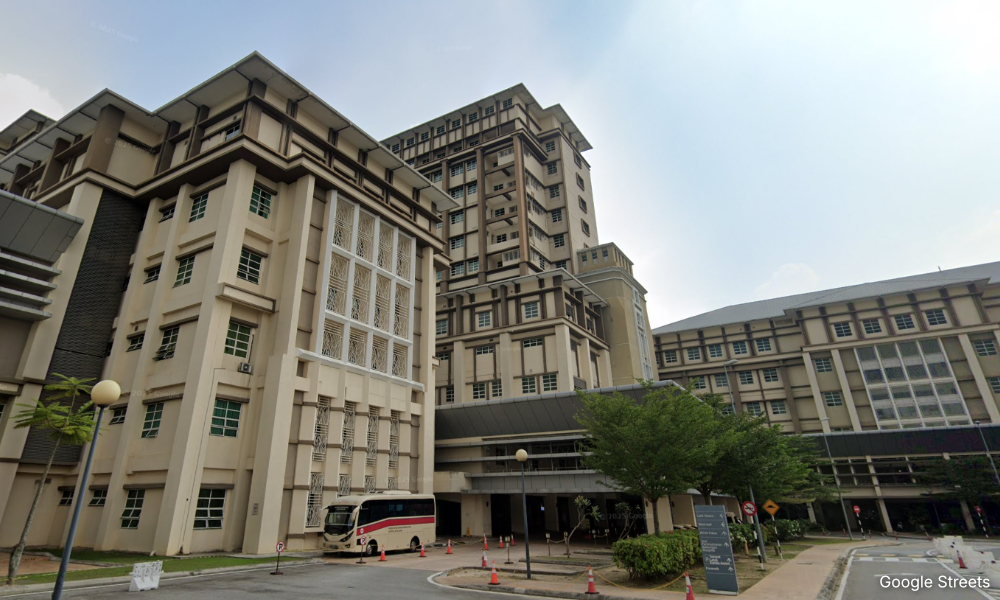
The rescue contractor eventually finished the job, but only after years of wasted time, ballooning costs, and a trail of audit reports cataloguing every failure.
Looming shadow
This is the shadow that now looms over Petaling Jaya. If Shah Alam was a ghost haunting Selangor, PJ risks becoming its sequel - bigger budget, bigger promises, and bigger temptations for rent-seekers.
The danger is not ignorance; it is willful amnesia. Politicians and administrators love ribbon-cuttings, but they rarely stay for the reckoning when projects collapse.
When rumours of problems in the Shah Alam hospital project became public in 2010, the Public Works Department (PWD) was adamant that there were no irregularities in the awarding of the contract or the construction.
In an email response to Malaysiakini, PWD secretary-general Judin Abdul Karim - who signed the letter awarding the contract- deflected to a slew of personal aides and press officers.
In December the previous year, Malaysiakini reported source-based claims that the contract was awarded under debatable circumstances and at an inflated price of about RM500 million to Sunshine Fleet Sdn Bhd.
After the initial denial and long after the project stalled, money was paid and a new contractor appointed, PWD dissected the Shah Alam disaster and admitted its shortcomings.
Their findings are not dusty footnotes; they are stark warnings. If we fail to learn from Shah Alam, Petaling Jaya will inherit its curse.
Despite having to eat its own words, a scathing 44-page report on the debacle was finalised after a workshop held in October 2015 and subsequently published.

PAC report
The Public Accounts Committee (PAC) also conducted an inquiry, and both findings were similar.
This was the classic “Ali Baba” model: a rent-seeking middleperson that extracts profit while actual builders struggle with insufficient funds.
The PAC concluded that the company’s priority was never project completion; it was personal enrichment.
The original contractor never intended to build a hospital. It secured the RM482.6 million contract through direct negotiation, then subcontracted the entire project for RM451.23 million - pocketing RM31 million without lifting a brick.
Ownership records revealed Sunswhine Fleet was tied to Selangor royalty, with a confidential letter promising an additional RM46.23 million “commission” to its chairperson.
The contract, awarded via direct negotiation by the Finance Ministry, bypassed competitive tender. The PAC later recommended limited tendering for complex public works, stressing that scrutiny is not red tape but the first line of defence against failure.

Yet, the practice continues. Rent-seekers with the right connections still secure contracts, even for projects they have no expertise in. Evidence in court cases has exposed the rot: it is not what you know, but who you know.
The Shah Alam reports are catalogues of shame - design flaws, repeated rework, and subcontractor chaos. By the time the contract was axed in 2010, barely 27 percent of the hospital stood - yet RM139.9 million had already vanished into the contractor’s pockets.
The rescue contractor, an experienced firm, still needed 341 extra days to finish.
Lessons to learn
PWD’s lessons-learnt report highlighted failures in monitoring, communication, and oversight. These “technicalities” translated into redesigns, disputes, and ballooning costs. Strong contract management is not optional; it is the backbone of public stewardship.
The government sued to recover completion costs, but compensation for delay was never pursued. Worse, there are no records showing excess payments were recovered.
Legal remedies proved slow and toothless. Prevention - through rigorous pre-qualification, transparent tendering, and airtight contracts - remains the only reliable cure.
The Shah Alam Hospital now serves patients, but its legacy is wasted millions and broken trust. Every lesson was paid for dearly by taxpayers. The question is not whether we know these lessons, but whether we have the will to apply them.
Petaling Jaya’s hospital is not just another construction project; it is a litmus test of whether the government has learnt from its neighbour’s failures.
Shah Alam was a cautionary tale written in concrete and rust - a carcass that mocked taxpayers for nearly a decade. Every audit, every inquiry, every lawsuit screamed the same truth: when contracts are handed out through cronyism, hospitals become monuments to incompetence, not healthcare.
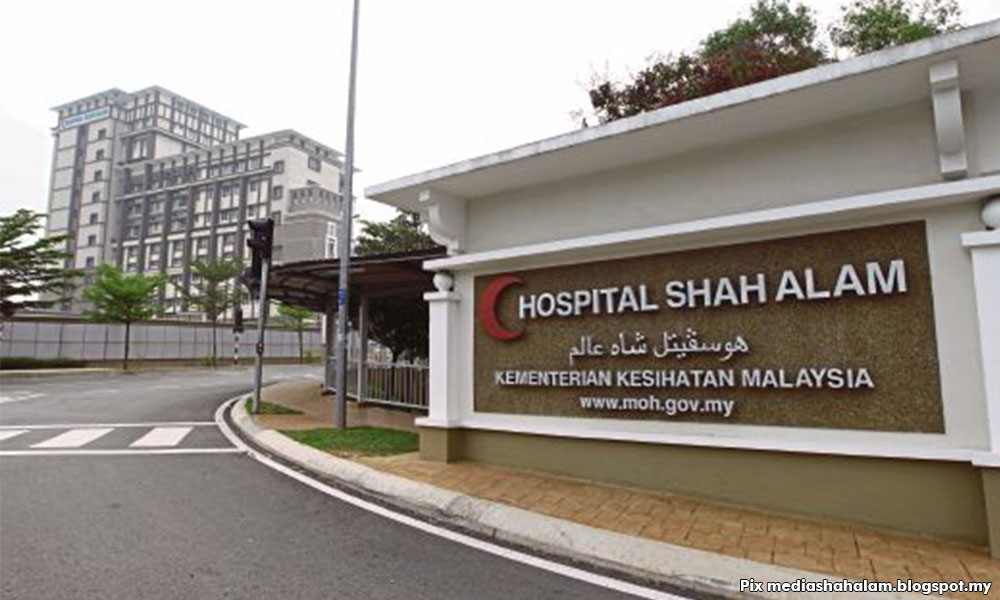
If those lessons are ignored, Petaling Jaya will inherit the same curse. Bigger budgets mean bigger appetites for rent-seekers, and ribbon-cuttings will once again mask the rot beneath.
The rakyat does not need another tombstone of accountability; they need a hospital that proves governance can rise above greed.
The Shah Alam fiasco was paid for in wasted millions and broken trust. Petaling Jaya must not pay that price again.
If the government repeats the sins of its neighbour, this hospital will not be a beacon of care - it will be another epitaph carved in concrete, reminding Malaysians that betrayal often wears the mask of development. - Mkini
R NADESWARAN is a veteran journalist who strives to uphold the ethos of civil rights leader John Lewis: “When you see something that is not right, not fair, not just, you have to speak up. You have to say something; you have to do something.” Comments: citizen.nades22@gmail.com.
The views expressed here are those of the author/contributor and do not necessarily represent the views of MMKtT

No comments:
Post a Comment
Note: Only a member of this blog may post a comment.