


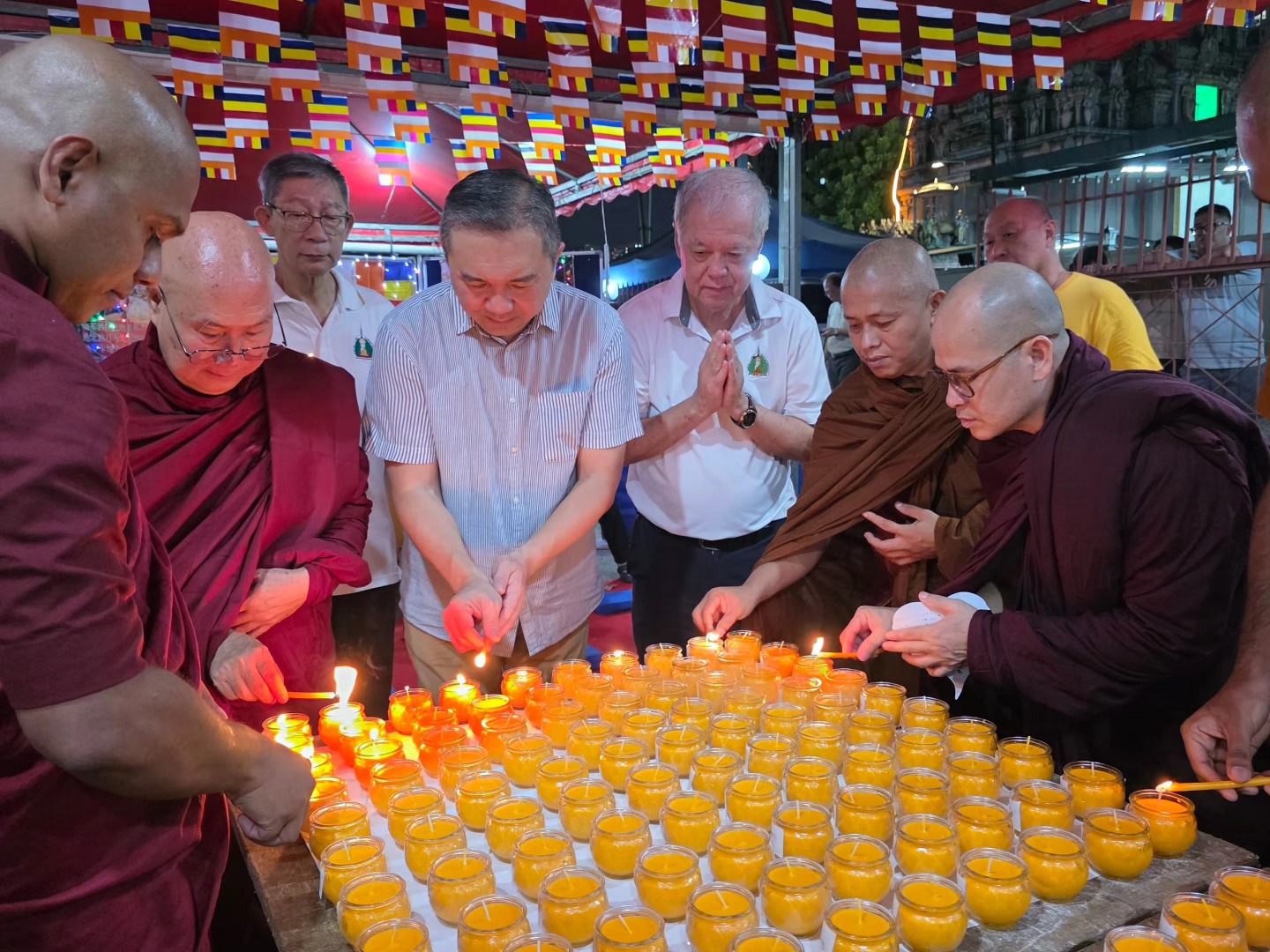
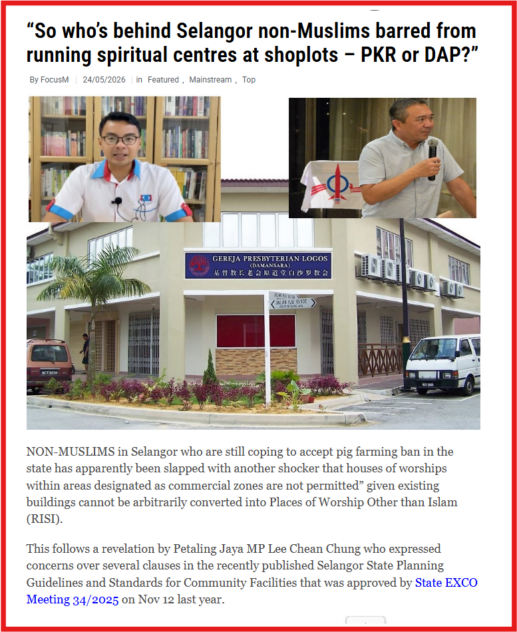
THE controversy surrounding non-Islamic places of worship under the Selangor State Planning Guidelines and Standards for Community Facilities remains unresolved despite the LIMAS (Special Committee for Buddhist, Christian, Hindu, Sikh and Tao Affairs) meeting held on May 30.
While the state government offered assurances that the proposed rules would apply only to new commercial developments and would not a existing sites, the fundamental core issue remains.
At its core, the issue is straightforward: developers in Selangor are legally required to allocate land for Muslim houses of worship (mosque/surau) in new residential projects. However, there is no equivalent mandatory provision for non-Muslim communities.
As a result, Christian, Buddhist, Hindu and other groups are often left with limited options. Many are forced to operate in shoplots, the path of least resistance amid local government and bureaucratic hurdles while others turn to industrial or factory lots.
Even these alternatives now face threats under the updated guidelines. Writing a lengthy legal analysis of the interlocking regulations, planning standards and political considerations would be useless.
Opposition from Muslims
The clearest way to understand the depth of the challenge is through a real story: the long and arduous journey to build the Church of Divine Mercy in Shah Alam.
This saga highlight why fair, transparent and equitable planning policies matter. True religious freedom as guaranteed under the Federal Constitution requires not just the right to worship but practical space to do so with dignity.
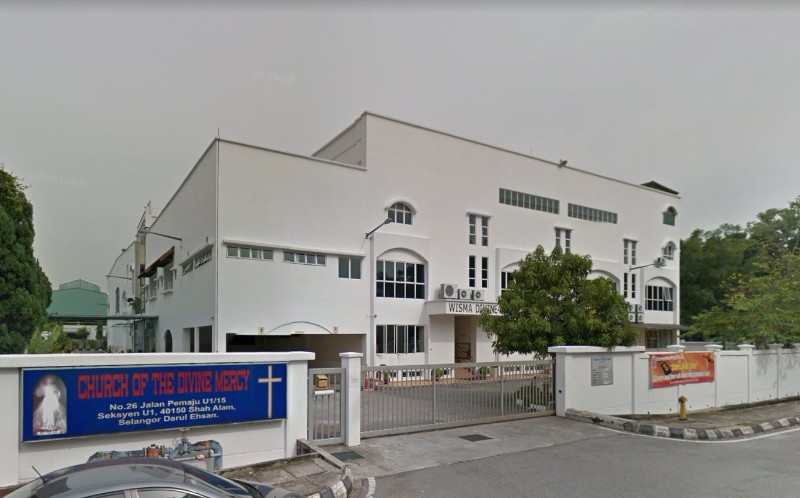
The Catholic Church of the Divine Mercy in Shah Alam’s 28-year journey from the 1977 land application to the 2005 opening involved bureaucratic delays, repeated site rejections tied to local Muslim sensitivities and political dynamics under the UMNO-led state governments.
In 1977, Catholic Archbishop Dominic Vendargon applied for land to serve the growing Catholic population in Shah Alam.
Approval took 14 years and nine months. In 1992, a plot in Section 24 was allocated through a state subsidiary. Construction began in mid-1993 but was halted months later by the local council.
In February 1996, the State Executive Council (EXCO) declared the site “unsuitable” for a place of worship, citing reasons that Shah Alam was “Malay” or Muslim-majority.
Local Malay residents and community groups lodged protests, emphasising “proximity” concerns, fears of altering the Islamic character of neighbourhoods and worries about proselytisation.
These objections were channelled through representations to UMNO-led local councils and the state government.
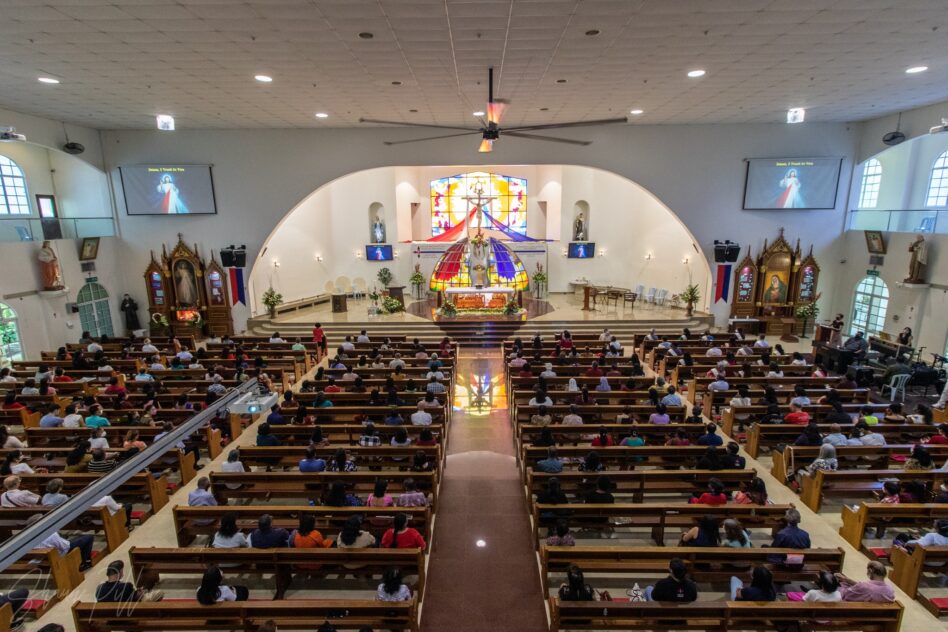
30-year ‘test of faith’
Mosque construction advanced more readily while non-Muslim proposals faced prolonged scrutiny under vague “harmony” guidelines.
UMNO’s political emphasis on Malay Muslim primacy shaped bureaucratic decision-making, resulting in repeated stop-work orders, re-designs and administrative flip-flops that exhausted church resources.
A 1999 site opposite Monfort Boys Town saw approvals withdrawn in late 2000, followed by an inadequate alternative lacking infrastructure. The church rejected the latter.
Frustrated by repeated setbacks, the archdiocese filed for judicial review in the High Court in February 2001.
The suit challenged the state EXCO’s decisions as arbitrary, irrational and procedurally improper, hence invoking Article 11 of the Federal Constitution on freedom of religion.
The case did not reach a full hearing or published judgment. Instead, the legal pressure prompted the state to approve a viable plot in the Hicom-Glenmarie Industrial Park (Jalan Pemaju U1/15).
The church accepted this compromise. The state mandated that the structure feature an industrial warehouse design without prominent external crosses to keep it visually obscured from the main roads.
Externally, the church was designed to resemble a large modern warehouse or “fancy godown,” blending into the industrial landscape instead of presenting a traditional ecclesiastical form.
Construction which finally began on Dec 8, 2003 was completed in November 2004. The certificate of fitness was issued in July 2005 and Archbishop Murphy Pakiam blessed the church on 10 September 2005.

The protracted delays imposed heavy financial burdens. Multiple site changes and plan revisions generated repeated architectural, engineering and legal fees.
An eventual delay of over nearly three decades had significantly increased material and labour costs. Unlike many mosques, the church received no government funding thus has to raise all the additional funding from its parishioners.
Many Christians described the 28-year struggle as a “Mission Impossible” test of faith. While it was ultimately built, the pain of perceived injustice lingered.
Now do you understand why the new Selangor guidelines is so important to non-Muslim religions?
An avid political commentator, James Chin is Professor of Asian Studies at University of Tasmania.
The views expressed are solely of the author and do not necessarily reflect those of MMKtT.
- Focus Malaysia.

No comments:
Post a Comment
Note: Only a member of this blog may post a comment.