


Many who love to bash DAP are calling for Transport Minister Anthony Loke to resign after the LRT derailment on May 28.
Yet on the very same day, Channel News Asia reported tens of thousands of travellers got stuck for hours after “sistem rosak” (a system outage) at immigration checkpoints nationwide. This was a blow to Visit Malaysia Year 2026.
However, the same crowd of DAP bashers is not demanding Home Minister Saifuddin Nasution Ismail, who is from PKR, to quit, even though he is in charge of the Immigration Department.
Similarly, why aren’t they insisting that PAS leaders in Kelantan resign when the problem of brown, rusty water persists since the “holy men” took power there 36 years ago?
Few also called for Umno Defence Minister Khaled Nordin to quit after wild “parti ye ye” with alcohol and women in military camps were exposed early this year.
To be fair, rail disruptions in the Klang Valley have been declining in the Madani era. Back in 2022, there were 252 cases.
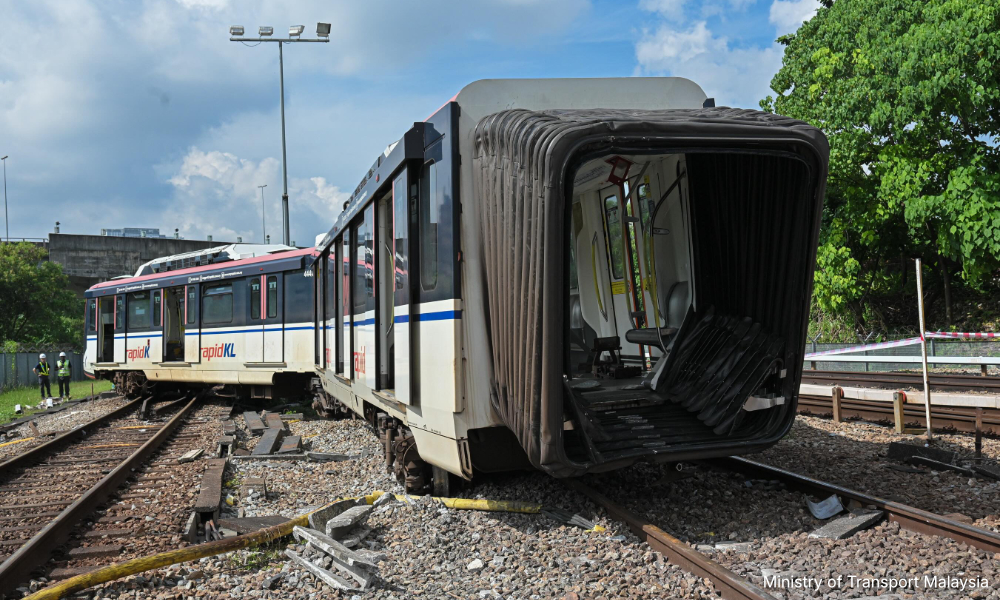
In 2025, there were only 31. This is an 87 percent reduction over three years. However, the latest derailment has become a racially charged political issue.
Why the double standards? Is it only DAP that makes the moral brigade go berserk?
Does Loke have real power?
The LRT system is run by Prasarana Malaysia Berhad. While the Finance Ministry (which is under Anwar Ibrahim) is in charge of the corporate side, the Transport Ministry oversees policies and operations.
So, if this transport agency is a house, Anwar is akin to the owner who also appoints the caretaker called Prasarana. Loke is more like an external inspector who checks whether the house is clean.
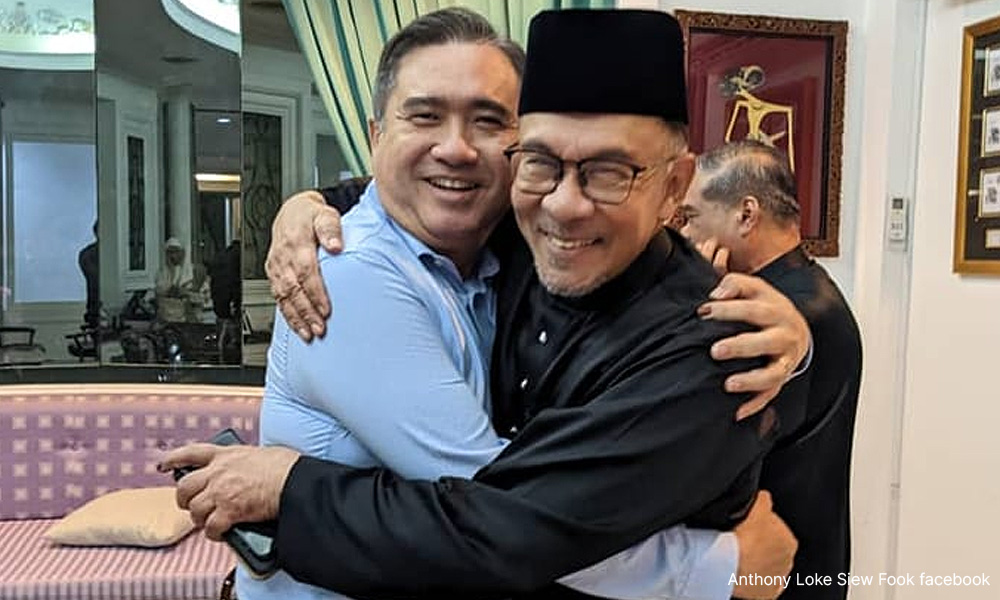
In February, 16 LRT stations were closed due to technical problems. The Transport Ministry’s Land Public Transport Agency (Apad) did a probe, but top bosses were not punished.
Prasarana instead submitted an “action plan” to resolve the system’s problems. This is the Malaysian way - don’t shame anyone publicly (unless they are from DAP lah).
On April 30, The Edge reported Prasarana announcing that its CEO, Amir Hamdan, would resign after less than a year at the helm. Not even a month later came the derailment. Was it due to management disruption?
As a government agency, does it also have the civil service “iron rice bowl” mindset? Loke can only set policies, but he is not working inside to check which jokers are neglecting their jobs.
That task belongs to the CEO of Prasarana, and Loke lacks the authority to remove him if he does not perform - that is Anwar’s duty. And that CEO has changed six times since 2018!
Former Umno leader Tajuddin Abdul Rahman was appointed in May 2020 as Prasarana’s non-executive chairperson by the then-Perikatan Nasional government, three months after the Sheraton Move.
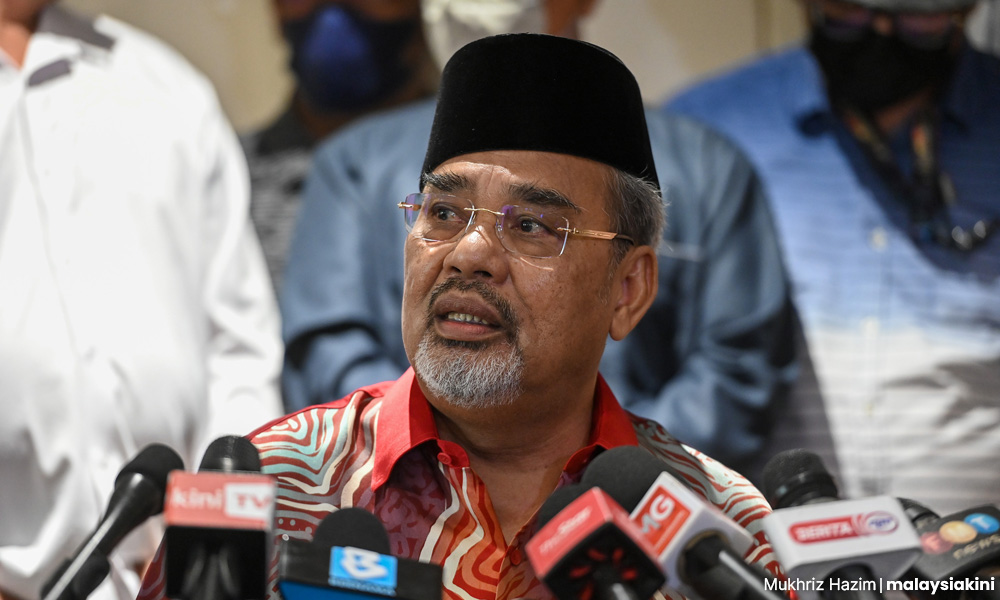
A year later, two LRT trains crashed near KLCC and injured over 200 people.
Tajuddin staged a disgraceful media conference, including a joke that the trains had just “kissed” each other. He was sacked - but only because he openly displayed his incompetence.
LRT is too complex for us
Malaysia is infamous for its poor maintenance culture. Rosli Khan, who spent 30 years in the transport industry, wrote in FMT that Apad mainly has “generalist civil servants” and lacks professionals who can identify early warning signs before failures happen.
He added that railways have lots of complex technical details and should not be centred around “administrative paperwork” or “launching new stations with political fanfare”.
Yet when problems happen, “Everyone waits for someone else to produce a report. Everyone passes responsibility upwards or sideways”.
While Rosli highlighted our lack of technical competence, allow me to add another problem - our crime culture.
Several major rail disruptions have been caused by theft of critical signalling cables - forcing massive, costly repairs and hours of delays.
The government wants to use “advanced surveillance tech” to curb this, but can it beat corrupt insiders who “pakat” (collaborate) with thieves, for example, by disabling CCTVs?
BRT is more practical
Let’s admit it, in many ways, Malaysia still has third-world software despite some first-world hardware. That’s why we need a more practical, rugged, and foolproof mass transport system that can be easily repaired.
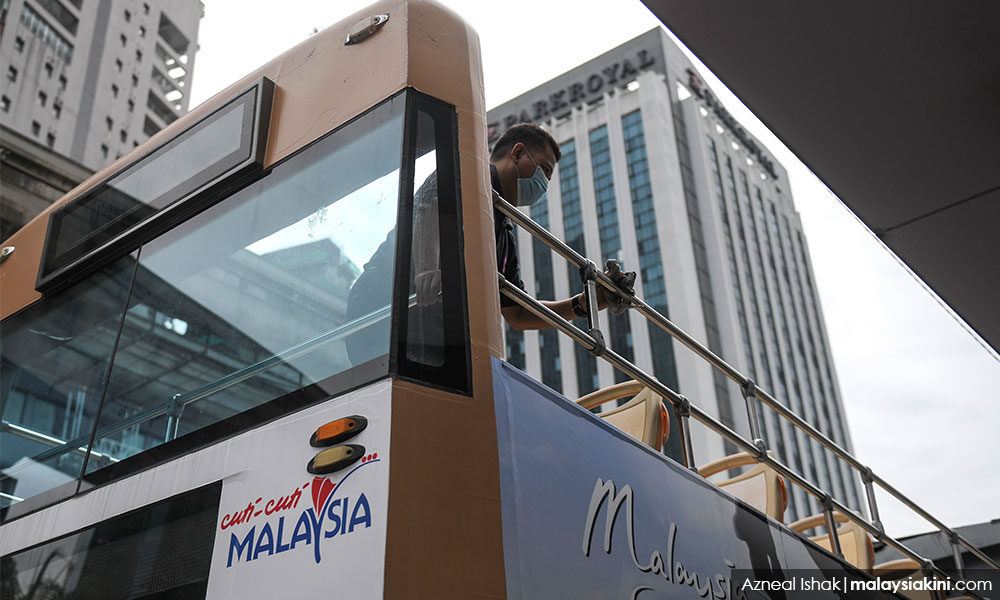
For the future, instead of LRT and MRT, it’s better to do BRT - Bus Rapid Transit. It’s just buses running on flyovers or special road lanes. It’s easier and cheaper to build and maintain.
Bus breakdown? No problem, just bring in a new bus! That’s why Bandar Sunway, Petaling Jaya, converted its original monorail system into a more cost-effective BRT, whereas the Malacca Monorail is now a rusty monument of the state’s folly.
The city of Curitiba, Brazil, became a global urban planning icon when it pioneered BRT back in 1974.
Since then, 200 cities worldwide have emulated it, including Guangzhou, Jakarta, Istanbul, Rio de Janeiro, and Bogota.
DAP leader Liew Chin Tong wrote in The Edge in 2022 that Malaysia had a strong liking for “big toy” LRT/MRT projects while neglecting the need for highly connected, bus-centred public transport.
And Rosli said that the key mistake Malaysia often makes is trying to jump straight into expensive mega-projects like LRT/MRT, while basic bus systems remain dysfunctional.
He added that rather than delivering the most effective transport solutions, the mantra of “public-private partnerships” is repeated. But the question is how much profit “private” companies are gaining while the “public” or rakyat helps pay the bills?
Oh yes, I can never forget the late, great mini buses of Kuala Lumpur, which were so efficient because each driver competed fiercely for passengers, rather than the lethargic bus monopolies that came after.
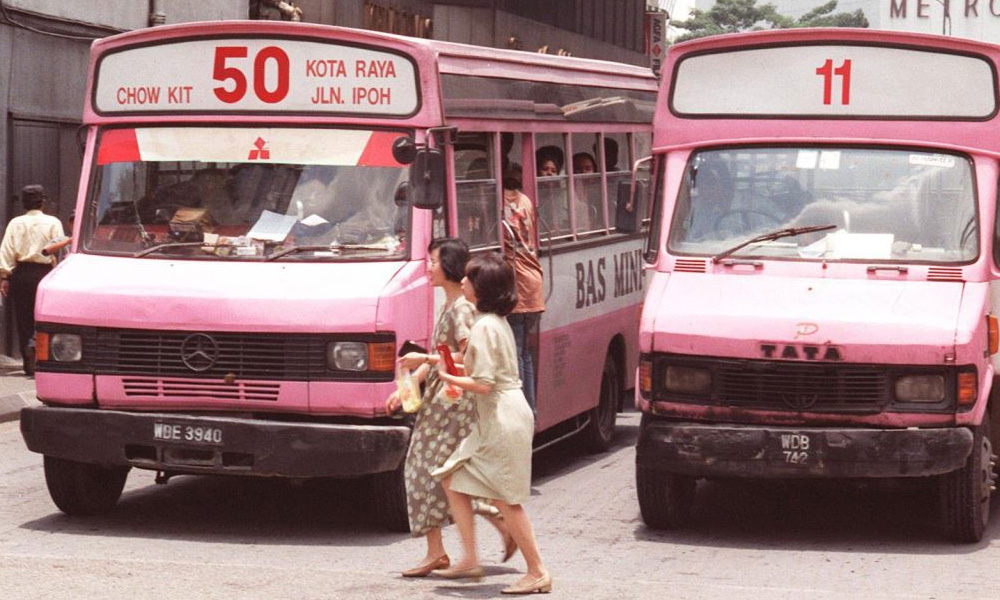
I miss those energetic bus conductors shouting out “Chow Kit! Chow Kit!” or “Bangkok Bank! Bangkok Bank!” to attract customers. And they were mainly ordinary Malays working hard for business, not waiting for handouts.
In conclusion, complex and expensive LRT/MRT systems may not be suitable for Malaysia, given our limited technical capability and crime problem, whereas BRT costs less and is much easier to maintain.
The only problem? BRT may be too cheap, and cronies can’t “makan” (siphon) enough from the projects. - Mkini
ANDREW SIA is a veteran journalist who likes teh tarik khau kurang manis. You are welcome to give him ideas to brew at tehtarik@gmail.com.
The views expressed here are those of the author/contributor and do not necessarily represent the views of MMKtT.

No comments:
Post a Comment
Note: Only a member of this blog may post a comment.