


ASK any Malaysian cook why a plate of nasi campur costs more than it did a few years ago, and the answer will rarely begin with the weather. It should.
Every northeast monsoon, floods affecting vegetable farms in Johor, Perak and Kelantan can push up wet market prices within weeks, with the increases eventually reaching kitchens across the country, from homes to school canteens.
Extreme weather is no longer just a weather story. It is a food security story, and increasingly a national security concern.
At its centre is the food service sector: restaurants, mamak stalls, hospitals and schools that feed Malaysians outside the home. This is where rising ingredient costs are quietly translated into smaller portions, cheaper substitutes and poorer diets.
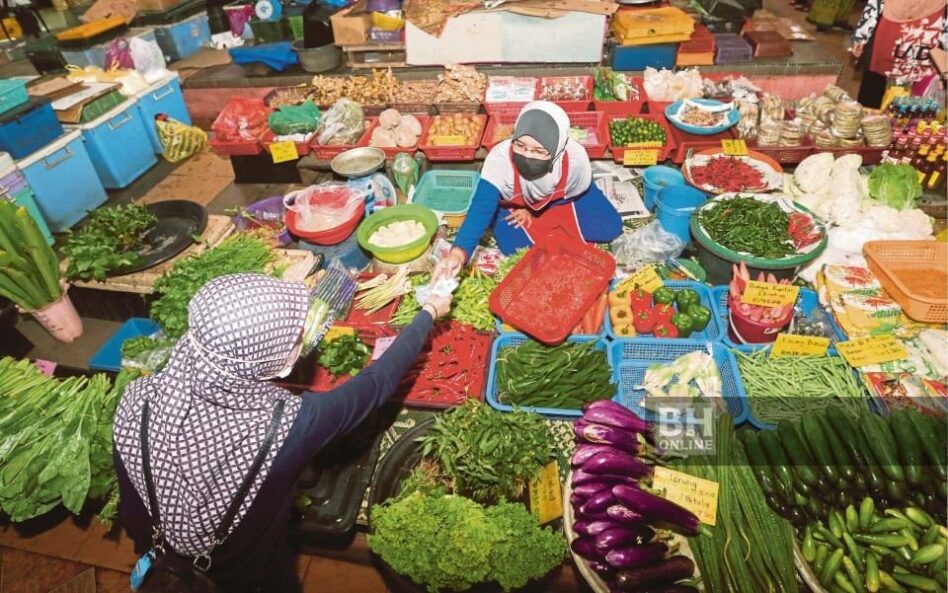
The pattern is familiar. Heavy rain floods farms, disrupting harvests and supply. During the December 2024 floods, vegetable prices rose by 50% to 80% after more than 100ha of farmland in five states were inundated. Sawi, bayam and kangkung reportedly reached RM8 per kilogramme, up from RM3.50 previously.
Leafy vegetables are particularly vulnerable because they are perishable and difficult to store for extended periods. When harvests are damaged, supplies can take weeks or months to recover as farmers wait for floodwaters to recede and replant.
The deeper concern is the fragility of Malaysia’s vegetable supply. The country’s overall vegetable self-sufficiency ratio (SSR) was 45.4% in 2023, although this masks significant differences between individual crops.
In 2024, eight of 11 selected vegetables recorded SSR levels above 100%, including spinach at 107.1%. Yet Malaysia remained heavily dependent on imports for certain produce, with round cabbage recording an import dependency ratio of 59.6%.
Self-sufficiency on paper is not necessarily resilience in practice. When domestic farms and neighbouring suppliers are hit by similar weather disruptions, imports may not be able to fill the gap.
Food service operators absorb these shocks, often out of sight. When key ingredients become substantially more expensive, operators face a difficult choice: absorb the higher costs, raise menu prices or substitute cheaper ingredients.
With customers already sensitive to price increases, many initially try to avoid passing on the full cost. Cabbage and bean sprouts may replace pricier greens, while vegetable portions shrink even as the rice and fried protein remain on the plate.
Institutional kitchens are particularly exposed because their meal budgets are fixed. Under the Supplementary Food Programme (RMT), the allocation is RM3.50 per pupil per day in Peninsular Malaysia and RM4 in Sabah, Sarawak and Labuan.
These rates have remained unchanged since November 2022. When ingredient prices rise, operators have limited room to adjust their spending without affecting the meals served.
Low-income households face the same squeeze. When vegetables and protein become more expensive, B40 families do not stop eating; they may simply eat less well. Instant noodles, white bread, fried snacks and sugary drinks offer relatively cheap calories, but do not provide the same nutritional value as balanced meals.
This is how a price spike can become a health concern. Malaysia already faces a double burden of malnutrition, with undernutrition and obesity occurring side by side.
The National Health and Morbidity Survey (NHMS) 2023 found that 54.4% of Malaysian adults were overweight or obese. Meanwhile, the NHMS 2022 recorded stunting among 21.2% of children under five, down slightly from 21.8% in 2019.
A stunted child and an overweight parent eating from the same pot of instant noodles is no contradiction. It reflects a food environment in which affordable, nutritious meals remain out of reach for many.
The long-term cost of poor diets, including diet-related disease, could far outweigh the savings made on cheaper meals today.
Because food service shapes what millions of Malaysians eat every day, it is one of the most practical policy levers available. Three steps could make a difference.
First, institutional meal rates should respond to food prices. A fixed RM3.50 cannot buy the same meal during a supply disruption as it can during a normal harvest.

An automatic top-up when a supply emergency is declared would help prevent children’s nutrition from becoming the shock absorber.
Second, menus should be planned around nutrients, not just dishes. Malaysia’s Healthy Plate concept, or suku-suku separuh, calls for half the plate to comprise fruits and vegetables.
Pre-approved substitutions, such as replacing flood-sensitive greens with pumpkin, carrots, legumes or frozen vegetables, would help kitchens maintain nutritional value without exceeding their budgets.
Third, schools and hospitals should consider forward contracts with farmers using rain shelters, fertigation and other climate-resilient methods. Guaranteed demand would give growers greater confidence to invest in more reliable production.
Another northeast monsoon is approaching. Malaysia cannot stop the rain, but it can decide who pays for it. Right now, that burden risks falling on schoolchildren, patients and low-income families.
Treating food service as frontline food security infrastructure, supported by flexible budgets, nutrient-based menus and climate-resilient sourcing, would help prevent one bad harvest from becoming a generation of poor health.
Dr Mohd Zulfakar Mohd Nawi is Senior Lecturer at the Department of Professional Education and Postgraduates, Faculty of Technical and Vocational Education, Universiti Tun Hussein Onn Malaysia (UTHM), and Dr Salme Yahya is Senior Lecturer at the Faculty of Hospitality, Tourism and Wellness, Universiti Malaysia Kelantan (UMK).
The views expressed are solely of the author and do not necessarily reflect those of MMKtT
- Focus Malaysia.

No comments:
Post a Comment
Note: Only a member of this blog may post a comment.