


The government’s move to consider expanding the MyKad-based targeted subsidy mechanism to diesel is no longer just an administrative matter. It is now a question of urgency and political judgment.
Prime Minister Anwar Ibrahim’s broader push for a more orderly and targeted subsidy system has given many reasons to hope that the government’s study of extending the same MyKad-based method used for RON95 to diesel will eventually lead to implementation.
People understand the government is operating in a harsher global climate shaped by war, supply disruptions and geopolitical uncertainty. They know Putrajaya is not making decisions under ideal conditions. That is precisely why this matters.
In difficult times, the public looks not only for explanations but for proof that the government is prepared to act.
If Budi95 has already shown that subsidy delivery can be made cleaner, tighter and less vulnerable to leakages, there is little reason to keep treating diesel as though Putrajaya is starting from zero.
The government has said the MyKad approach under Budi95 is more structured, helps curb leakages and achieves savings without significantly changing consumer purchasing behaviour.
Unlike petrol, diesel does not sit mainly at the level of personal consumption. It sits at the base of economic activity, powering the movement of goods, the production of food and the machinery that keeps industries operating.
That is why diesel cannot be judged only by the number of people who buy it directly. In the real economy, cost never stays with the first payer. It moves. A higher diesel bill for a transporter becomes a higher delivery cost. That becomes a higher operating cost. In the end, it reaches the final consumer, which means the rakyat.
And once those costs spread, they do not unwind neatly. Prices do not simply fall back into place because one input later becomes cheaper. Businesses that have already cut margins, slowed operations, frozen hiring or shut down do not recover overnight. Economic damage leaves a mark.
That is what makes diesel different. Petrol affects movement. Diesel affects the cost structure in daily life.
If that can be done for RON95, the case for diesel is even harder to ignore.
Of course, diesel use differs across regions. Sabah and Sarawak cannot be treated the same as the peninsula. Geography, access and usage patterns matter. Implementation must be stable and credible.
Meaningful signs
But there comes a point when caution stops looking prudent and starts looking like a delay for its own sake. Officials themselves have said any such move requires careful assessment of logistics, usability and system readiness nationwide.
The government has already learned from the rollout of the RON95 mechanism. It has built a large-scale system of authentication, control and delivery. It has already been seen where the pressure points are.
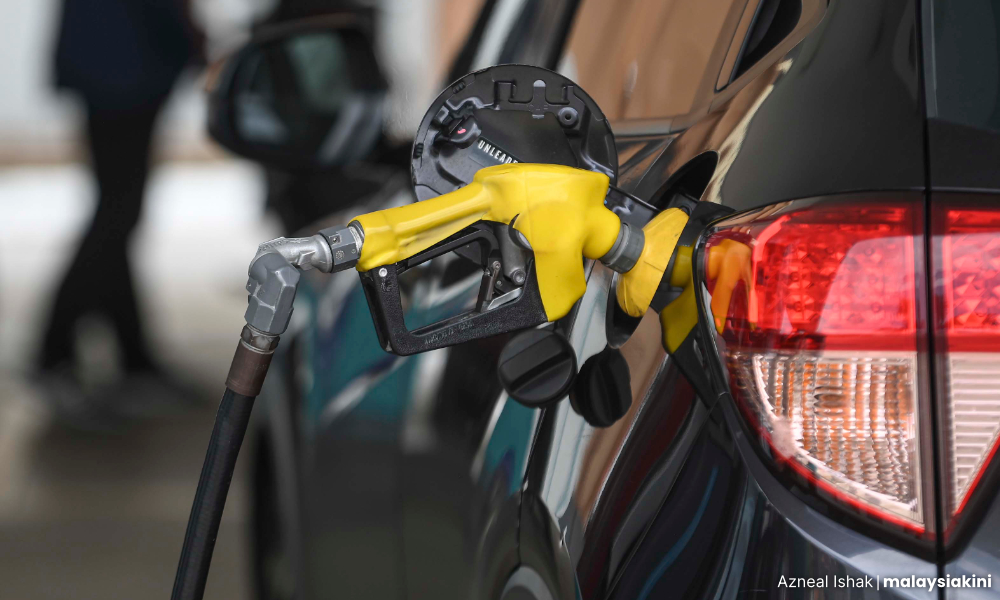
Budi95 has benefited nearly 14.8 million Malaysians. With that experience in hand, diesel should not be treated as though it lies beyond the government’s capacity.
A working platform is not meant to remain a one-off success. It should become the basis for the next step. Otherwise, the administration ends up learning without applying, testing without moving, and knowing without deciding.
That would be the real failure.
A MyKad-based diesel subsidy mechanism would not only sharpen targeting and reduce leakages. It would also ease pressure through the wider economy.
When diesel stays high, the burden does not stop with transporters, contractors or farmers. It reaches households through food prices, service charges and more expensive essentials. Relief at the diesel level does not stay in one place. It travels.
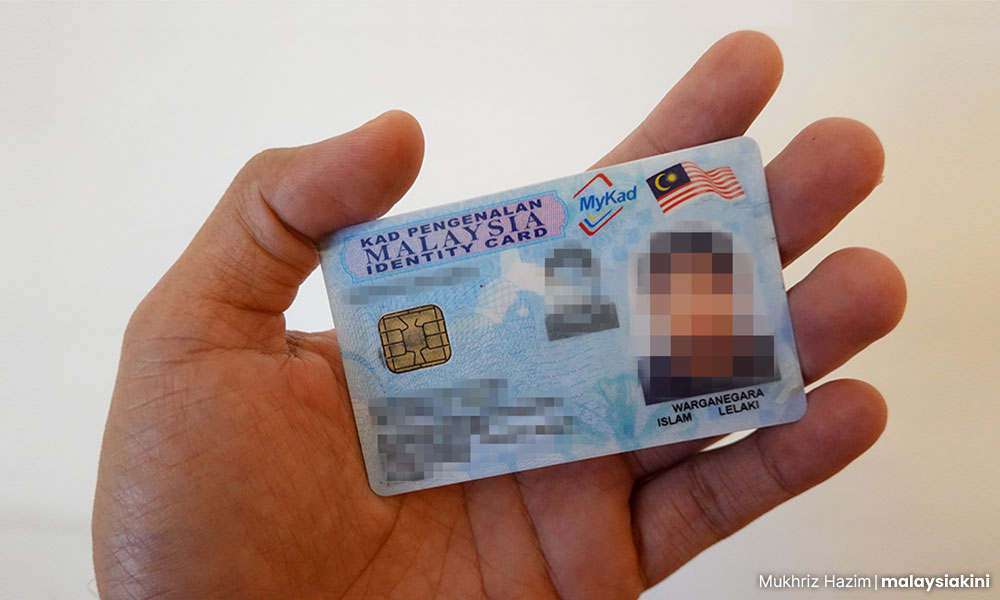
Seen from that angle, the government’s willingness to study a nationwide diesel subsidy mechanism through MyKad is already a meaningful signal. It suggests the administration understands a simple truth.
Cost-of-living pressure is not just about wages or consumer spending. It is also about the price of the inputs that keep the economy moving.
Current discussions also indicate the government is reviewing a shift from cash transfers under Budi Diesel Individu towards a Budi95-style delivery method, while separate mechanisms may still be needed for sectors such as fisheries.
From study to execution
Still, signals are not enough. Good intentions do not lower bills. Announcements do not reduce pressure in the market. The public will judge this by one thing above all else: whether it happens in time to matter.
That is now the real question.
Not whether the idea makes sense. Not whether the system can work.
But why, when so much of the groundwork is already there, should the country wait any longer?
Yes, implementation must be done properly. Systems must be ready. Coverage gaps must be addressed. Regional realities must be respected. But those are conditions for action, not excuses for drift.
The rakyat do not need another long stretch of official caution slowly turning into policy delay. They need a government prepared to use what it has already built.
A diesel subsidy mechanism tied to MyKad is no longer a distant policy possibility. It is the logical next step from a system already tested and improved.
And because diesel sits at the centre of transport, production and economic continuity, speeding it up would do more than tidy subsidy delivery. It would ease pressure at one of the most sensitive points in the national economy.
If the government is serious about protecting the people from rising costs while making subsidies fairer and more efficient, then this is the moment to move from study to execution. The system already exists. The case is already clear. The longer the delay, the weaker the case for delay becomes. - Mkini
MAHATHIR MOHD RAIS is a former Federal Territories Bersatu and Perikatan Nasional secretary. He is now a PKR member.
The views expressed here are those of the author/contributor and do not necessarily represent the views of MMKtT.

No comments:
Post a Comment
Note: Only a member of this blog may post a comment.