


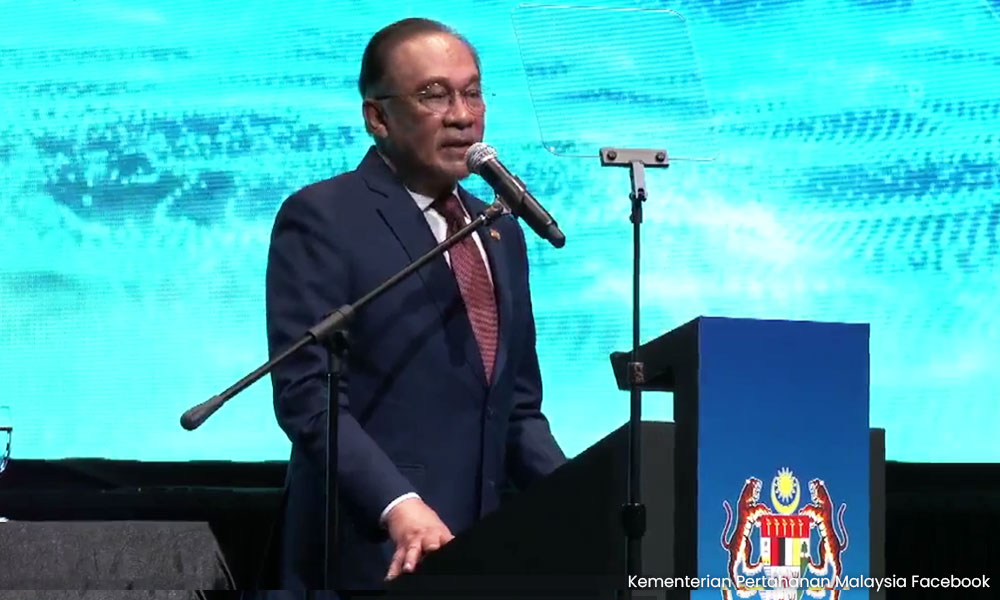
On April 18, speaking in Kota Bharu after officiating the new terminal at Sultan Ismail Petra Airport, Prime Minister Anwar Ibrahim told Malaysians that only 15 percent of the population is affected by recent diesel price increases.
The remaining 85 percent, he said, are still buying at subsidised rates, and that part of the story is "not mentioned at all."
The prime minister’s instinct is reasonable. Sensationalised cases should not drive policy, but if the government's position is now that only 15 percent of Malaysians feel the diesel hike, that figure has to survive scrutiny.
It does not.
What govt’s own data already shows
A day before the prime minister's remarks (April 17), the Statistics Department released the March 2026 Consumer Price Index.
Headline inflation rose to 1.7 percent. The transport group, which had been contracting at minus 0.7 percent in February, flipped to plus 1.6 percent in March. Food away from home rose 2.3 percent. Restaurant and accommodation services rose 2.6 percent.
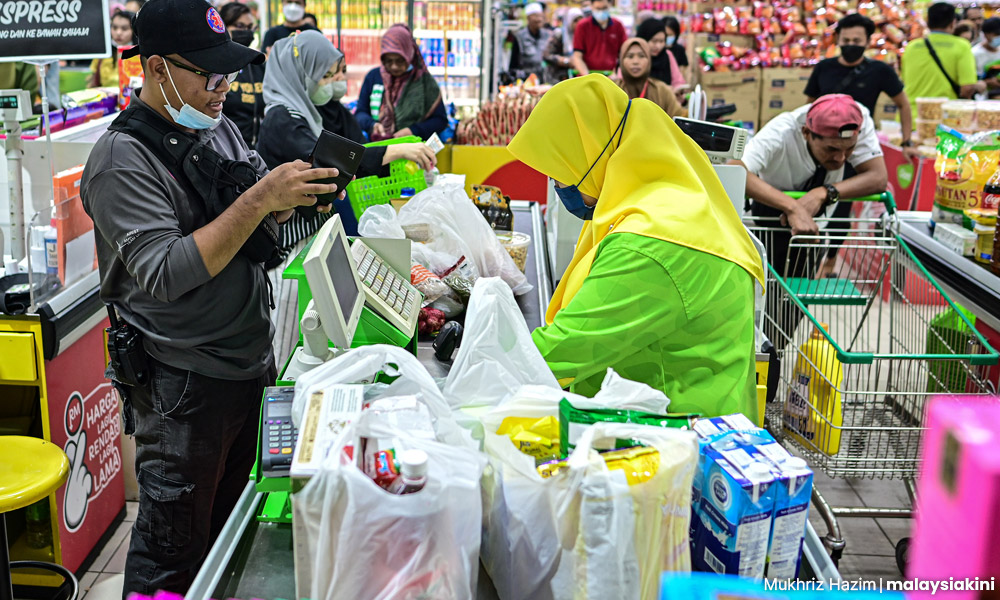
Across the basket, 358 of 573 items tracked by the department recorded price increases, roughly 62.5 percent. Eight states registered inflation above the national average.
This is the government's own chief statistician describing what the diesel price hike is doing as it moves through the economy.
Not the right way to count
The 15 percent figure appears to count Malaysians who fill up at the pump as unsubsidised diesel. That is one way to measure exposure, but it is not the right way.
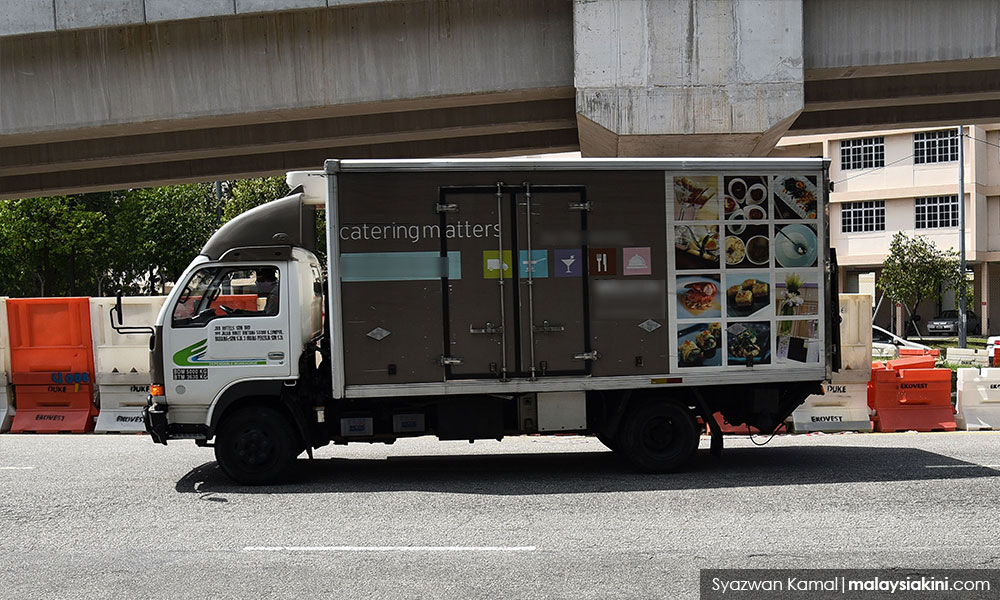
Diesel is not a consumer good bought off the shelf. It is an input cost. Every tonne of rice moved from Kedah to Selangor, every chiller truck delivering fresh fish to the wet market, every school bus, every farm generator, every factory machinery, every construction excavator runs on it.
When the diesel price rises, the cost does not stay at the pump. It flows down the supply chain and lands on the final price of bread, kangkung, ikan cencaru, construction rentals, school transport and mamak meals.
The economists' term for this is pass-through. Households do not need to drive a diesel vehicle to feel it. They only need to eat, send children to school, shop or pay rent.
Existing shields are sector-targeted, not population-wide. The subsidised diesel 1.0 covers public transport, subsidised diesel 2.0 covers 23 categories of goods transport vehicles, and Budi Diesel delivers cash transfers raised to RM400 for April for eligible individuals and smallholders.
These were never designed, and cannot function, as a population-wide insulation from price pressure.
Govt’s own response tells different story
Two days after the Kota Bharu remarks, on April 20, the Finance Ministry announced a relief package for micro, small and medium enterprises affected by the crisis.
It allocates RM5 billion in government guarantee schemes, with coverage raised to 80 percent and tenure extended to 10 years, targeted at construction, agriculture and agri-food, logistics and transport, as well as tourism.
The e-Invoice Phase 4 transition is extended by 12 months, to Dec 31, 2027, for businesses with annual sales of RM1 million to RM5 million, with consolidated e-invoicing permitted without penalty. Re-imports of Malaysian-made goods delayed by the conflict will be considered for interim import duty and sales tax exemption until Dec 31, 2026.
These are sensible measures. While the 12-month e-Invoice deferral will once again lead to questions the Institute for Strategic Analysis and Policy Research (Insap) has previously raised, the enhanced scheme coverage is a reasonable response to working capital stress.
However, the package tells its own analytical story.
If only 15 percent of Malaysians are affected, why does the Finance Ministry deem that MSMEs across four supply chain sectors require RM5 billion in enhanced guarantees, and that smaller firms cannot absorb a new digital reporting obligation on top of the cost shock?
The breadth of the government's own response is a recognition that the pressure runs deep into the productive economy. It cannot do so and stop at 15 percent of households.
Let the rakyat speak
We have no interest in contradicting the prime minister with a bigger number pulled from the other direction. What is missing is the distribution of household impact, documented by households themselves.
That is why Insap has launched a nationwide household survey. It asks questions that matter: Has daily life been affected? Which expenses are hitting hardest? Is the current support enough? Responses will be aggregated, anonymised and published.
The prime minister said he did a study, but that is not quite the same as the rakyat speaking for themselves. Governing by an undisclosed study that doesn’t match official inflation data released the day before and sits uneasily beside the Finance Ministry’s own MSME relief package released the day after raises more questions than answers.
The honest questions are how deep the impact runs, how long it will persist, and whether the subsidised diesel, Budi, government guarantee schemes and other targeted measures are sufficient in scope and quantum.
Those questions have answers, and they belong to Malaysian households. This survey is how we hear them. - Mkini
WOON KING CHAI is the director of the Institute of Strategic Analysis and Policy Research (Insap). He previously served in senior roles in the federal government and private sector.
The views expressed here are those of the author/contributor and do not necessarily represent the views of MMKtT.

No comments:
Post a Comment
Note: Only a member of this blog may post a comment.