


Letter to editor
I REFER to the article “Why it’s less of a ‘hassle’ for guides to bring tourists to Batu Caves temple than Putrajaya Mosque” (Focus Malaysia, Nov 3), and wish to scrutinise the statement: “This is when one events consultant highlighted that visit itinerary very much hinges on the tour guides.”
The consultant commented: “How many are Malays? I used to work in the hospitality industry whereby most of the tour guides who bring our foreign guests around are non-Malay. This isn’t me being racist; it’s just a fact.”
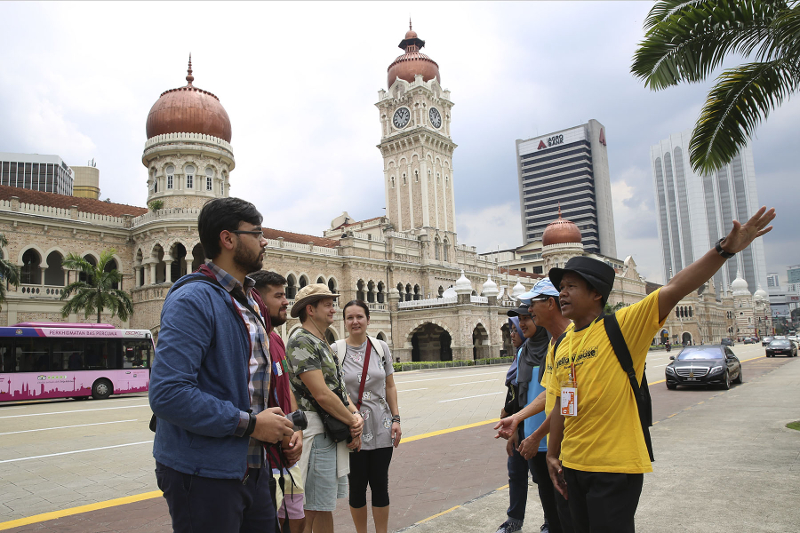
To put things into proper perspective, there are many Malay tourist guides nationwide. All tourist guides must be licensed by the Tourism, Arts and Culture Ministry (MOTAC), and are required to meet the relevant licensing requirements.
They may also join their respective state tourist guide associations, the Malaysian Bumiputra Tourist Guide Association, or both.
The exact number of Malay tourist guides is not compiled, simply because it is not a relevant consideration in the licensing process. Tourist guides are licensed according to their qualifications and language proficiency.
The licensing process includes examinations and assessments, which may involve oral interviews, slide commentaries and descriptions of scenery viewed from a moving or stationary tour bus.
Those seeking licences in additional languages must undergo further assessments. Tourist guides are engaged based on the languages in which they are licensed. A Malay guide who speaks Mandarin, for instance, could be engaged to guide a tour group from China.
More importantly, it is necessary to correct the misconception that tourist guides decide where to take visitors under their care. The itinerary is already established and forms part of the contract when a tour package is purchased.
All the services included are stated in the itinerary, with the arrangements and pricing agreed upon in advance between overseas outbound tour operators and the local inbound tour operators engaged to provide the services.
While arrival and departure transfers are generally straightforward, involving journeys between airports and hotels with no sightseeing stops, routes for sightseeing, visits to attractions and shopping excursions are also planned in advance and included in the tour itinerary.
Unless the planned route becomes impassable due to circumstances such as floods, landslides or road accidents, deviations from the contracted itinerary are generally not permitted without the necessary arrangements or approval.
In other words, a tourist guide or tour leader cannot simply instruct the bus driver to proceed to a destination that is not included in the agreed itinerary.
Decades ago, the Commercial Vehicle Licensing Board (LPKP) attempted to introduce a requirement for every tour bus, or bas persiaran, to carry an itinerary endorsed by the board.
This was intended to help enforcement officers verify whether a bus was being used for tourism or express bus services.
Having an itinerary on board was not a problem. However, obtaining LPKP’s endorsement for every itinerary would have been practically impossible.
For example, a tour bus transporting arriving passengers from an airport to 50 different hotels in the Klang Valley would need to carry 50 separate endorsed itineraries.
When sightseeing tours and overland transfers were added to the equation, each bus could potentially have to carry hundreds of pre-endorsed itineraries.
LPKP, in turn, would have been inundated with millions of printed itineraries to stamp and return to tour operators.
YS Chan is a tourism, transport and training consultant.
The views expressed are solely of the author and do not necessarily reflect those of MMKtT
- Focus Malaysia.

No comments:
Post a Comment
Note: Only a member of this blog may post a comment.