


Upko president Ewon Benedick has dismissed claims of a political bait-and-switch after his party helped form a Sabah administration that includes national parties.
He insisted that the party’s “Sabah First” mantra has not been forsaken amid backlash that rose quickly on social media after election night.
Ewon had declared Upko’s support for a Gabungan Rakyat Sabah (GRS) Plus administration, led by second-term Chief Minister Hajiji Noor. The coalition comprises GRS, BN, Pakatan Harapan, and Upko.
Critics said the move contradicted Upko’s call for an all-Sabah political front, a message the party had leaned on throughout the campaign.
Now, Upko finds itself sharing the government bench with its former allies, Harapan and BN, which the party had distanced from in the wake of the 40 percent revenue issue.
Ewon, now sworn in as a deputy chief minister, said he understood why some Sabahans are upset, but maintained that the “Sabah First” stance was to pursue the long-promised 40 percent revenue entitlement and wider constitutional rights, which he believed were still achievable within the new Sabah government.
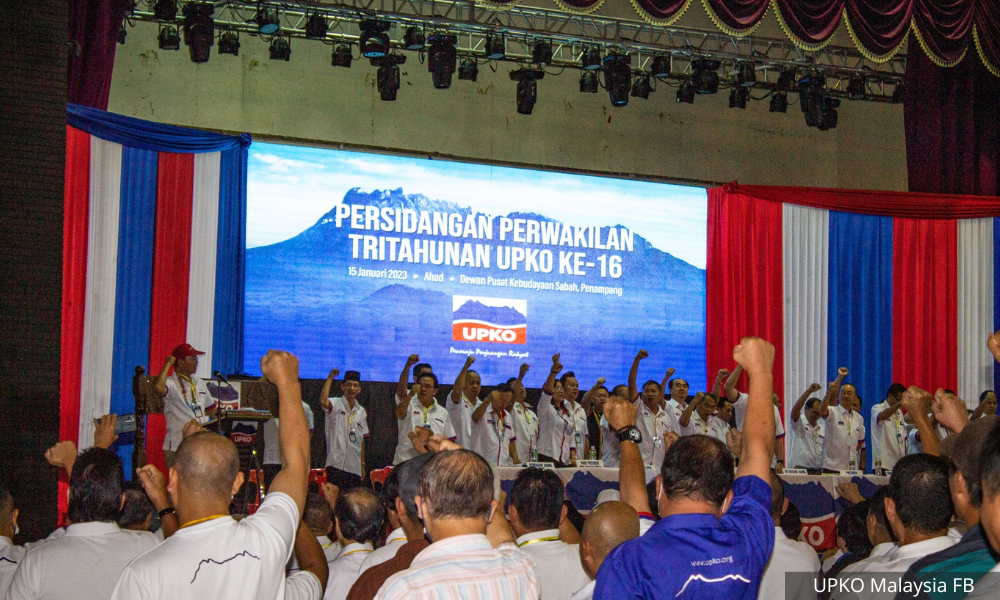
He also said the public should judge him not with post-election anger but on the outcomes of the next political cycle.
“Leave it to the rakyat about my leadership after five years. I leave it to your (the voters’) interpretation. My ‘Sabah First’ is to pursue the 40 percent and Sabah rights.
“But the government has been formed… Now the wisdom is with the chief minister. It is now a unity government, and I want to move forward.
“We can pursue the 40 percent within the unity government,” he added, referring to the High Court’s order for the Sabah and federal governments to resolve the “lost years” issue within 180 days.
The issue refers to Sabah’s unpaid 40 percent entitlement from 1974 to 2021.
From cabinet to cabinet
On the campaign trail, Ewon warned repeatedly that Sabah risked losing leverage over the 40 percent entitlement if national party leaders were installed in the state government; leaders who, he said, must “refer to their party president across the sea”.
He argued this would slow negotiations and dilute Sabah’s bargaining strength.
He had earlier, in a show of frustration, resigned from the federal cabinet after examining the High Court judgment and the Attorney-General’s Chambers’ submissions, which he believed clashed with Sabah’s constitutional guarantees.
He later pulled Upko out of Harapan to pursue the 40 percent agenda without national party constraints.
Yet, even with national parties in the current Sabah government, Ewon insisted Sabah’s political footing is now stronger than before.
“We must understand that the majority of the components in the Sabah government are local parties.
“The national parties only have two ministers. In a way, we (the local parties) are the majority in terms of decision-making. And it is much better than the previous government in terms of composition,” he said.
PKR’s Jamawi Jaafar is now Sabah’s agriculture, fisheries, and food industry minister, while Umno’s Jafry Ariffin is its tourism, culture, and environment minister.
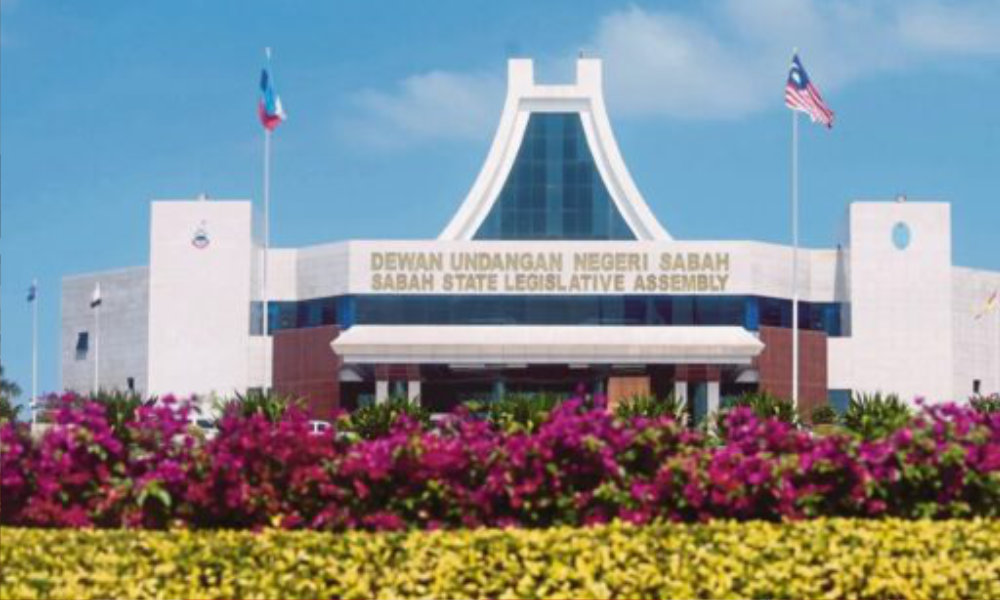
Ewon, who was also made Sabah’s industry, entrepreneurship, and transport minister, believed local dominance in the state administration would help with negotiation on implementing the 40 percent entitlement under Article 112C and the 10th Schedule of the Federal Constitution, among other issues.
“Coming from Upko, having served at the federal level, I have seen and may have some knowledge on how the federal government viewed the 40 percent issue.
“And I believe my three-year time as federal minister could assist the state government to be firm when discussing with the federal government on the matter,” he said.
Ewon also welcomed his new state ministerial portfolio, describing tourism as one of Sabah’s biggest economic choke points.
He also said exporters and small industries have long struggled with logistics - from bringing raw materials into Sabah to shipping finished goods out of industrial parks.
He argued that centralising transportation, ports, and related agencies under one ministry would help clear bottlenecks and provide Sabah investors with a more seamless operation. - Mkini

No comments:
Post a Comment
Note: Only a member of this blog may post a comment.