


Prosecuting informants whose information and exposè led to a series of investigations, arrests, and eventually charges in court is not a “serious way” to tackle corruption, said lawyer Latheefa Koya.
Speaking to reporters outside the Kuala Lumpur Court Complex, Latheefa, who is representing businessperson Albert Tei, argued that there is nothing under the Whistleblower Protection Act 2010 that hinders a supposedly tainted whistleblower or informant from protection.
The former MACC chief claimed this is in contrast to what MACC chief commissioner Azam Baki had said previously, that Tei is not a whistleblower, as he is also involved in the corruption allegations.
“As a criminal lawyer and a former head of MACC, I find these very, very shocking… It’s amazing that for the first time, you hear a whistleblower being charged for exposing systemic corruption that involves one of the highest officers.
“This is mind-boggling… never happened in any other parts of this world,” said Latheefa after Tei was charged with four counts of offering bribes to Shamsul Iskandar Akin, former senior political secretary to Prime Minister Anwar Ibrahim.
What about the ‘big fish’?
Latheefa described Tei as only a “small fish” and urged MACC to instead press charges against the “big fish” in a network of alleged corrupt practices.
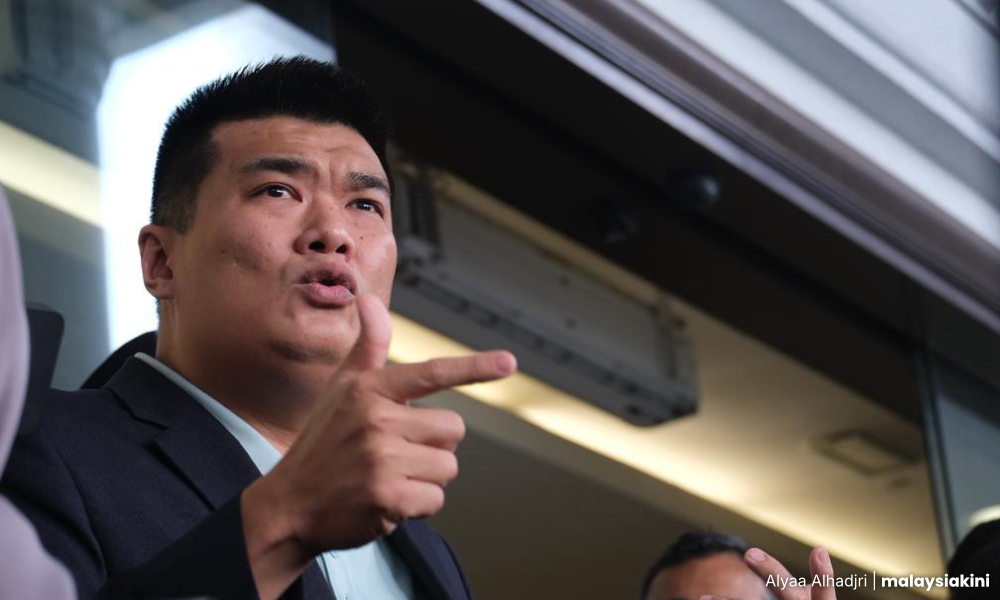
“There is no point repeating hundreds of times that you are going to fight corruption (when) in reality, someone like Tei courageously comes out, puts his face, his neck out to expose the wrongdoings, (and) you go and pounce on him.
“You went to his house, pounced on him like a common criminal, like a terrorist, and there is no explanation as to why this has to happen,” she said, stressing that MACC would have no case to investigate if not for Tei.
Intimidation tactics
Latheefa further claimed that MACC’s Nov 28 raid and arrest at Tei’s house, when the anti-graft officers had come clad in bulletproof vests and balaclavas, was a show of power.
She added that the businessperson was later taken in handcuffs and an orange MACC t-shirt when being brought for remand proceedings in Putrajaya Magistrate’s Court the next day.
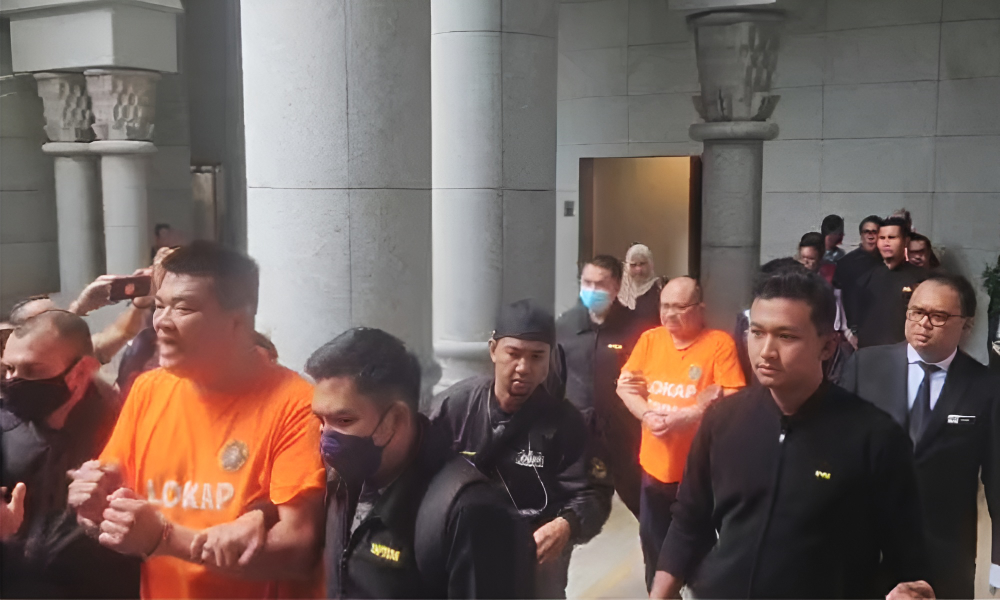
“Tei has been going on and on about the (corruption allegations involving politicians in) Sabah, but they (the MACC) dragged their feet (until) finally, out of 14 persons exposed, only two were charged, and that was together with Tei.
“What’s the message? They are trying to discourage him by charging him. Had MACC taken serious action, instead of having ‘these people’ returned as assemblypersons, there would be a serious message that we will not tolerate corruption,” she said.
“But instead, the MACC dragged their feet, and for a strange reason, they decided that, as a show of power, they would go to (Tei’s) house with guns blazing to arrest the informant.
“During my time, I have actually specifically given directives that no one will be put on an orange shirt, handcuffed, and paraded like a common criminal,” she said, adding that this is not the way corruption should be fought.
Instead, she added, a real government that wants to fight corruption would deal with the informant in order to secure a proper prosecution.
Immunity offered in Rosmah, Guan Eng cases
Elaborating, Latheefa said the attorney-general has the discretion to offer immunity from prosecution to informants, such as those in the corruption cases involving DAP national adviser Lim Guan Eng and former prime minister Najib Abdul Razak’s wife Rosmah Mansor.

“This is not the first time a so-called ‘giver of bribe’ is being used as a witness. In the case of Lim, we had a witness by the name Zarul Ahmad Zulkifli, who had given testimony as to whom he had given money to. Why wasn’t he charged?
“Because if you were to charge him, then the case would be impractical. So, similarly in the case of Rosmah, we had a prosecution witness who had not been charged, given immunity, but why, in Tei’s case, is there no such consideration?” she asked, adding that the government cannot effectively fight corruption without offering protection.
Charged in court
Earlier today, Shamsul was charged with four counts of taking RM176,830 in bribes from Tei, while the businessperson was charged with four counts of giving bribes to Shamsul.
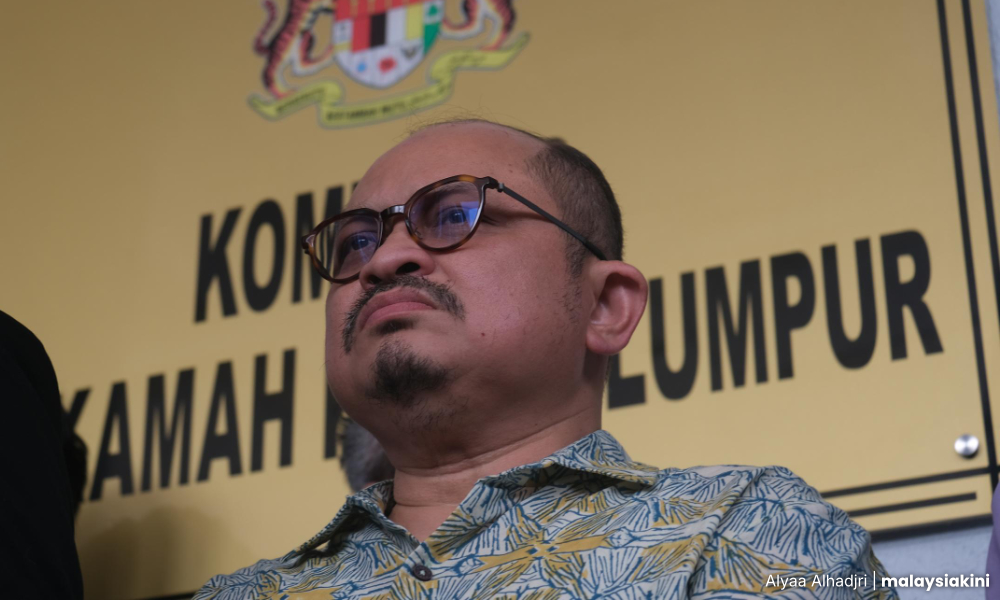
Both pleaded not guilty before Sessions Court judge Suzana Hussin. Shamsul was charged under Section 17(a) of the MACC Act for receiving bribes, while Tei was charged under Section 17(b) for giving bribes.
Both are punishable with up to 20 years in jail and a fine of at least five times the amount of the bribes involved.
Suzana set bail for Shamsul at RM150,000 with two sureties, and RM70,000 bail for Tei.
Both of them are required to surrender their passport to the court and report themselves to the MACC once a month, as well as not to disturb any witnesses until the case is over. - Mkini

No comments:
Post a Comment
Note: Only a member of this blog may post a comment.