


By late morning, Rumah Pangsa Pantai Peringgit (RPPP) is already piping hot. With very few trees tall enough to cast shade, every housing block and walkways absorb direct sunlight, making it unbearable to live in.
As Malacca grapples with rising temperatures and the pressures of urban living, residents of this low-cost flat complex have been living with the impacts for years.
Now, instead of being treated as passive recipients of aid, they are actively involved in helping shape a response.
Facilitated by the Resilient Cities Network (R-Cities) and the Malacca Historic City Council (MBMB), residents of RPPP are co-designing a heat mitigation initiative centred on heat-reflective paint and community-led cooling strategies.
The project is expected to be launched early this year, but it has already offered lessons on how climate solutions can be built with communities, not just for them.
Living with heat
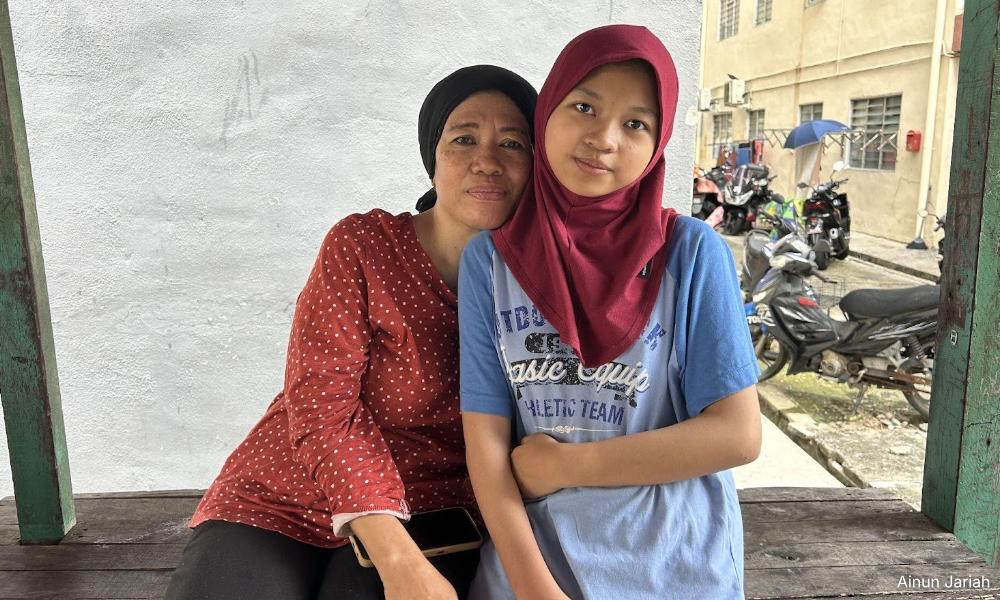
Ruzi Mohamad, 56, lives on the fourth floor of Block F with her 14-year-old daughter, Naziera Nasir. The heat is even more intense at this level and can reach up to 32 degrees Celsius, according to Ruzi.
The prolonged heat has affected both their comfort and health. They suffer from migraines, and Naziera, who also has epilepsy, would faint if the temperature became too high.
“We avoid going out when it’s too hot, especially in the afternoon. We don’t want to risk headaches or migraines,” Ruzi said.
Unfortunately, this is not an isolated case.
Another resident, Norliza Norzaini, 64, gets asthma attacks and migraines whenever it gets excessively hot.
“Cold weather is fine, but when it’s too hot, my asthma can flare up more easily. Even walking outside under the sun can trigger migraines,” she said.
According to R-Cities, extreme heat, despite being one of the deadliest climate risks, is often overlooked compared to floods and storms.
With a combination of high humidity and high temperatures, the body reduces its ability to cool itself, increasing the risk of heat exhaustion, heatstroke and cardiovascular strain.
What’s worse is that extreme heat impacts are not felt equally, as children, older adults, outdoor workers, and those with pre-existing health conditions face higher risks.
From complaints to co-design
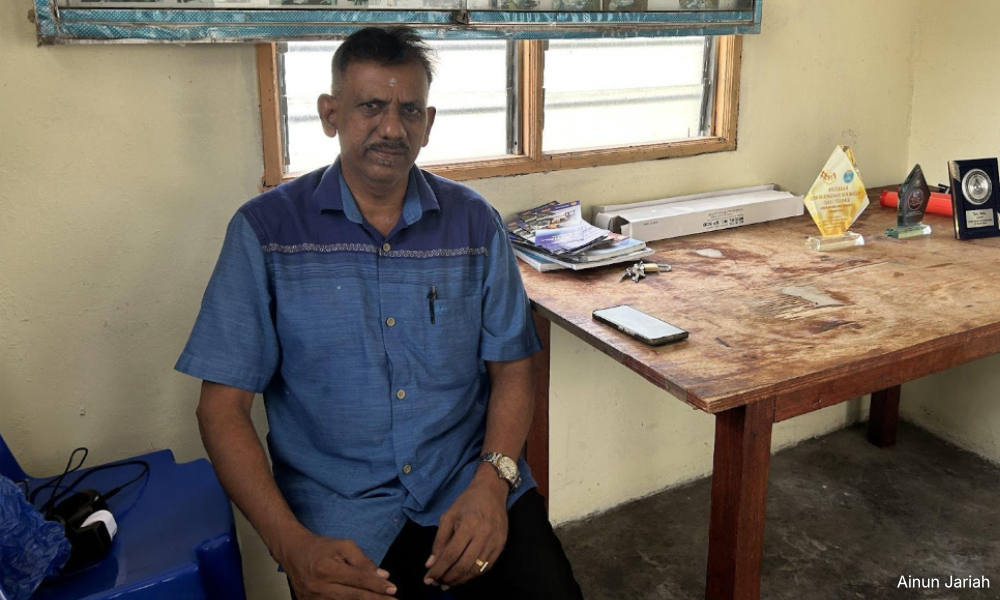
Cheven S Punasamy, 58, has been serving as the community leader at RPPP for over 13 years. He lives in Block C with his wife and two daughters.
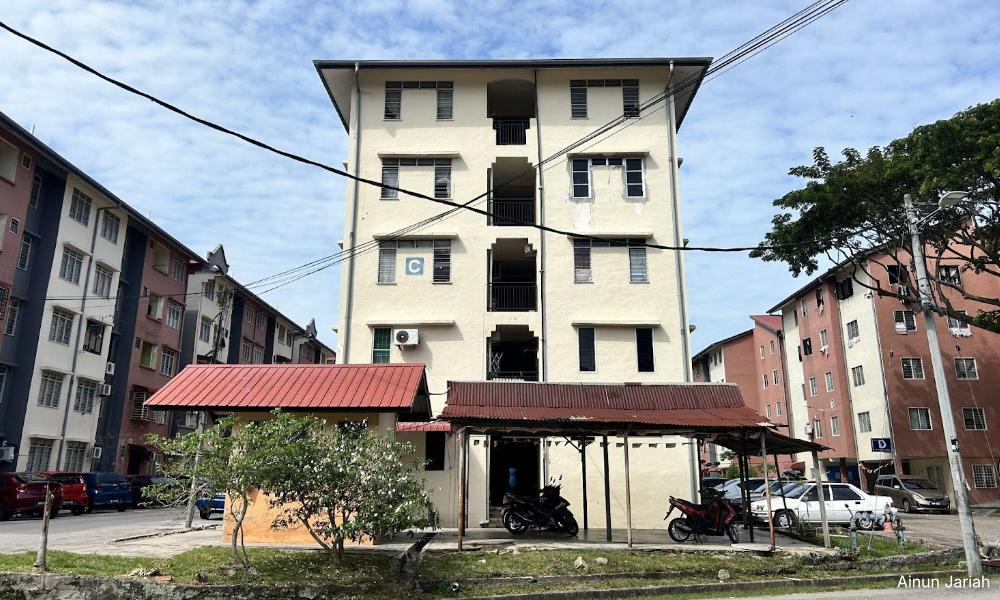
As a leader, he has heard residents’ complaints about the heat dozens of times. He has raised the issue with several authorities, including the Pengkalan Batu assemblyperson, the Malacca Housing Board, and the Malacca Historic City Council (MBMB).
A shift took place in late 2023 when R-Cities collaborated with local authorities and residents to co-develop community-led climate solutions.
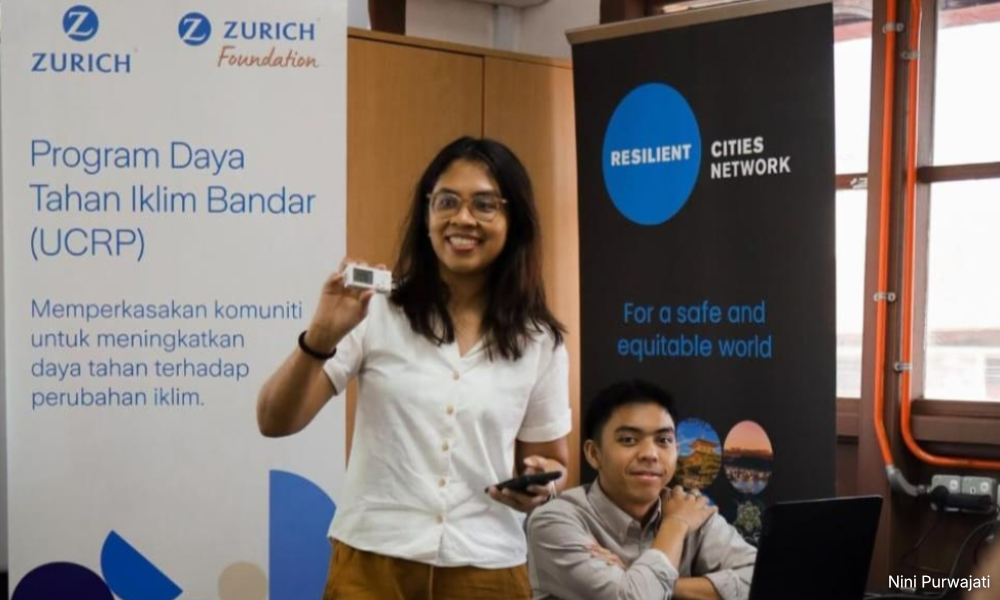
According to R-Cities Asia-Pacific Engagement head and programme lead Nini Purwajati, during the early stages of the project, the organisation had worked closely with MBMB to identify suitable communities.
The work required R-Cities to first get approval from both MBMB and the Malacca Housing Board, as there is no legal route to deliver the work directly to residents alone.
However, beyond legal requirements, Nini said that working with these authorities helps ensure that the work won’t come off as a one-off intervention, as they have the power to embed the lessons learned within the city and inform future urban heat policies and programmes across Malacca.
“This approach does not reduce the role of residents. Community leadership and participation remain central.
“The government’s role is to enable community-driven solutions to be implemented, maintained, and scaled. This is how we make sure to create the enabling ecosystems for communities to thrive,” said Nini.
When discussing with MBMB on deciding which communities to work on, several factors were considered. This includes environmental risks and socio-economic vulnerability. They eventually narrowed it down to Kampung Pantai Peringgit and Kampung Morten.
According to Nini, Kampung Morten faces recurring flooding issues, while Kampung Pantai Peringgit experiences intense urban heat. Both areas are largely made up of B40 households, making residents more vulnerable to climate-related risks.
While research on heat-reflective paint exists internationally, Nini said R-Cities’ decision was heavily influenced by feedback gathered directly from residents, making co-design the main solution to this heat problem.
Through site visits, community meetings, surveys, and temperature assessments, R-Cities and MBMB examined how housing design, materials and surrounding infrastructure were contributing to heat retention in these neighbourhoods.
Residents were also invited to share daily coping strategies and constraints, helping the team assess which interventions were practical, affordable and could be implemented quickly without major structural changes.
“We heard comments like, ‘I don’t have an air-conditioner because it’s too expensive,’ or ‘Even if I have one, I don’t turn it on because of the electricity bills.
“As a result, even when it’s hot, residents think twice before switching on the air-conditioner. So, we had to think about a solution that truly considers their economic reality,” said Nini, adding that these were some of the comments they’ve received from the surveys and community meetings.
For R-Cities, the paint is only one part of a broader approach. Nini emphasised that reducing indoor heat requires a combination of physical interventions and behavioural changes.
“This isn’t a one-size-fits-all solution.
“It needs to be combined with practical habits - like closing windows during the day to block heat, and opening them at night to let cooler air in, especially since indoor temperatures are higher at night,” she said.
Nini emphasised that involving residents throughout planning was critical to ensuring the intervention’s relevance and sustainability.
“If you want a community garden, you need to know whether residents will maintain it; otherwise, it becomes a one-off project,” she said.
What the evidence shows - and what it doesn’t
Through a collaboration with Singapore’s Nanyang Technological University (NTU), R-Cities installed heat-monitoring devices inside selected flats to better understand residents’ indoor living conditions.
The findings showed that at night, the indoor temperature in RPPP flats was surprisingly warmer than the outdoor temperature.
This led to a community action plan using heat-reflective paint as a form of passive cooling technology, along with some murals to beautify the area.
However, to achieve maximum cooling effect, Nini advised combining natural cooling habits. These include closing windows during the day to block heat and opening them at night to let cooler air in.
Between design and delivery
One of the projects that inspired R-Cities was Singapore’s pilot project in Tampines, where temperatures were reduced by up to 2 degrees Celsius after applying cool paint.
However, the Malacca project is being done on a much smaller scale compared to Singapore’s due to resource and capacity limits.
“In Singapore, they paint the roofs, walls and even pathways.
“Here, due to resource and capacity limitations, we’re only focusing on the external walls,” said Nini.
Walls will be prioritised because they have the largest surface area and offer the greatest balance between feasibility, cooling potential and visual improvement.
Nevertheless, despite the smaller scale, being selected as one of the pilot communities carries meaning for residents like Norliza.
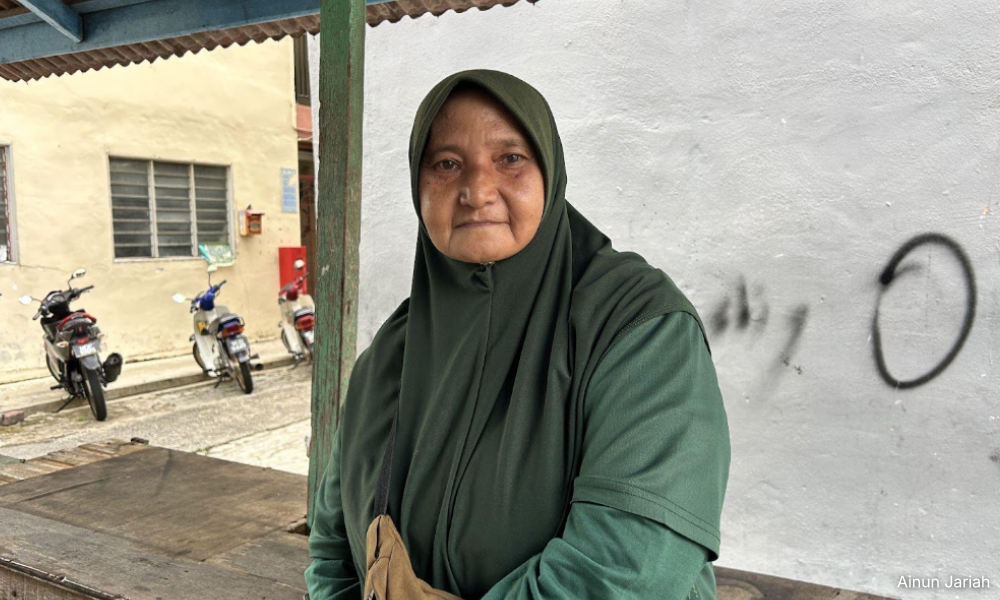
“Even if we’ve heard about these things before, we never really expect them to happen to us. So yes - I do feel proud that our community was chosen,” she said.
Hope and the path forward
While some recommended habits aren’t always possible, residents remain invested in the project.
One of the residents, only known as Veeramah, 94, keeps her doors and windows closed after 5.30pm following a previous intrusion by a large black snake, highlighting the practical limits of certain solutions.
In support of this, Nini noted that cooling recommendations only work if they are safe and practical. These realities are discussed directly with residents, with solutions adapted accordingly.
Despite these limitations, the community’s optimism persists.
Cheven said, “My hope is that this action plan actually reduces the heat here. We want real results, not just empty words, wasting time, money and energy. It’s for the benefit of the community, after all.”
The initiative represents more than just cooling walls - it embodies the potential of co-designed, community-led solutions that respond to residents’ lived realities, offering a model other states could follow to tackle urban heat in their own communities.
At the same time, Nini stressed that involving residents throughout the planning process was critical to ensuring the intervention’s relevance and sustainability.
“If you want to build something like a community garden, you need to know whether residents are actually willing to maintain it.
“Otherwise, it just becomes a one-off project,” she said.
By involving residents through surveys, workshops and discussions, R-Cities aimed to build a sense of ownership within the community - increasing the likelihood that the intervention would be cared for over time.
This story was produced as part of the Panas! Climate Change Stories in Malaysia initiative by Science Media Centre Malaysia, in collaboration with WWF-Malaysia, and supported by the British Council Alumni UK Climate Action Grant. - Mkini

No comments:
Post a Comment
Note: Only a member of this blog may post a comment.