


DAP secretary-general Anthony Loke wants Prime Minister Anwar Ibrahim to seize the remaining term to focus on implementing reforms and manifesto commitments agreed upon with BN.
Loke (above, left) told Anwar not to dwell on the outcome of the next general election as it is not within their control and “not up to us to imagine what the results will be.”
“You have the next one to 15 months, so just implement what you need to and do what you ought to do. Leave the election results to the voters.
"Regardless of the outcome of the next general election, for me, there will be no regrets, as long as we at least leave behind a good record."
He made these remarks in response to a question by Astro AEC about what DAP should do to win back the confidence of its supporters if the party remains in government.
More than 4,200 DAP delegates will cast a secret ballot tomorrow to decide whether the party should continue to remain in the federal government until the end of the current parliamentary term.
More severe tests await
Loke pointed out that he had told the prime minister that, given the current cooperation model and momentum between BN and Perikatan Nasional, Pakatan Harapan will face even harsher tests because Malay voters are no longer paying attention to governance performance.
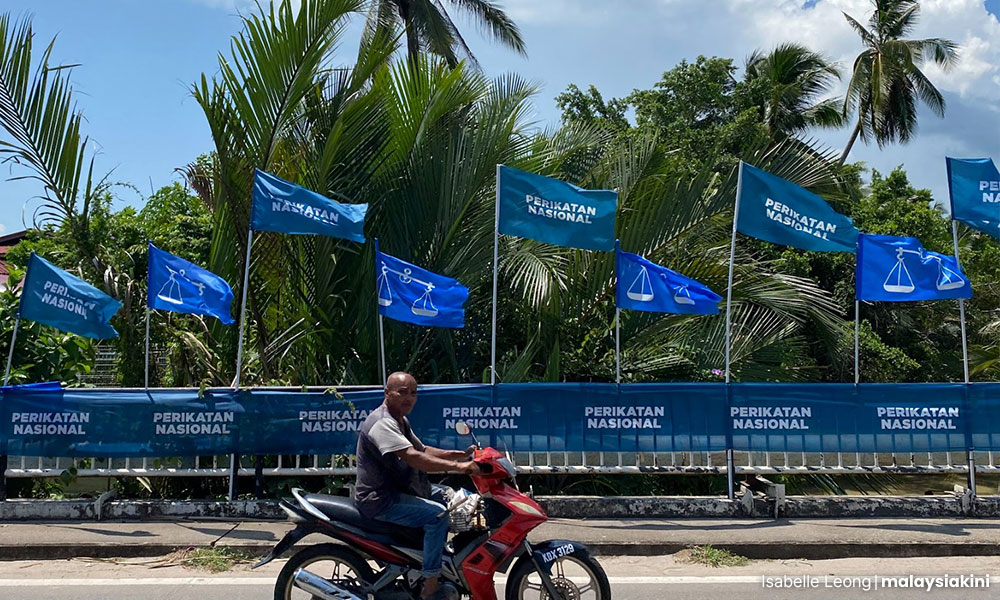
"(For example) in the Negeri Sembilan state government, the majority of Malay voters interviewed said that the Harapan government is actually doing very well, but the main point is that they simply do not want DAP to be in the government.
“Malay voters are no longer looking at achievements, performance, or track records; they simply do not want DAP in the government.
"This is the current sentiment. For me, when facing such a situation, what you can do is use your existing time and opportunities to push as much as possible for things that can bring change to the country."
He also revealed that he had told Anwar that the latter should make every effort to advance certain common agreements between Harapan and BN.
"We have made comparisons on what can be pushed and what can be implemented, as well as areas such as economic issues where there are no major differences or major controversies among all parties."
He cited examples in which all parties agree that the economy needs to grow faster and people's incomes need to rise; therefore, the prime minister may need to push for greater economic openness and reforms, especially in the upcoming budget.
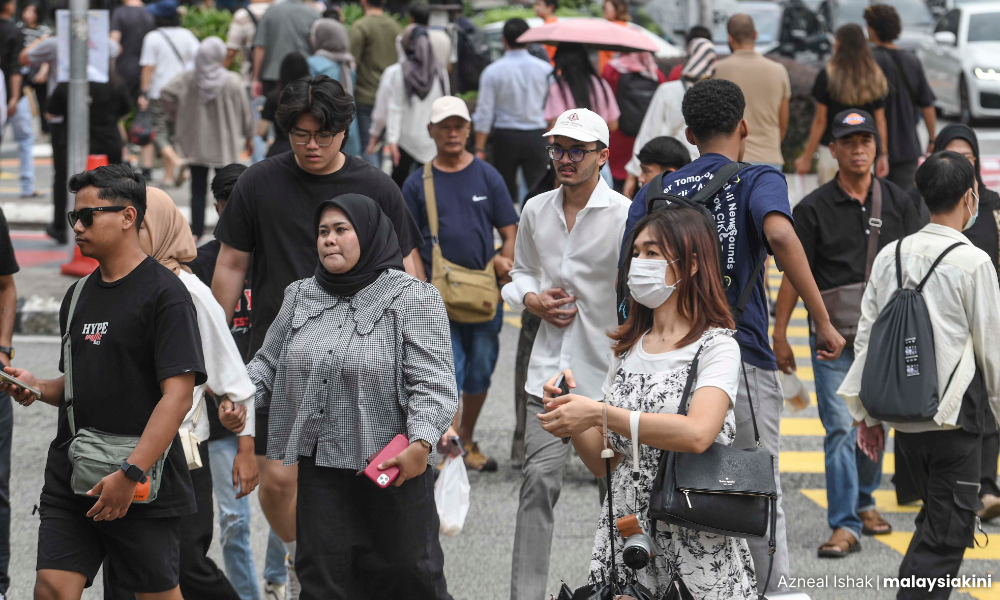
Additionally, Loke cited reforms such as the separation of powers for the attorney-general and the public prosecutor and limiting the prime minister’s tenure to two terms.
"These are things that BN cannot oppose, and we cannot use their disagreement as an excuse, because BN has already agreed, so the prime minister also needs to make a decision.
“To a certain extent, we told the prime minister that he must be more decisive."
High-stakes gamble?
Regarding DAP's dilemma of being caught between a rock and a hard place, Loke explained that being in government is different from being in the opposition, but DAP has never done anything to wrong its supporters.
Loke also reminded the delegates that the public will scrutinise the party congress’ decision. Voter recognition and support, he noted, will only be known during the general election.
“If we make the right choice, we hope to gain the voters' approval; if we make the wrong choice, voters will surely punish us."
Having voluntarily brought up this motion, Loke said he is not worried if the election results come back worse than expected.
He said there has been no precedent in such a motion, adding that if he had chosen not to table it, no one could have forced him.

“Bringing the motion to the delegates' convention is also to convey a message and a new approach, which is that everyone should think together about the party's direction.
"If the majority makes a collective decision, we must respect it. If the outcome is not what I want, I must also learn to follow it.
“This is the responsibility and accountability a leader must possess, and one cannot worry too much."
He also denied claims that submitting the matter to a vote by delegates is a high-stakes gamble.
"I am not taking a gambling mindset to do this; I have always said that making a choice is a responsibility, and we choose the better of two options.
“Politics is about choosing the lesser of two evils. You have to make a choice." - Mkini

No comments:
Post a Comment
Note: Only a member of this blog may post a comment.