


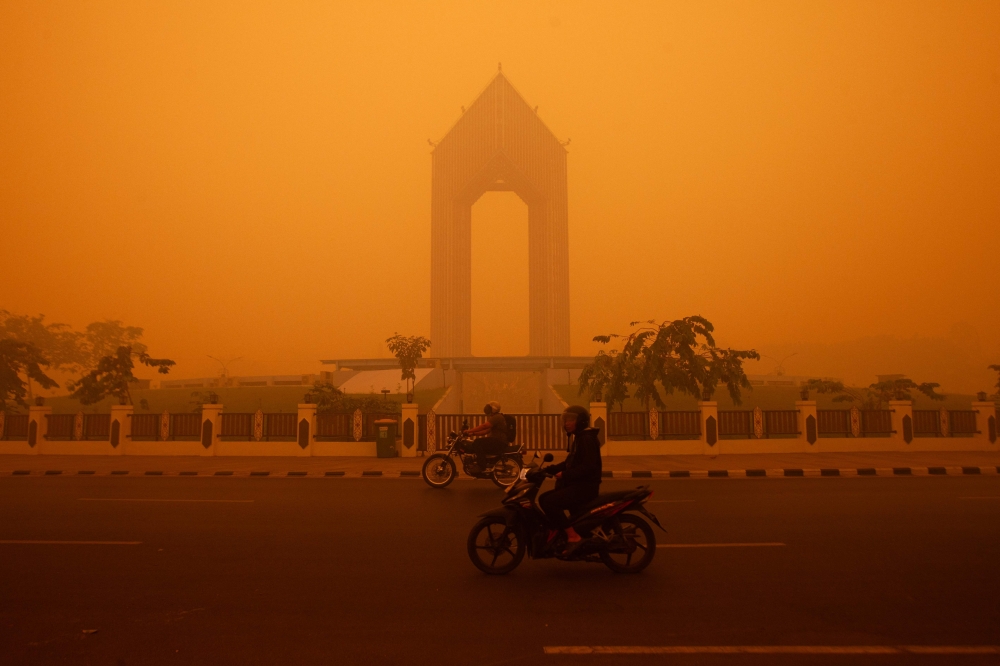
Malaysia presents a striking statutory paradox when responding to seasonal haze pollution: the nation possesses a comprehensive, highly punitive domestic environmental legal framework, yet remains entirely powerless against atmospheric smoke originating beyond its borders.
Grounding environmental protection within constitutional jurisprudence is essential, as it establishes an unshakeable bedrock for public rights claims that elevates clean air from a regulatory ideal to a fundamental human right.
The legal foundation for environmental rights in Malaysia originates from Article 5(1) of the Federal Constitution, which mandates that no person shall be deprived of their life save in accordance with law.
In the landmark Court of Appeal decision of Tan Tek Seng v Suruhanjaya Perkhidmatan Pendidikan (1996), the judiciary expansively interpreted the term “life” to encompass all elements that constitute a person’s quality of life.
This precedent has since been established as the legal authority for a constitutional right to live in a reasonably healthy, pollution-free environment.
The practical application of this constitutional principle was demonstrated in 2024 when the Johor Bahru High Court doubled the fine for a company responsible for air pollution in Pasir Gudang to RM80,000 per charge, explicitly citing Article 5 and observing that it guarantees a healthy quality of life.
That same year, the Human Rights Commission of Malaysia (Suhakam) published a dedicated report examining haze pollution through the lens of the right to clean air.
The primary statutory instrument for domestic environmental enforcement is the Environmental Quality Act 1974 (Act 127). Following legislative amendments gazetted on June 6, 2024, and brought into force on July 7, 2024, Parliament amended 28 sections of Act 127, elevating maximum penalties up to RM10 million for severe offences.
To combat atmospheric haze, Section 29A of Act 127 strictly prohibits open burning.
Under the revised penalties, convicted offenders face fines ranging between RM25,000 and RM1 million, imprisonment for terms up to five years, or both.
Furthermore, administrative compounds can now be issued for up to half the maximum statutory fine.
This represents a significant shift from the previous compound baseline of approximately RM2,000, which polluters routinely treated as a mere operational cost cheaper than clearing land by machine.
Section 29A also imposes explicit legal liability on landowners to prevent trespassers from starting fires on their property.
This statutory framework is reinforced by the Environmental Quality (Clean Air) Regulations 2014, which regulate emissions from industrial premises and factories.
In Sarawak — the state most severely impacted by seasonal haze — the Natural Resources and Environment Ordinance 1993 provides the state government with localised environmental regulatory powers.
According to Rosli Zul, Director of the Department of Environment’s Enforcement Division, open burning accounts for nearly 80 per cent of all environmental complaints received annually, prompting intensified enforcement action nationwide.
While these robust domestic environmental statutes establish stringent air quality standards within national borders, public institutions and duty-bearers still face immense administrative and operational hurdles when severe pollution episodes disrupt critical social and economic sectors.
The transboundary jurisdictional deficit and proposals for reform
The fundamental structural flaw in Malaysia’s legal response to haze is territoriality.
Territorial legislation cannot cross international borders to stop transboundary atmospheric pollution, necessitating extra-territorial corporate accountability mechanisms.
The strict territorial limitation of Act 127 allows Malaysian authorities to penalise illegal land clearing in Kuala Langat or Bachok, but leaves them powerless against peat fires burning in Kalimantan, even when those agricultural operations are backed or controlled by Malaysian capital.
The smoke that forced the closure of 710 schools in Sarawak requires no passport to cross international boundaries.
This jurisdictional void has driven recurring calls for a Transboundary Haze Pollution Act.
Following the severe 2019 haze crisis, the Academy of Sciences Malaysia was tasked with studying the feasibility of a transboundary pollution legal framework.
The Cabinet approved the introduction of such a bill on February 12, 2020, but the legislative initiative was shelved following a change in government.
In 2023, the government maintained that the option remained under consideration.
By 2024, the incumbent minister argued that enforcing such a law without bilateral agreements posed insurmountable jurisdictional hurdles.
On September 25, the ministry confirmed it had reopened studies into dedicated transboundary legislation, with the minister directing a special committee to conduct an investigation.
Dr G. Pubadi, Undersecretary of the Ministry’s Environmental Management Division, acknowledged that drafting extra-territorial legislation presents complex legal challenges.
To overcome these legal hurdles, future legislation must strategically draw a distinction between extraterritorial in rem land management and in personam regulatory leverage over domestic corporate parents.
Seeking in rem jurisdiction over foreign physical property or foreign sovereign land-use decisions invites legitimate diplomatic resistance regarding state sovereignty.
Conversely, exercising in personam jurisdiction over parent entities registered, listed, or operating within Malaysia is well within established administrative and corporate legal norms.
By embedding mandatory disclosure rules — such as requiring Bursa Malaysia-listed conglomerates to publish detailed maps of foreign agricultural concessions, active fire hotspot data, and foreign subsidiary burn records — Malaysia can exert formidable economic, market, and regulatory pressure without infringing on foreign territorial sovereignty.
Additional legal reform proposals put forward by civil society groups include amending Article 5(1) of the Federal Constitution to explicitly recognise the right to a safe, clean, and healthy environment, as well as enacting a comprehensive clean air act.
Concurrently, the Education Ministry could elevate its haze guidelines into enforceable administrative regulations that prescribe mandatory minimum indoor air quality standards for classrooms.
The arrival of the northeast monsoon around mid-October typically clears the immediate skies.
However, until Malaysia enacts legislative reforms capable of addressing cross-border pollution, every dry season will bring the same public health crisis and the same jurisdictional limits. - malaymail
* Dr Mohd Zulfakar Mohd Nawi is a Senior Lecturer at the Department of Professional Education and Postgraduates, Faculty of Technical and Vocational Education, Universiti Tun Hussein Onn Malaysia (UTHM). Redza Zakaria is the Head Unit of Maritime Law, Policy and Governance at the Institute of Ocean and Earth Sciences (IOES), Senior Lecturer at the Faculty of Law, Universiti Malaya, and a member of the Group of Experts for the Ocean Literacy (WESTPAC) under Unesco.
** This is the personal opinion of the writer or publication and does not necessarily represent the views of MMKtT

No comments:
Post a Comment
Note: Only a member of this blog may post a comment.