


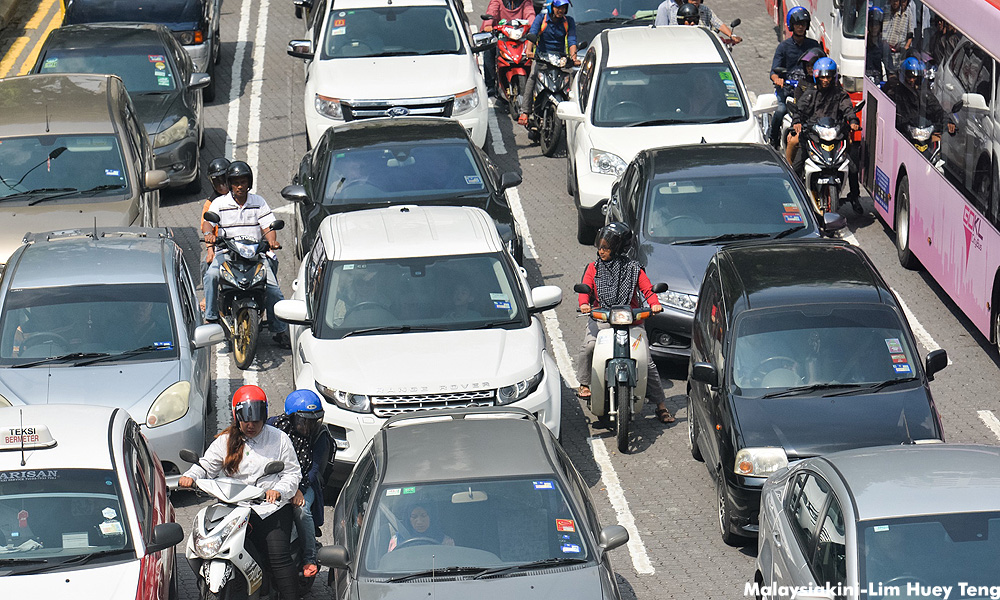
Like most developed cities, Kuala Lumpur and its surrounding areas in the Klang Valley suffer from serious traffic congestion.
The main contributing factor to this is, of course, car ownership, which has seen an exponential increase in the last couple of decades. This is accentuated by the low capacity of the public transport network.
This can be seen in the modal share ratio of public to private transport usage – especially in the journeys to work category – which stands at about one to four for the Klang Valley. This means that for every four trips made using private vehicles, only one equivalent trip is made using public transport.
The share, in terms of public transport usage, is somewhat low by world city standards. It was only of late that a transport policy document for Kuala Lumpur set a 40 percent target for public transportation, from the current 19 percent.
London, a much older city than Kuala Lumpur, recorded a share of 44 percent for public transport in 2011. What are they doing right, and what are we doing wrong?
A web of bureaucracy
There are a number of similarities between the Klang Valley – encompassing places such as Ampang, Serdang, Petaling Jaya, Subang Jaya, Gombak, Shah Alam and all the way to Port Klang – and Greater London.
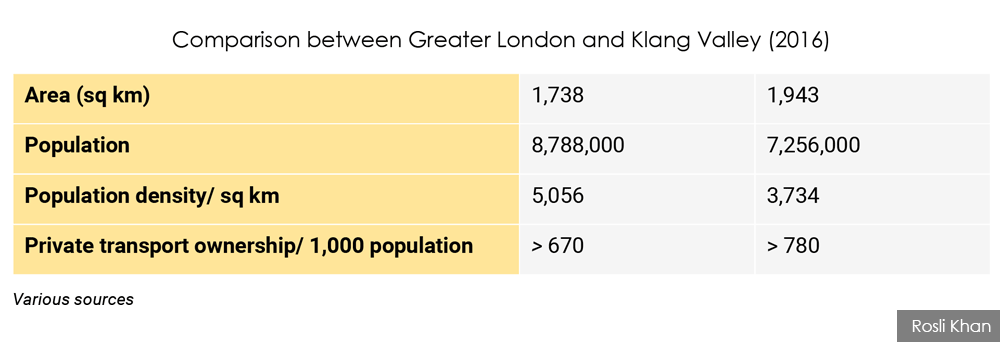
However, the main challenges in the organisation and management of public transport are not so much the physical attributes of the cityscape, its size, or even the demand and supply capacity.
Rather, success commonly stems from how the public transport authority organises itself structurally, as well as how it sets up an accompanying institutional framework for planning and management so that transport operations are efficient and beneficial to the public.
Equally important is how that governmental body responsible takes ownership and responsibility in implementing transport policies, its objectives of promoting the use of public transport and discouraging private transport.
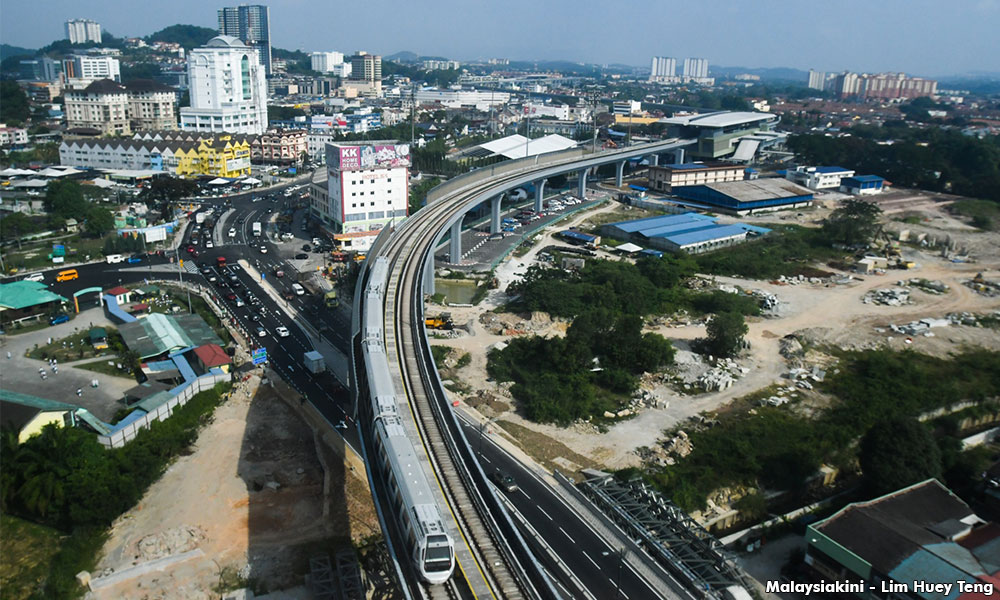
While Malaysia’s public transport expenditure in the last few years has been encouraging – in the form of LRT extensions and the MRT – the results thus far have been far from satisfactory.
We have spent large sums of public funds for a single transit system, the 52km (mostly elevated and partially underground) rapid transit system referred to as the Sungai Buloh–Kajang MRT line, or MRT1.
But so far, it has been relatively unsuccessful in luring even a small percentage of drivers away from their cars for their daily commute. Many of those who switched to MRT1 were former bus users, not private transport users.
In this respect, we have also made many poor decisions in the past in terms of public transport project planning – like accruing construction debts at the outset and failing to operate public transport services successfully without duplication of authority.
We have ended up with too many government bodies and agencies involved in managing public transport. Despite having a Transport Ministry, we also have the relatively new Land Public Transport Commission (Spad) that reports directly to the Prime Minister’s Department.
Spad is not only struggling to rein in and manage the many different modes and private operators under its wing, but it has also been tasked with coordinating the many different elements of planning and managing public transport functions while regulating them at the same time.
Apart from that, we also have Prasarana, created under the Finance Ministry to plan and manage the light rail transit systems, LRT1, 2 and 3. Yet another body, MRT Corporation, was created when we needed to plan MRT1 and 2. And then we have MyHSR, another body to look at high-speed rail between KL and Singapore.
And which authority supervises the Express Rail link (ERL) to KLIA? What about KTM, another loss-making body, that has also been placed under the supervision of Finance Ministry? KTM's assets are actually owned by another agency, Railway Assets Corporation (RAC), which itself is being turned into a regulatory authority under the Transport Ministry.
This tangled web also contains the Malaysian Rail Link (MRL) that was formed to plan and manage the East Coast Rail Link (ECRL). In many cases, it seems to be a case of one government agency regulating another.
Do these bodies actually manage the day-to-day running of their train services and facilities? No, as it turns out, because the LRT, monorail, MRT1 and most buses are contracted out to be managed by yet another government agency, RapidKL, in turn, owned by Prasarana.
Do we really need this many layers of ownership and management organisations sitting above one another?
Going underground
Transport for London (TfL), created as a government-owned entity in 2000, is responsible for the transport systems in Greater London.
TfL has a budget of GBP11.5 billion, over 40 percent of which comes from fares alone. The UK government contributes about 23 percent. Congestion charges, a form of road toll paid by those who bring their cars to central London, contributes about 11 percent, while the rest are from the rental of terminals and loans.
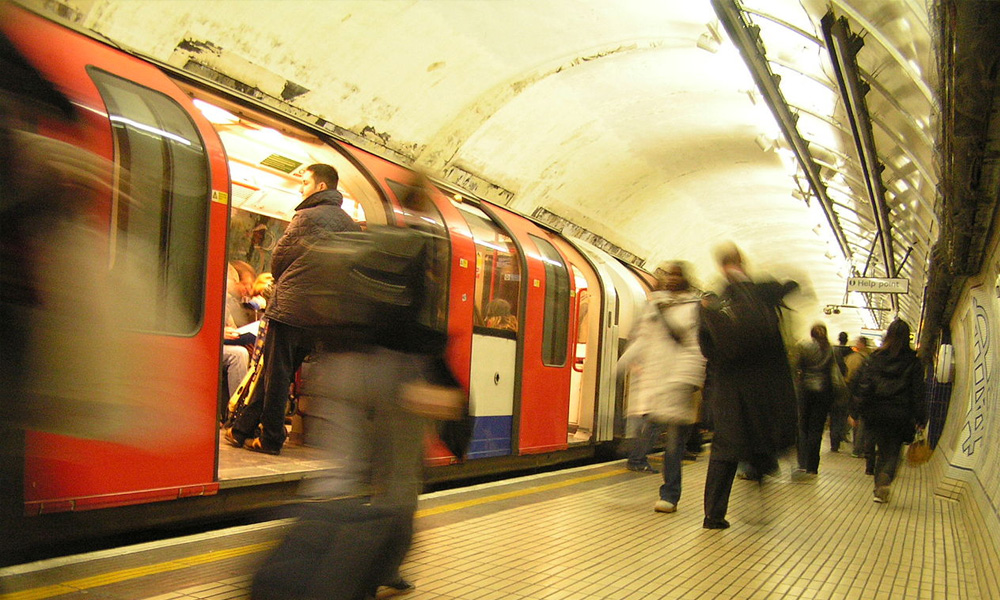
Its success is owed to it being the singular authority for the planning, design, management, operation, and fare collection for many modes of transport in London.
TfL manages and operates a variety of public transport modes, such as the London Underground, buses, coaches, taxis, minicabs, trams and river transport. It also manages the road traffic management system via the congestion charge.
The agency is also responsible for the collection of fares and charges – including parking – for all modes of transport, through payment systems such as the Oyster card.
This is something that the Klang Valley should aspire to achieve. But that would be impossible with our current policy of having layers after layers of bureaucrats managing public transport, simultaneous with other agencies encouraging the construction of even more roads or highways in and around Klang Valley.
There is, of course, a direct conflict between those encouraging greater use of public transport and those wanting more roads to be built. Phases two and three of the Duke Highway, for example, are a testament to this conflict, since this will bring even more private cars into the city centre.
Raja Noriza Raja Ariffin’s study on modes of transport in Kuala Lumpur, “Urban Transportation Systems and Governance in the Klang Valley, Malaysia,” drew some interesting conclusions in this regard.
Raja Noriza found that the formulation and implementation of urban transport policy in the Klang Valley generally reflects the characteristics of Malaysian political culture, since the most influential actors in the sector are politicians who are not experts in the transportation field.
The last point makes it unsurprising that most policies pertaining to transport are formulated in an ad hoc manner, instead of being based on extensive research into patterns of transport needs. As a result, transport policy implementation is usually the result of curative rather than preventive actions.
The complexity and fragmentation are consequences of the vertical and horizontal duplication of power and poor decision-making. The absence of any clear leadership is affecting functionality, productivity and efficiency. Having a singular authority could resolve all of the above.
ROSLI KHAN has been a practising transport and logistics professional, academic, consultant and company director for over 30 years.- Mkini

No comments:
Post a Comment
Note: Only a member of this blog may post a comment.