


Over the past 72 hours, social media and news portals have been flooded with debates about peaceful assembly.
Suddenly, everyone has rediscovered Article 10 of the Federal Constitution. Suddenly, everyone is a defender of the right to protest.
And as we should be. The right to peaceful assembly is a fundamental constitutional freedom and a universal human right. But like all fundamental freedoms, it is not absolute. It cannot be exercised in a way that infringes on the dignity, security, or equal protection of others.
Let us be clear about what this debate is really about. This is no longer a discussion about whether Malaysians have the right to assemble. They do.
The issue being debated is whether the prime minister’s warning crossed a line, whether his words were excessive.
Some have cited constitutional provisions and court decisions as if the right to peaceful assembly exists without boundaries. It does not.
There is nothing in the Federal Constitution that protects the promotion of racial hatred, hostility, or division. Freedom of assembly does not extend to conduct that undermines the rights of others.
When race is weaponised
The recent rally near Sogo must be assessed in that context. Public assemblies do not exist in a vacuum. When the framing, messaging, or surrounding narratives risk deepening tensions in a country with a sensitive and painful history of violence, the state has not only the authority but the responsibility to respond (provided that response remains lawful and proportionate).
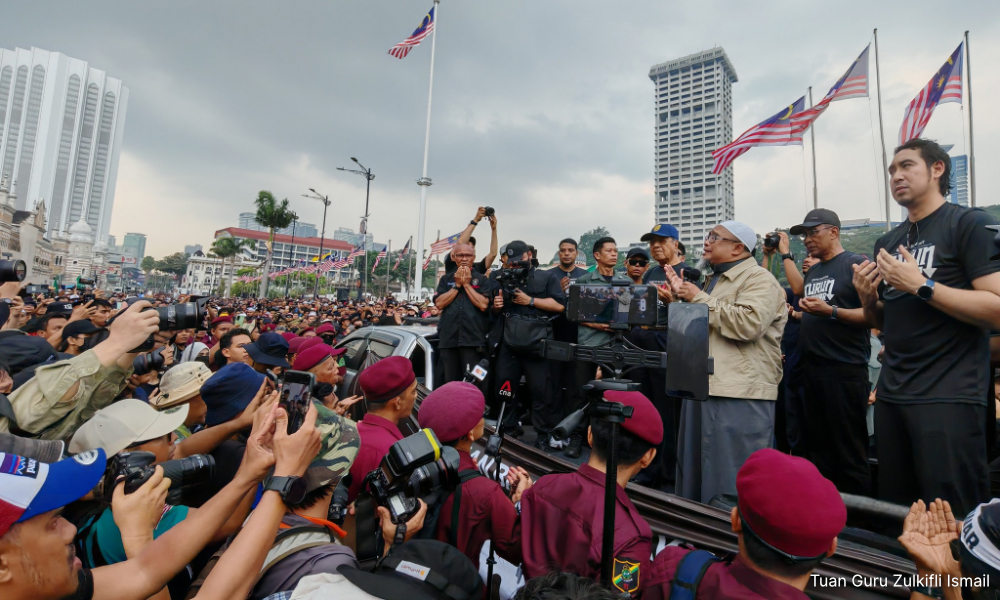
Since the Madani government was formed, numerous rallies have taken place, including those demanding the prime minister’s resignation. The Turun Anwar rally proceeded. The authorities facilitated it. Why? Because political dissent is part of democratic life.
This moment is different not because people protested but because of the potential consequences of the issues being mobilised.
When race is weaponised, when identity becomes a rallying point for exclusion, it is no longer about political disagreement. We are crossing a line that has, in our history, led to real harm.
Many of us have taken to the streets before. Many of us have protested without permits. But those mobilisations were not grounded in racial or religious exclusion. They were about governance, reform, accountability, and rights.
Defending the right to protest does not require defending every protest, regardless of its content or impact.
Malaysia does not belong to any one political party. Malaysia belongs to all of us, across races, religion, and political beliefs. Political disagreement is democracy. Holding government officials accountable is democracy. Racial hostility is not.
The prime minister, as head of government, carries a duty to preserve public order and protect the rights of all communities.
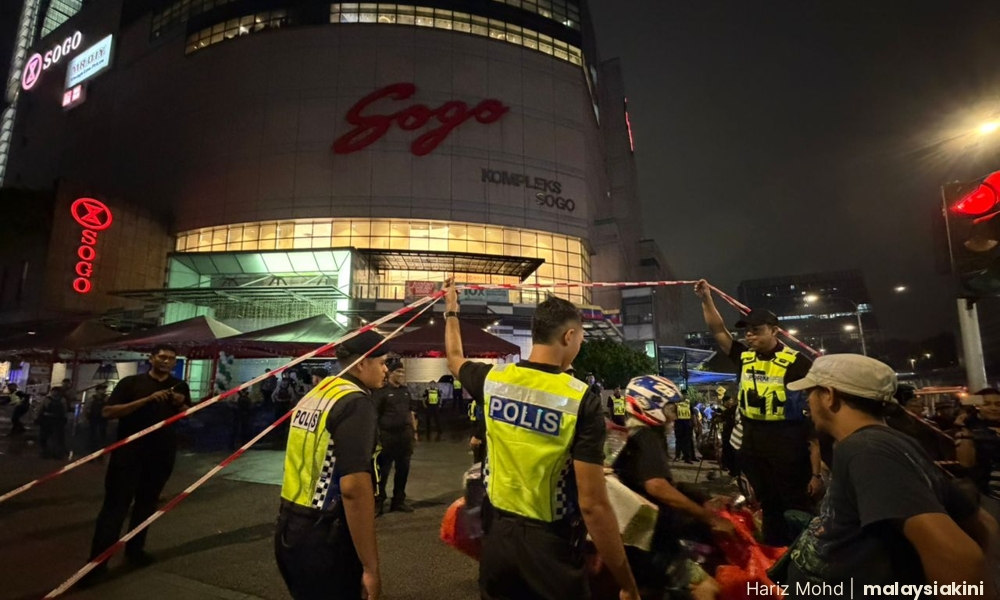
Instructing authorities to act against attempts to inflame racial tensions, if done within the bounds of law and due process, is not inherently authoritarian. It can be a legitimate exercise of responsibility.
And to those claiming that this rally is "the same as Bersih," please revisit what Bersih stood for. Bersih mobilised for clean elections, institutional reform, and democratic accountability. It was not a movement premised on one race.
If we erase that distinction, we risk confusing the defence of democracy with the defence of division.
And that is a line we should be careful not to cross. - Mkini
MANDEEP SINGH is a former Bersih 2.0 secretariat manager.
The views expressed here are those of the author/contributor and do not necessarily represent the views of MMKtT.

No comments:
Post a Comment
Note: Only a member of this blog may post a comment.