


Long before records fall and medals are won, someone must decide when a race truly begins. For generations of Malaysian athletes, that responsibility rested in the steady hands of a devoted starter.

This was his world: the short, exact ritual of “On your marks”, the quiet pivot to “Set”, and the sudden stillness that rippled across the lanes.
The stadium fell silent. Breath was held. Muscles trembled under years of preparation.
In that brief pause, Hetish Sharma was the most powerful person on the track.
He decided when effort turned into history.
Hetish was not waiting for the athletes to be ready. He was reading them: the flicker of a knee, the tension in a shoulder, the tell-tale tremor of adrenaline that signalled a false start.
Sometimes he held them a fraction longer than usual. It looked like authority. It was also reassurance.
Then came the sound. Sharp, final and irrevocable.
For more than six decades, Hetish, who turns 87 in September, carried the quiet weight of fairness.
It is a role few notice and fewer understand, yet without it there are no records, no personal bests and no medals worth trusting.
Before the sprint, there was Hetish.
Growing with the sport
He did not simply witness Malaysian sport mature. He grew with it, job by job, gate by gate, whistle by whistle.
Born in Kuala Lumpur, Hetish was a schoolboy sprinter who grew up around Batu Road, now Jalan Tuanku Abdul Rahman.
In the 1950s, he watched the Malayan Championships at the Selangor Club Padang, where local runners shared lanes with servicemen from the UK, New Zealand and Kenya.
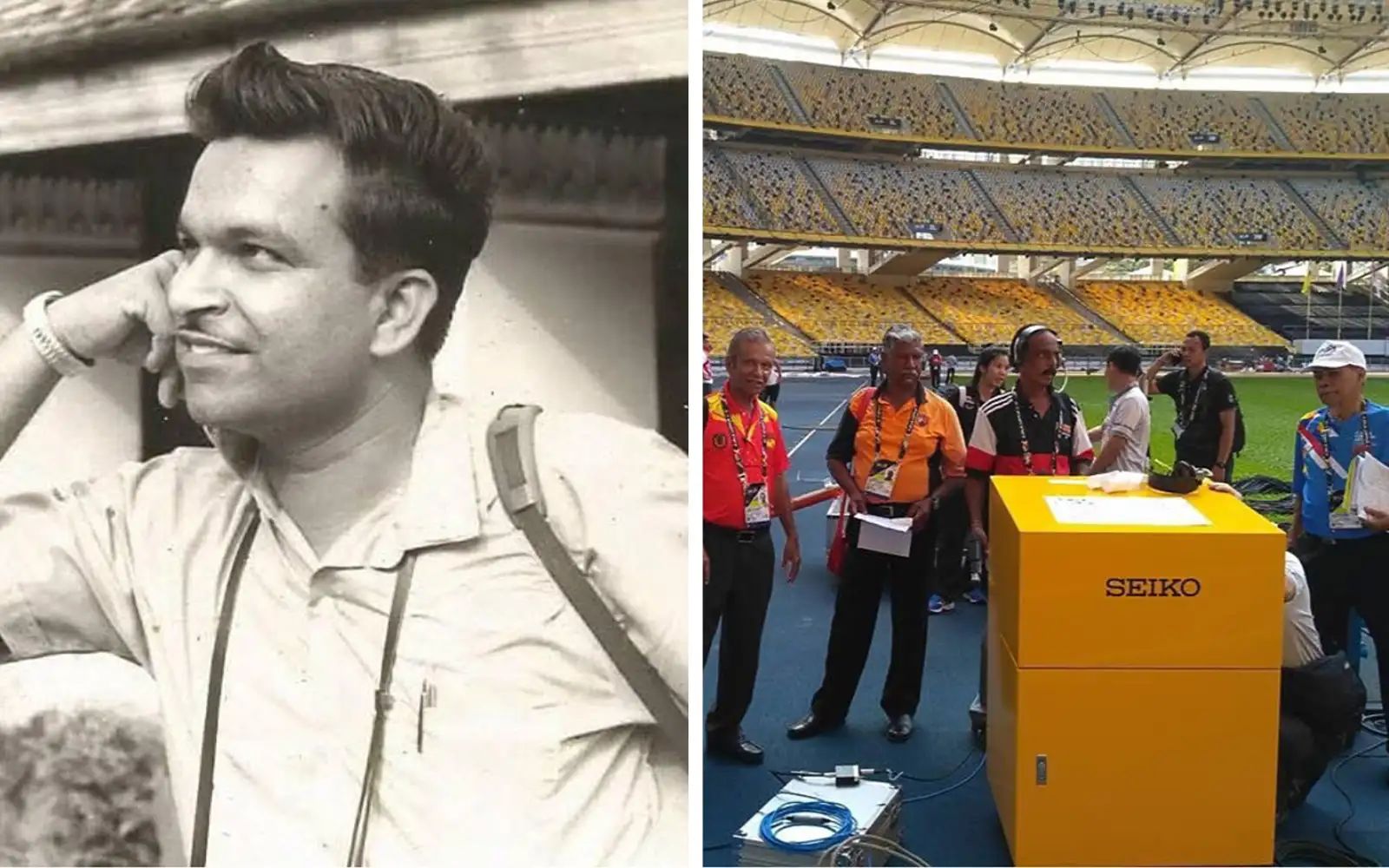
Athletics, even then, was a passport to a wider world.
His formal involvement began in Merdeka year. In 1957, as a student at High Street Modern School, he was among schoolboys roped in to manage gates and sell $1 tickets at the first national championships at Merdeka Stadium.
The headmaster, Herman D’Souza, Malaya’s chef de mission to the 1956 Melbourne Olympics, trusted him with responsibility well beyond his years.
That trust stayed with him.
Hetish went on to teach in 14 schools, retiring in 1991 from Bukit Bintang Boys School. Teaching shaped him. So did officiating.
Both demanded patience, clarity and fairness. Both required the ability to stay calm while others felt pressure.
Learning the craft, holding the line
His officiating career unfolded gradually and deliberately. He qualified as a swimming official in 1965 and served as a turn judge at the SEAP Games that same year before becoming a starter.
In 1969, he sat for the athletics officials’ examination, qualifying as a starter in 1972. His first assignments were school meets. Bigger stages followed.
By 1977, he was starting races at the SEAP Games in Kuala Lumpur. The scale changed, but the responsibility did not.
One race from a national health ministry championships remains etched in memory. In the men’s 100m final, all eight runners were warned for false starts.
The crowd grew restless. By the ninth attempt, they were openly hostile. Hetish held his line. The race eventually went off cleanly.
Trust, tools and fairness
Over time, the numbers became staggering. Forty to 50 meets a year, tens of thousands of races.
Between 1984 and 1988 alone, he fired a starting pistol about 9,000 times.
He knew his tools intimately, right down to the lifespan of a .38 calibre pistol, which he once learned directly from the manufacturer was only 5,000 shots after writing in for spare parts.
The tools would change, and Hetish changed with them. Pistols gave way to electronic start systems, sensors replaced smoke and precision became digital.
He adapted without complaint, learning new technology while preserving the heart of the craft: timing, awareness and judgment.
Athletes trusted him with years of preparation and that trust was absolute.
Months of training, sacrifice and hope rested on a moment he controlled. Hetish understood that responsibility instinctively.
Fairness, for him, was never merely procedural. It was ethical. A moral act.
To rush a start was to cheat the field. To ignore a twitch was to rewrite effort unjustly. The rulebook mattered, but conscience mattered more.
“Every race was memorable,” he says. “Each start carried consequence.”
A legacy still in motion
Off the track, he found the same values among fellow officials. There is deep camaraderie in officiating, a shared understanding that their work enables others to shine.
At the recent Malaysia Athletics awards, Hetish received a certificate of appreciation for lifelong service, alongside Tham Siew Kai, Sivalingam Vallipuram and Mohamad Awang.

Though awaiting a carry-and-use licence, Hetish remains active as a mentor.
His last assignment as a starter came last year at a Hulu Langat schools meet. At the 2017 SEA Games in Kuala Lumpur, he served as referee for starts.
His eye–finger coordination, he says with a smile, remains “perfect”, and he still harbours a quiet hope of being called upon again as referee for starts when the SEA Games return to Malaysia next year.
At home, the legacy is personal. His daughter Anita grew up following him to stadiums, especially Merdeka Stadium, sitting among timekeepers and officials.

She remembers the routines, the people, and the small joy at the end of long days — an ice-cold Milo from the van.
When Malaysia Athletics honoured him, she spoke of gratitude, pride and a life defined by integrity.
Hetish started countless runners, including legendary sprinter Rabuan Pit, across eras when Malaysian athletics found its rhythm and voice.
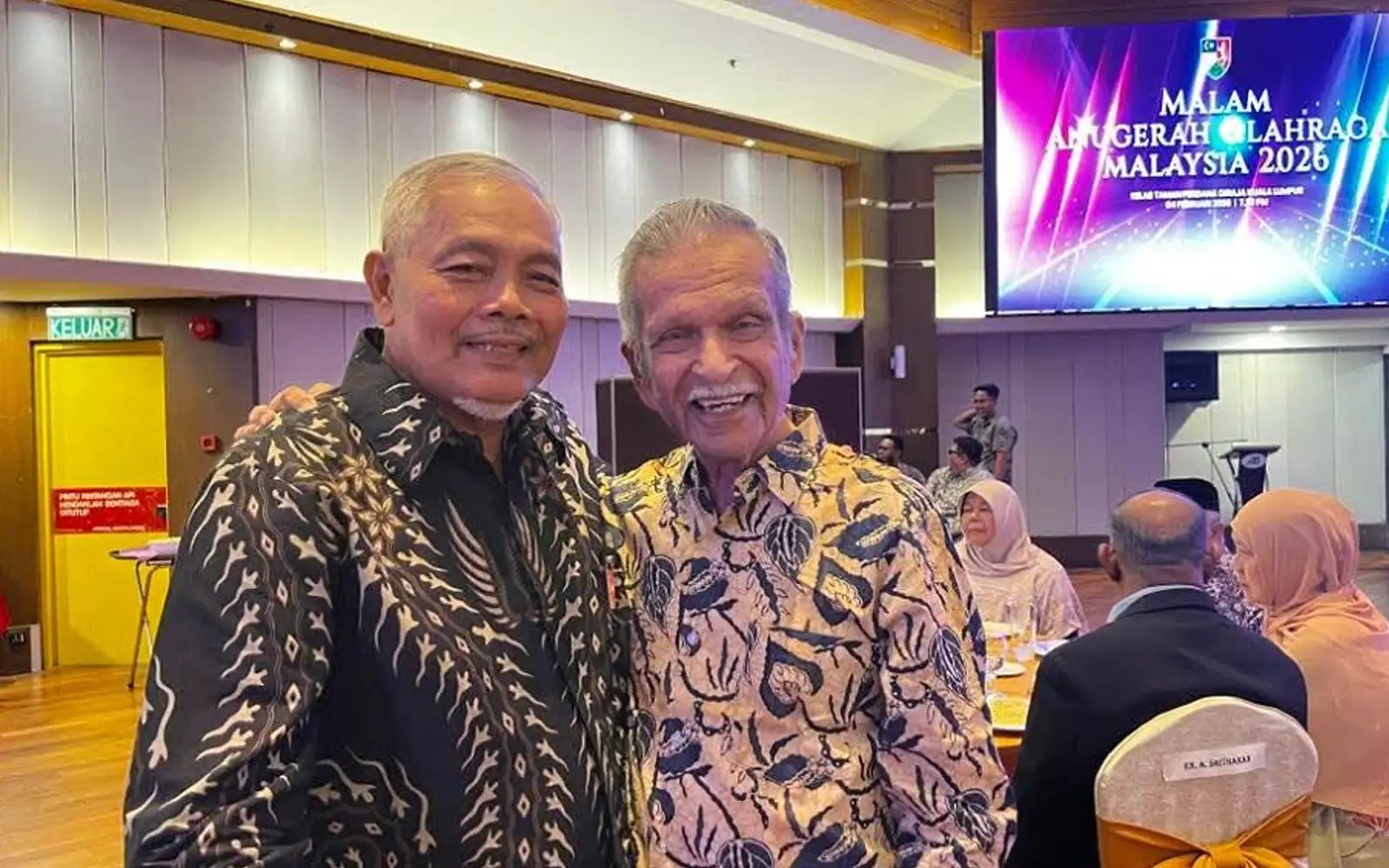
He released them all the same way: calmly, precisely, without seeking notice.
The stadium still quietens when a starter steps forward. The ritual remains unchanged: athletes settle and breath holds. Somewhere, a decision is made.
For generations of Malaysian athletics, that decision belonged to Hetish Sharma, the man who stood between preparation and possibility, and gave the sound that set them free. - FMT

No comments:
Post a Comment
Note: Only a member of this blog may post a comment.