


The directive to replace the term “LGBTQ+” with “deviant culture”, as reportedly announced by Deputy Religious Affairs Minister Marhamah Rosli, is not a minor semantic adjustment. It is a political act with legal and social consequences.
When the state labels a segment of its own population as “deviant”, it does more than articulate moral disagreement. It codifies stigma. It signals that certain citizens stand outside the circle of dignity and equal protection.
State language carries institutional authority. It shapes enforcement culture, public attitudes and bureaucratic behaviour.
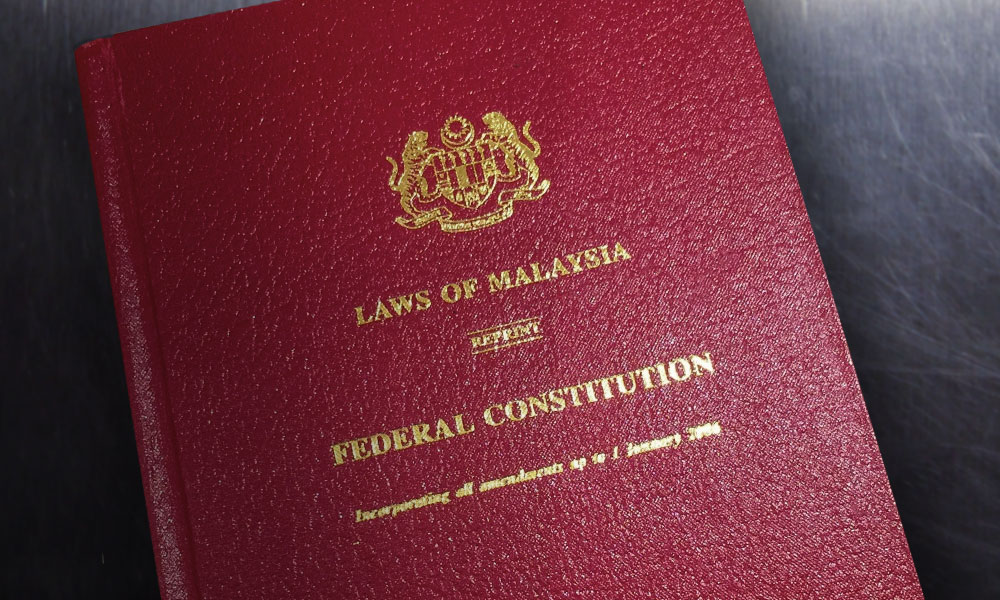
The Federal Constitution does not recognise categories of “acceptable” and “deviant” citizens. Article 8(1) guarantees that all persons are equal before the law and entitled to equal protection.
This is not ornamental phrasing. It is the moral and legal spine of our democracy. Once official discourse marks some citizens as inherently lesser, that spine begins to bend.
Recent statements by the minister in the Prime Minister’s Department (Religious Affairs) have emphasised that religion must remain central to building a united nation amid economic and social challenges. Religion holds a powerful and respected place in Malaysian society.
Yet the ethical tradition of Islam is rooted in justice (‘adl), compassion (rahmah) and the removal of harm. When religious authority is exercised through labelling rather than reform, it risks weakening those principles.
True moral leadership requires confronting corruption, violence and inequality with the same urgency used to police identity.
Systemic corruption
The deeper issue is not vocabulary. It is selective moral power.
The language of “deviance” has been directed at identity rather than at conduct that demonstrably harms others.
Malaysia records, on average, five rape cases reported every single day. Each case represents a woman or child whose safety was violated and whose dignity was compromised.
These are not abstract social anxieties. They are acts of violence. Yet the national framing of sexual violence remains technical and reactive. There is no comparable national urgency declaring rape a structural crisis demanding sustained reform.

Billions of ringgit have been lost to corruption across administrations. Corruption is not a private moral lapse. It is an abuse of public trust that quietly strips resources from hospitals, shelters, enforcement agencies and social protection systems. It weakens institutions meant to safeguard citizens.
Still, systemic corruption is rarely described in sweeping moral language, despite its measurable national harm.
Women who secure court-ordered maintenance frequently find themselves navigating years of enforcement proceedings while raising children alone. Legal recognition without enforcement offers little relief. Economic abandonment destabilises families and entrenches inequality.
Yet such conduct does not provoke the same urgency of moral condemnation.
Gender-related killings of women occur in patterns that Malaysia does not systematically classify as femicide. Without consistent recognition, prevention remains fragmented. The readiness to name identities as deviant stands in sharp contrast to the hesitation to name structural violence against women.
Selective moral outrage
These contrasts reveal a troubling imbalance. In a constitutional democracy, the distinction between identity and conduct is fundamental. Criminal acts such as rape, corruption, violence and abandonment warrant moral clarity and legal accountability. Identity does not.
When the state reserves its strongest moral language for who people are rather than for harm that can be measured, prevented and prosecuted, governance shifts from protection to performance.
Article 8 does not promise equality only to those who conform to prevailing norms. It promises equal protection to all persons. Constitutional democracy is tested not when rights are comfortable, but when they are contested.
Selective moral outrage weakens institutional credibility. It suggests that labelling is easier than reform, and that symbolism is easier than enforcement.
Corruption erodes equality before the law. Weak enforcement of maintenance orders erodes equality before the law. Gaps in addressing sexual violence erode equality before the law. Failure to systematically confront gender-related killings erodes equality before the law.

Renaming communities does not strengthen governance. It does not reduce violence. It does not restore stolen public funds. It does not ensure that children are supported. It does not make women safer in their homes.
It does, however, make exclusion visible.
A government that seeks moral authority must demonstrate it through consistent protection of the vulnerable and unwavering commitment to accountability. Moral language untethered from structural reform risks becoming an instrument of division rather than a guide to justice.
Human dignity is not divisible. Equality before the law is not selective. The true measure of governance is not who can be labelled “deviant”, but whether power is exercised with fairness, restraint and courage - especially when it is hardest to do so.
AMEENA SIDDIQI is SIS Forum (Malaysia) communications manager. With a strong background in publishing, media, and communications, she plays a pivotal role in advancing SIS’s mission to promote women’s rights within the Islamic framework in Malaysia. Her work is driven by a commitment to amplifying voices, fostering dialogue, and advocating for meaningful change.
The views expressed here are those of the author/contributor and do not necessarily represent the views of Malaysiakini. - Mkini

No comments:
Post a Comment
Note: Only a member of this blog may post a comment.