


The proposed constitutional amendment seeking to limit the prime minister's tenure does not undermine the powers of the Yang di-Pertuan Agong or the Conference of Rulers, electoral reform watchdog Bersih said.
In response to Perikatan Nasional MPs who opined the contrary yesterday, Bersih chairperson Faisal Aziz said that the Constitutional Amendment Bill falls outside the scope of Article 159(5), which specifically protects provisions that cannot be amended without the consent of the Conference of Rulers.
These include the position of Islam, special privileges, the national language, and citizenship rights.
"Article 159(1) provides that the Constitution may be amended. This affirms that the Federal Constitution is a living document that evolves in accordance with the passage of time.
"Furthermore, Article 159(5) specifically identifies special provisions that may not be amended without the consent of the Conference of Rulers.
“These cover matters including the position of Islam, special privileges, the national language, citizenship, and related provisions," Faisal said in a statement posted on Facebook and X.
He stressed that the bill's singular purpose is to limit executive power and prevent the prolonged concentration of authority in any one prime minister, not to diminish the constitutional standing of the monarchy in any form.
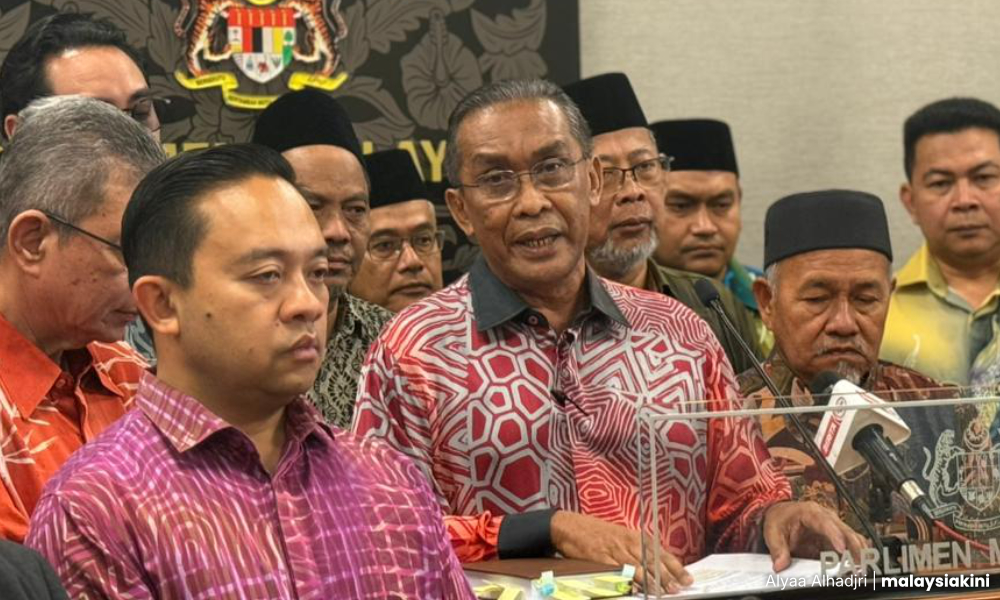
The PN MPs yesterday urged Putrajaya to postpone its plan to table two institutional reform bills next week, concerning the separation of the attorney-general's (AG) role from the public prosecutor (PP) and the prime minister's term limit.
READ MORE: Parliament vets public prosecutor or we don't vote - 10 PKR MPs
At a press conference in Parliament, PN's chief whip Takiyuddin Hassan urged the government to return to the drawing board with its proposals and subject them to scrutiny by a Parliamentary Special Select Committee (PSSC) first.
On limiting the prime minister's term to 10 years, Takiyuddin said the opposition is concerned about the bill's constitutionality, as it could undermine the power vested in the king.
Citing Article 40(2)(a) of the Federal Constitution, the PAS lawmaker said the king has the discretion to appoint a prime minister from among MPs whom he believes have the majority's support.
Subject to constitutional provisions
However, in his statement today, Faisal reminded that the prime minister's position is subject to the provisions of the Constitution regarding the discharge of responsibilities and functions, including the manner of appointment.
"Article 43(2)(a) prescribes the procedure by which the Yang di-Pertuan Agong appoints the prime minister.
“The existence of this procedure explains that certain conditions are already in existence for the Yang di-Pertuan Agong to appoint a prime minister. This principle is consistent with the constitutional monarchy system that we practise.
"The royal address of the Yang di-Pertuan Agong at the opening of Parliament on Jan 19, 2026, clearly expressed His Majesty's support for limiting the tenure of the prime minister to 10 years. This royal address explains that there is no conflict between this amendment and the powers of the Yang di-Pertuan Agong," Faisal added.
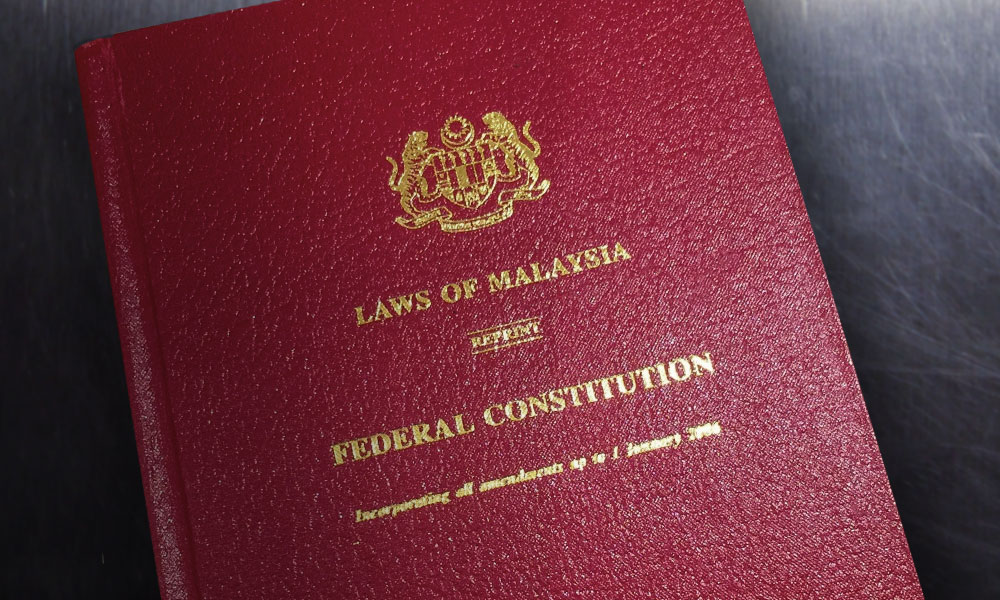
He said that the proposed amendment represents a meaningful leap forward in institutional reform and must not be politicised by any party. - Mkini

No comments:
Post a Comment
Note: Only a member of this blog may post a comment.