


In 2005, when Anwar Ibrahim was in the political wilderness, claiming to be a victim of political manoeuvrings, he spoke at the Law Asia conference in Brisbane, declaring: “There are only two kinds of lawyers - those who know the law and those who know the judge.”
For good measure, he explained: “So, all these years behind bars have made me realise what it's like to be at the receiving end of unjust laws administered by unjust politicians. The earlier charge sheet was long, but there was to be no trial.
“There was no need for a defence lawyer because I wasn't going to be given the opportunity to make my case and get myself out. I was put there pursuant to an executive order signed by the home minister.
“This was my first real experience of the interplay of law and politics: the law was unjust, and the politics was expedient.”
Four years later, still in the wilderness and another sodomy trial looming, he quoted Austrian Nobel Prize laureate Friedrich August von Hayek, who held that government in all its actions is bound by rules fixed and announced beforehand, which make it possible to foresee with fair certainty how the authority will use its coercive powers in given circumstances, and to plan one’s individual affairs based on this knowledge.
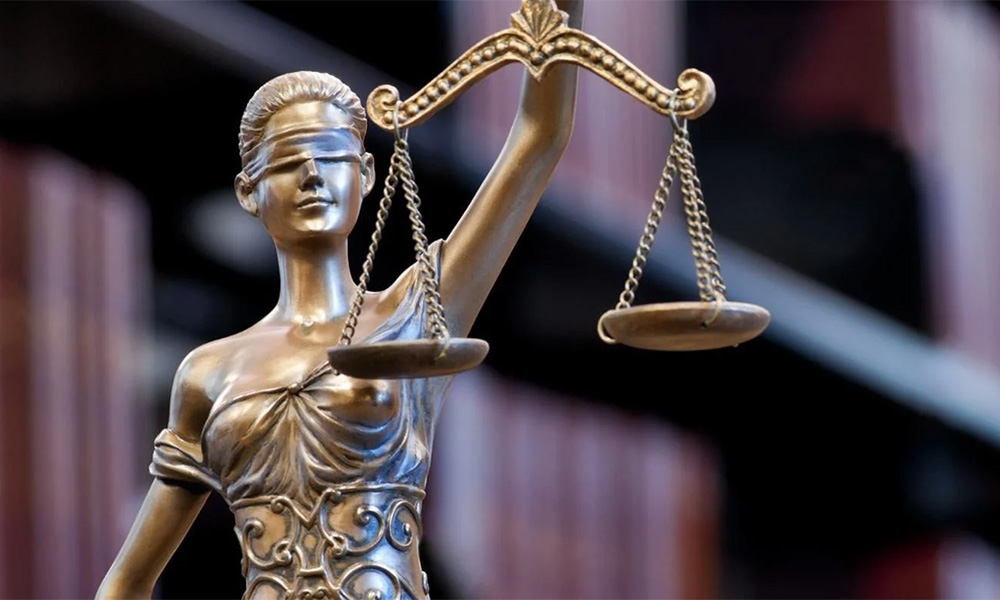
The rule of law refers to the fundamental principles that govern the exercise of power within a society. At its core, it means that the authority of the government and its officials must always be derived from law - whether expressed in legislation or upheld through judicial decisions of independent courts.
Our system of government rests on a basic principle: no one, including lawmakers, may commit an act that constitutes a legal wrong or restricts a person’s liberty unless they can point to a valid legal justification.
Since then, Anwar has used the phrase “uphold the rule of law” regularly, including saying it at a Chinese New Year lunch that Malaysia must be governed by the rule of law, not by “whims and fancy”, while upholding mutual respect in its multiethnic and multireligious society.
As calls for a royal commission of inquiry into claims of a “corporate mafia” within the MACC mounted, his aide, the political secretary in the Finance Ministry, Kamil Abdul Munim, argued that such a high-level inquiry should not rest solely on speculation or innuendo and would require substantial proof rather than unsubstantiated claims.
Such prophetic words must certainly be followed by “I must practise what I preach”, but this is hardly seen or exercised.
When a balloon seller is treated the same way as a religious preacher who set up shop along the five-foot way, with their tables and other paraphernalia seized, we applaud for uniform application of the law. Yes, the rule of law is in place.
When one gets reprimanded and his ware confiscated, while the other is deemed “innocent” and gets back what was seized, it is seen otherwise - favouritism or bias towards one party over another.

When a man whose defence had already been called on 47 charges of corruption and money laundering sees those charges withdrawn, while another individual’s representation to withdraw charges under the Peaceful Assembly Act (PAA) 2012 is rejected, it opens the door to debate about entitlement and equality before the law.
Walk the talk
The rule of law is not a decorative phrase to be trotted out in speeches - it is the lifeblood of a just society. When leaders such as Anwar invoke thinkers like Hayek, they remind us that government must act according to predictable, transparent rules - not whims, favouritism, or selective enforcement.
Yet, the true test lies not in quoting ideals but in living them through consistent practice – by leading by example.
Uniform enforcement - whether against a balloon seller or a preacher - demonstrates fairness and strengthens public trust. But when enforcement bends, when charges are withdrawn for the powerful while ordinary citizens face rejection, the principle collapses into selective justice.
Such disparities erode confidence in institutions and reduce the rule of law to a slogan, wielded for political convenience rather than applied as a universal safeguard.
The credibility of governance rests on impartial institutions and independent courts. Without them, the promise of equality before the law becomes hollow, and society risks sliding into a system where entitlement, influence, and proximity to power dictate outcomes.

The rule of law must therefore be more than rhetoric - it must be the daily discipline of those in authority, a standard applied without fear or favour.
Ultimately, the measure of leadership is not how often one proclaims “uphold the rule of law,” but whether those words are embodied in action.
Only when justice is blind to status, wealth, and political allegiance can Malaysia claim to be governed by law rather than by men. - Mkini
R NADESWARAN is a veteran journalist who tries to live up to the ethos of civil rights leader John Lewis: “When you see something that is not right, not fair, not just, you have to speak up. You have to say something; you have to do something.” Comments: citizen.nades22@gmail.com.

No comments:
Post a Comment
Note: Only a member of this blog may post a comment.