


Muda has urged lawmakers to ensure a thorough review of the proposed Constitutional Amendment Bill seeking to separate the roles of the attorney-general (AG) and public prosecutor, warning that stronger safeguards should be in place to ensure independence.
Muda secretary-general Ainie Haziqah Shafiee stated that while the party welcomes the reform in principle, the bill requires more comprehensive scrutiny before it is voted on in Parliament.
“The primary goal of this reform must be to ensure that the public prosecutor and the AG are truly independent from executive influence, particularly from the prime minister,” she said in a statement today.
Ainie pointed out that the Judicial and Legal Service Commission, which is in charge of nominating the public prosecutor to the Yang di-Pertuan Agong, is chaired by someone who is appointed by the prime minister.
Thus, executive influence still exists indirectly within the nomination stage, she said.
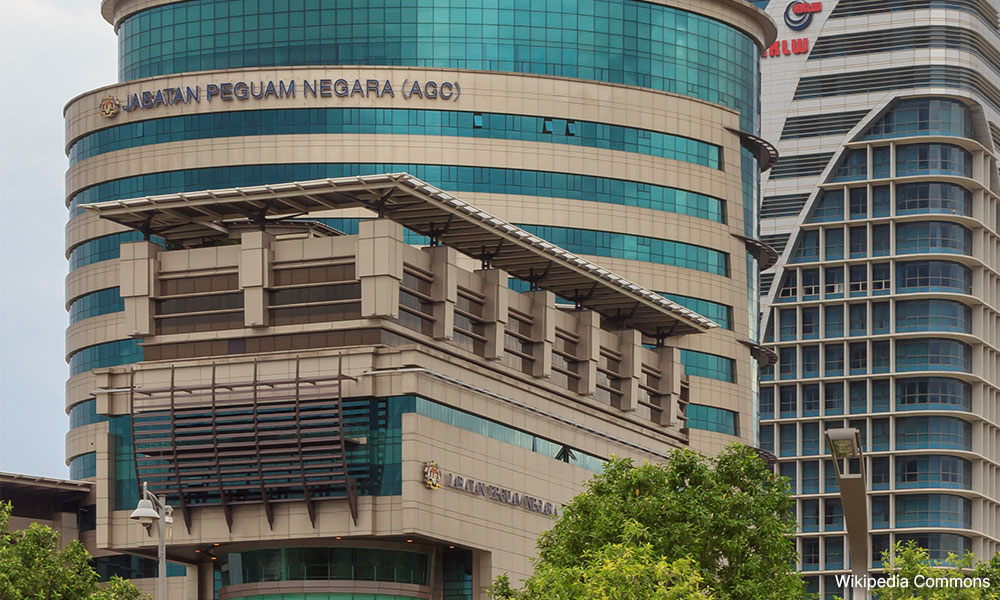
Ainie, a lawyer by profession, raised concerns about the commission’s composition, which would include the AG and solicitor general as members.
She said the composition of the Judicial and Legal Service Commission must be reassessed to reduce the risk of conflicts of interest, especially as the commission is also tasked with handling disciplinary matters involving the public prosecutor.
The party had also criticised the bill for its lack of parliamentary oversight when vetting and confirming the appointment of the public prosecutor.
Muda proposed that the appointment of the public prosecutor be subject to a bipartisan Parliamentary Special Select Committee (PSSC) screening process. The appointed public prosecutor should also be required to report to Parliament on performance and decisions involving matters of public interest.
Concerns raised
Ainie further expressed concerns over the bill’s use of the phrase “at the discretion” of the Yang di-Pertuan Agong in appointing the public prosecutor.
This is opposed to the usual formulation of “acting on advice” as applied to other senior appointments, such as the AG and chief justice.
The change in phrasing raises fundamental questions about whether a specific exception is being created for the public prosecutor’s appointment, she said.
Ainie also reiterated that several Parliament backbenchers had raised similar concerns, that a proposed seven-year term for the public prosecutor could entrench power in the office.
“We should never forget that power tends to corrupt and absolute power corrupts absolutely,” she said.
In light of these concerns, Muda called for the second reading of the bill to be postponed and referred to a PSSC for further revisions.
“There is no point in rushing through a legal amendment that appears strong in name but lacks transparency and fails to truly liberate these key offices from undue influence,” she added.
Proposed amendments
The bill on separating the roles of the AG and the public prosecutor was tabled in Parliament earlier this week, on Feb 23.
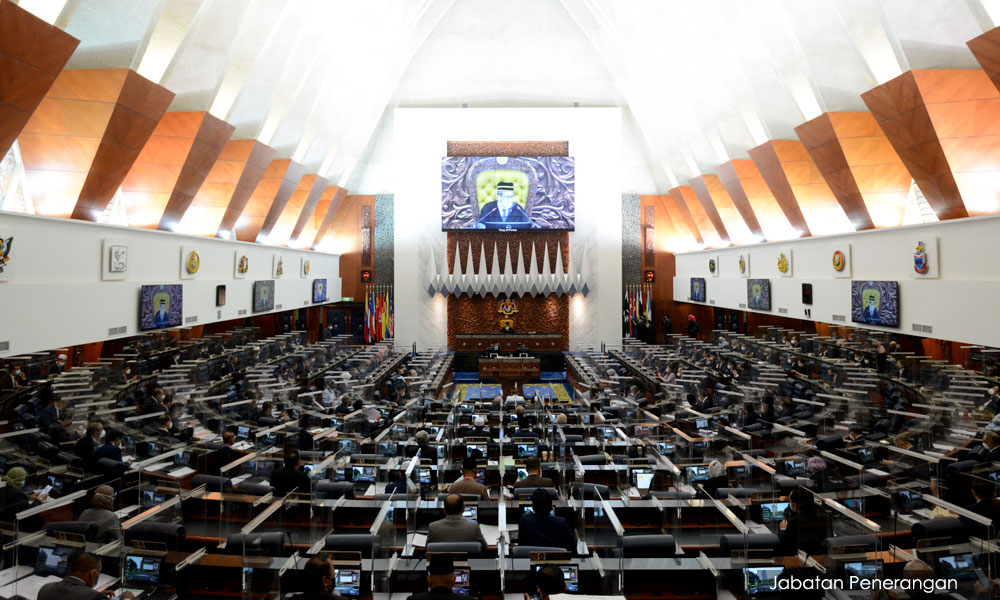
The bill proposes amendments to six constitutional articles and the introduction of two new provisions, making way for the establishment of a separate constitutional office of the public prosecutor.
The move would also transfer prosecutorial powers vested in the attorney-general to an independent officeholder.
Through the proposed amendments, the AG will no longer oversee criminal prosecutions. Instead, the new public prosecutor will have exclusive authority to institute, conduct, or discontinue criminal proceedings, except in syariah, native, or court-martial cases.
Muda’s concerns, particularly about the lack of Parliament oversight over the public prosecutor, echo those of civil society groups as well as a cohort of 10 PKR lawmakers led by Pandan MP Rafizi Ramli.
The PKR MPs have said that unless the bill is tweaked to include Parliament vetting of public prosecutor nominees, among others, they would not vote for the amendment, which requires a two-thirds majority.
The parliamentarians had referenced similar concerns raised by civil society organisations, including Bersih, the Center to Combat Corruption and Cronyism, and the Institute for Democracy and Economic Affairs.
Bersih today announced it had written to Minister in the Prime Minister’s Department (Law and Institutional Reform) Azalina Othman Said to appeal for the bill to be referred to the PSSC before it is tabled for a second reading.
“This bill touches on the core balance of power of the nation and is not merely an ordinary amendment. It must be thoroughly refined and discussed in detail before being tabled for approval,” the electoral reform group highlighted in the letter.
Azalina earlier said the amendments will be tabled for a second reading on March 2. - Mkini

No comments:
Post a Comment
Note: Only a member of this blog may post a comment.