


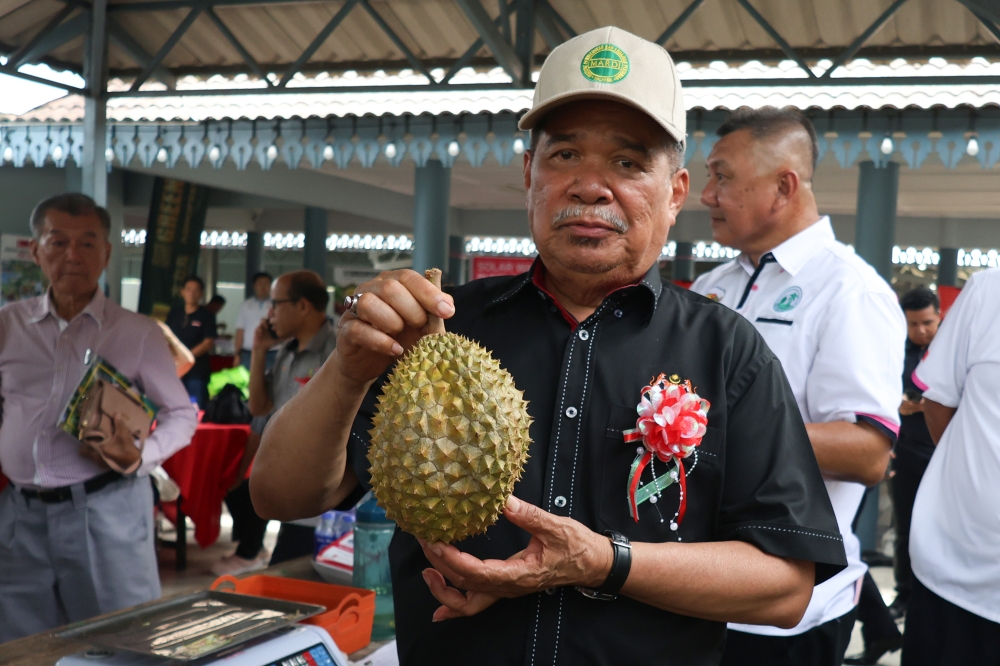
THE MUSANG King durian is a distinctly Malaysian product and cannot be sold by other countries under the same name, Agriculture and Food Security Minister Mohamad Sabu said.
He explained that Musang King is safeguarded under Malaysia’s Geographical Indication status, which legally protects the name. While similar-looking varieties may be grown elsewhere, he noted that seasoned consumers can easily tell the difference in taste.
Speaking in the Dewan Rakyat, Mohamad said he makes it a point to check on durian offerings whenever he visits China, whether for official engagements or personal trips.
Malaysia is currently in talks with the General Administration of Customs of the People’s Republic of China (GACC) to ensure stronger protection for Malaysian Musang King exports.
He added that Chinese buyers must be made aware that only durians approved by GACC and carrying the MyBest certification mark are genuine Malaysian products.
Meanwhile, China’s appetite for durian continues to surge. In 2024, the country imported a record US$7 bil (RM28 bil) worth of the fruit, three times more than in 2020, with more than 90% of global durian exports now destined for the Chinese market.
According to Chee Seng Wong, factory manager of Fresco Green, even a small fraction of China’s population buying durians represents enormous potential.
“If just 2% of consumers in China want durians, that alone is a massive market,” he reportedly said to news portal the Malay Mail.
He also pointed out a dramatic shift in farming trends. Where growers once cleared durian orchards to plant oil palm, many are now reversing course, replacing palm trees with durian due to rising demand and better returns.
Although Thailand and Vietnam remain the largest suppliers to China, Malaysia is carving out a stronger foothold with premium offerings such as Musang King, which can command prices ranging from US$14 to as high as US$100 depending on grade and quality. —Focus Malaysia

No comments:
Post a Comment
Note: Only a member of this blog may post a comment.