


If anyone assumes that the United States Supreme Court’s decision striking down President Donald Trump’s earlier tariffs would calm global economic anxiety, the opposite is closer to reality.
The ruling did not close the door on tariffs. It merely shifted the legal route through which they can be imposed, leaving markets facing a different but equally unpredictable environment.
The court rejected the use of the International Emergency Economic Powers Act as a blanket justification for global tariffs. Yet legal authority did not disappear.
Trump moved quickly to rely on Section 122 of the Trade Act of 1974, which allows temporary tariffs of up to 15 percent for 150 days without congressional approval. From a market perspective, tariff risk has not ended. It has simply changed form.
For businesses and trading partners, uncertainty is the real cost. Countries such as the United Kingdom and Australia had negotiated with expectations anchored around a 10 percent tariff environment. They now face the possibility of a uniform 15 percent rate applied across sectors without discrimination.
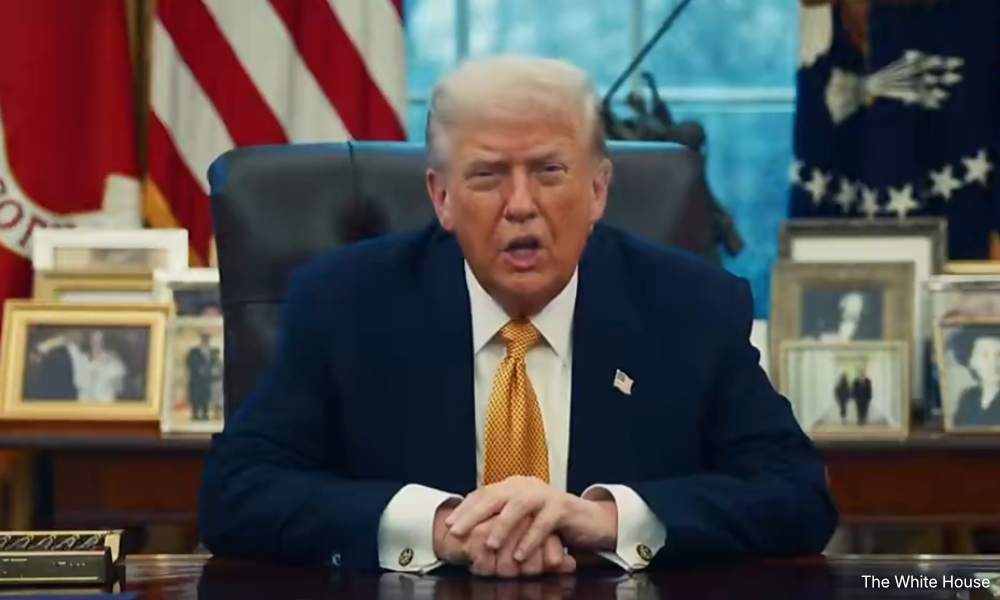
Section 122 requires equal treatment, meaning earlier negotiated advantages lose practical value overnight. Companies struggle to set prices, sign long-term contracts, or structure supply chains when policy can shift through sudden executive announcements.
The burden ultimately circles back to the American economy itself. Estimates in the United Kingdom suggest that a 15 percent tariff could add £2 to £3 billion annually in additional costs. Research indicates that between 31 and 63 percent of tariff costs are passed directly to consumers through higher prices.
Some studies place the share absorbed by American businesses and households at nearly 90 percent. This reality contradicts the political narrative that tariffs are paid primarily by exporters abroad. In practice, tariffs function as domestic taxes disguised as foreign penalties.
The legal dimension adds another layer of complexity. The ruling opens the possibility of refund claims on previously collected tariffs estimated at roughly US$130 billion, yet such processes could stretch for years.
Meanwhile, other provisions, such as Section 232, justified on national security grounds, remain available. The result is prolonged litigation combined with shifting tariff tools, creating a climate of defensive strategy and elevated costs for global commerce moving into 2026.
‘Double tariff’ claims
Claims circulating domestically that Malaysia faces a so-called “double tariff” misrepresent how international trade law operates. When earlier tariffs are invalidated by a judicial ruling, their legal basis disappears. New tariffs do not stack on top of those that have been nullified.
Assertions that both apply simultaneously confuse political messaging with legal reality. What matters is which legal instrument is enforceable, not rhetorical framing.
This is why Malaysia’s trade strategy deserves a clearer understanding. The Agreement on Reciprocal Trade with the United States is not a concession born of weakness. It functions as an insurance mechanism against volatility.
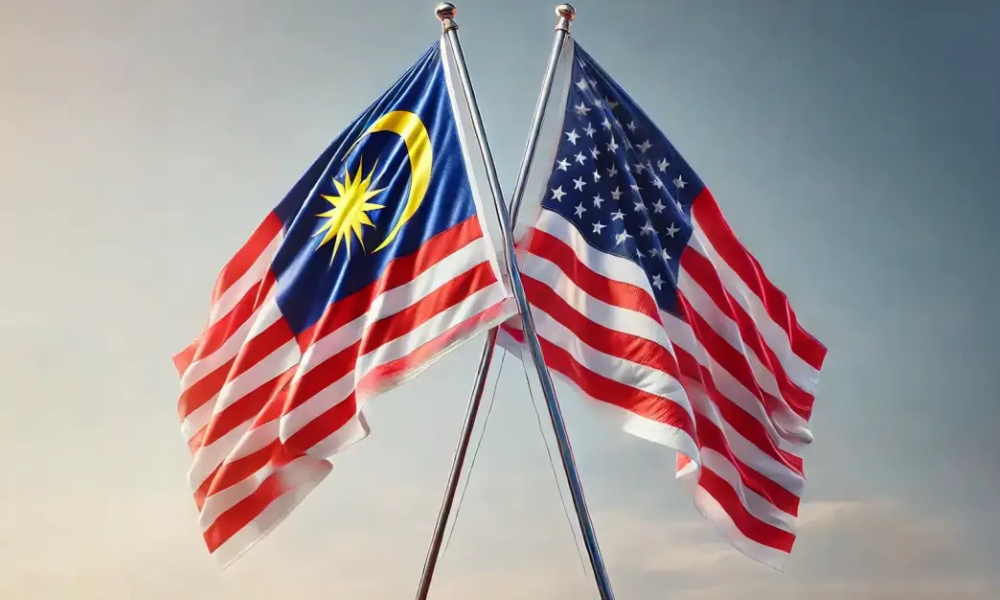
Acting early reduces exposure to sudden shifts. Waiting for prolonged legal disputes abroad to settle could leave exporters exposed to abrupt policy swings. In global trade, delay often carries higher costs than engagement.
Several principles follow from this approach. First, there is no overlapping tariff burden once the earlier measures are legally void. Second, proactive agreements help stabilise expectations for exporters and investors.
Third, timing matters more than narrative. Countries that move early often protect their economic base more effectively than those waiting for certainty that may never arrive.
The European Union has delivered a blunt message to Washington that agreements cannot be rewritten casually. Even when tariff numbers appear unchanged, the scope of affected sectors can shift dramatically.
Under earlier arrangements, a 15 percent rate applied only to defined categories, with clear exemptions for areas such as aerospace. A broad executive tariff could extend the same percentage to previously exempt sectors, transforming zero-cost access into a significant burden overnight.
Consider a European aerospace supplier exporting components worth US$100 million annually at zero tariff. A sudden expansion of a 15 percent tariff would raise costs by US$15 million each year.
Margins tighten, prices rise, contracts require renegotiation, and investment decisions stall. The number remains 15 percent, yet uncertainty itself becomes a hidden tax on trade.
Straightforward lesson
The lesson is straightforward. Stability is more valuable than headline tariff levels. Businesses can adapt to known costs, but they cannot plan around unpredictability. Legal disputes, executive authority, and political signalling now interact in ways that blur the line between economic policy and domestic politics.
Global trade in 2026 will likely be defined less by tariff size than by policy credibility. When rules appear temporary, investment hesitates. When commitments appear reversible, supply chains diversify away from risk. In that sense, the Supreme Court decision did not resolve uncertainty. It redistributed it.
For countries like Malaysia, the rational response is not rhetorical escalation but strategic positioning. Trade policy today is less about defending ideology than managing exposure. The world economy is not entering a tariff-free era. It is entering an era where tariffs are tools of negotiation, signalling, and domestic politics.
Understanding that distinction is the first step toward navigating it successfully. - Mkini
MAHATHIR MOHD RAIS is a former Federal Territories Bersatu and Perikatan Nasional secretary. He is now a PKR member.
The views expressed here are those of the author/contributor and do not necessarily represent the views of MMKtT.

No comments:
Post a Comment
Note: Only a member of this blog may post a comment.