



THIS is perhaps more relevant to Chinese Malaysians – both the older generation and those with Chinese education background – who have been accused of being unpatriotic and often told to “balik Tongsan” (return to China) for their poor command of the national language.
On the other extreme, those who are fluent in Bahasa Melayu/Malaysia (BM) are viewed with suspicion – as if they are trying to trick or con the Malays.
Both scenarios have led a dumbfounded licenced counsellor to wonder what actually is expected of non-Malays insofar as BM proficiency is concerned.
“So, now non-Malays can’t speak BM?” wondered Ann Wong who is also a digital creator in a Facebook post.
“Didn’t they just get angry that day, lambasting that every Malaysian citizen regardless of race so long as they’re Malaysians, must speak BM – the official language of Malaysia?”
Her poser une question came on the back of an observation by town planner Razak Boss (@razak_boss) on Threads of a trend whereby many non-Muslim influencers “have suddenly become fluent in BM”.
“This is till they’re able to use slangs, cite Quranic phrases or to the extent of making content with impression that they wish to convert (to Islam) just to attract Muslim audience,” remarked the self-proclaimed “Good Looking Corporate Player” with MBA who is active on Instagram, Facebook and Threads.
It’s true that our people (the Malays) are overly generous. Very tolerant. Why is this so? Because we’re a BIG market. Big money. Strong buying power.
“The influencers are aware … if they wish to enrich themselves quickly, penetrate the Muslim market. Rapid engagement. Explosive sales.
Echoing the confusion expressed by Wong, a presumably Muslim marketing consultant concurred that there has been somehow a state of inconsistency of what is expected of non-Malays.
“If you are not fluent in BM, you’re accused of not trying to adapt. If you’re fluent in BM and understand the (Malay) culture, we accuse them of having an agenda to target Muslims,” opined Fat Deadpool who previously studied at the Malaysia France Institute (UniKL-MFI).
BM is the national language. Everyone has the right to use it and should be encouraged to do so. If others try to bring themselves closer to you through language and culture, that should be seen as an effort at unity, not something suspicious.
Sometimes the problem is not their actions but our own prejudices.
Whether the crux of the matter is about language or “riding on religion”, one marathon freak reacted to the suspicion bluntly yet hilariously.
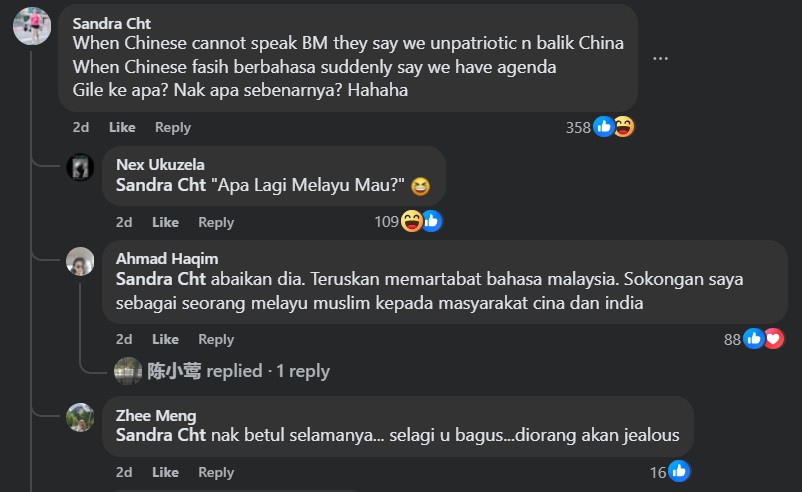
“When the Chinese cannot speak BM, they say we’re unpatriotic and balik China. When Chinese fasih berbahasa (speak fluently), (they) suddenly say we have agenda. Isn’t this crazy? What do you really want? Hahaha”.
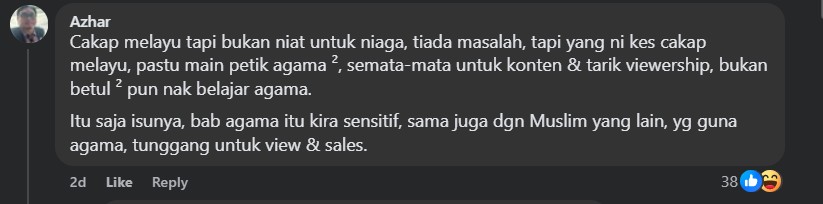
This is when some commenters clarified that while it is fine to be fluent in BM to facilitate a business transaction, “it’s insincere to leverage religion for the sake of content or attract viewership”.
“That’s the only issue for the religious aspect is sensitive; the same applies to Muslims who use religion to gain views and sales.”
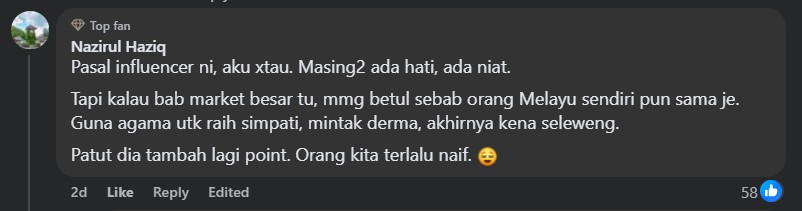
While acknowledging that tapping the vast Malay market could be the underlying intention, one Muslim commenter lamented that “the Malays themselves are abusing religion to gain sympathy by seeking donations which eventually leads to misappropriation of funds”.
“Perhaps another point should be added. Our people are too naive.  ”
”
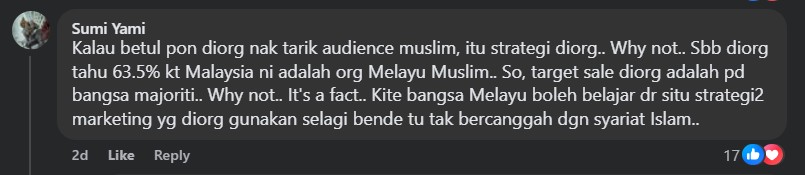
Well, another commenter urged the Malays “to learn a thing or two from the marketing strategies” of the so-called non-Muslim influencers who are well-aware that the Malay Muslims make up 63.5% of the Malaysian populace “so long as they’re not in conflict with Islamic practices”.
- focus malaysia

No comments:
Post a Comment
Note: Only a member of this blog may post a comment.