


The Perak Mufti Department has called on Muslims not to speculate on the date of 1 Syawal and to await the official announcement from the authorities.
This comes as concerns are rife on social media that 1 Syawal this year may fall on March 20 (Friday) instead of the expected March 21 (Saturday).
This would mirror the situation in 2022 when Aidilfitri was celebrated unexpectedly a day earlier than anticipated.
The department urged Muslims to remain calm and understand that differences in projections are normal within the discipline of falak (Islamic astronomy).
“The Hijri calendar distributed to the public is prepared based on hisab (astronomy calculations) data as a guide for annual planning.
“However, the official determination of 1 Syawal is subject to the rukyah hilal (new moon sighting) process on the evening of 29 Ramadan, as well as the declaration by the relevant authority, and any discrepancy between calendar projections and the official decision is not unusual in the system of determining the beginning of Islamic months,” the department said on Facebook.
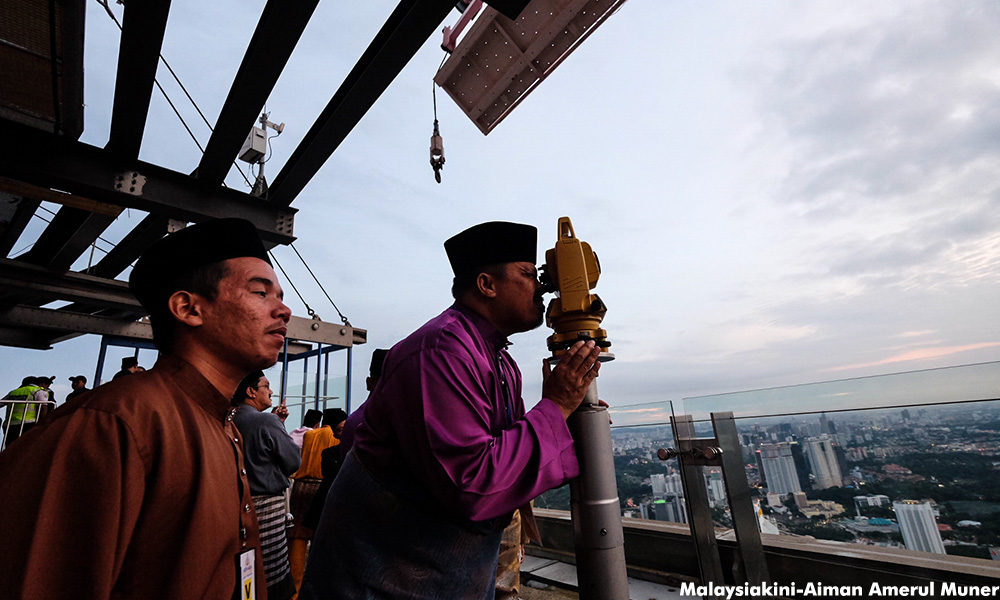
It added that Malaysia adopts an integrated rukyah and hisab approach. From the perspective of falak, when the hilal (crescent moon) is above the horizon at sunset, it generally has the potential to be sighted.
However, in Malaysia, the visibility of the hilal depends on several technical parameters such as its altitude and the distance between the moon and the sun (elongation).
“A hilal that is too low or close to the horizon has a very weak visibility potential even if it theoretically exists. Therefore, the presence of the hilal above the horizon does not necessarily guarantee physical visibility,” it said.
Weather conditions
The department also explained that weather conditions such as thick clouds, haze, or atmospheric disturbances pose major challenges in the observation process.
The department noted that although calculations may indicate that the hilal has the potential to be sighted even if it does not meet the criteria, weather factors may obstruct actual visibility.
“Conversely, under very favourable atmospheric conditions - which are rare in Malaysia - the hilal may sometimes be successfully sighted. This shows that the determination does not rely solely on calculation data, but also on actual field observations,” it added.
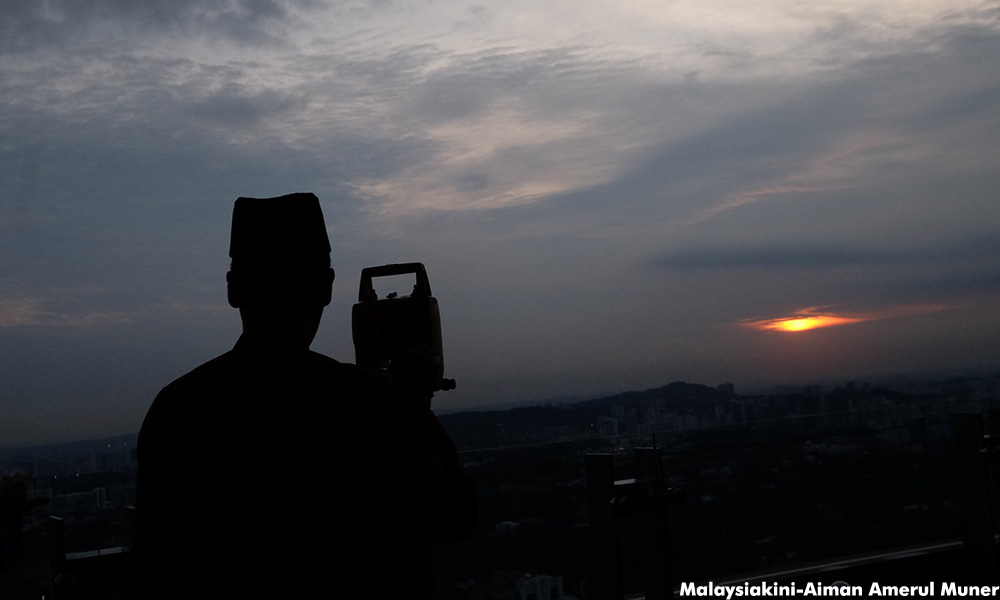
The statement further stated that hilal parameters differ each year, and this year the position of the Syawal hilal is lower and more difficult to observe compared with 2022, making it technically more difficult to sight.
Nevertheless, the official decision will depend on actual observation findings, the established verification process, and the announcement by the Keeper of the Rulers’ Seal.
The Perak Mufti Department also encouraged the public to make Aidilfitri preparations in a planned and early manner to avoid last-minute difficulties.
- Bernama

No comments:
Post a Comment
Note: Only a member of this blog may post a comment.