


Questions remain over what will become of the residents and their properties at the centre of Malaysia-Indonesia border negotiations in south Sabah and north Kalimantan, even as the government cleared the air on the issue yesterday.
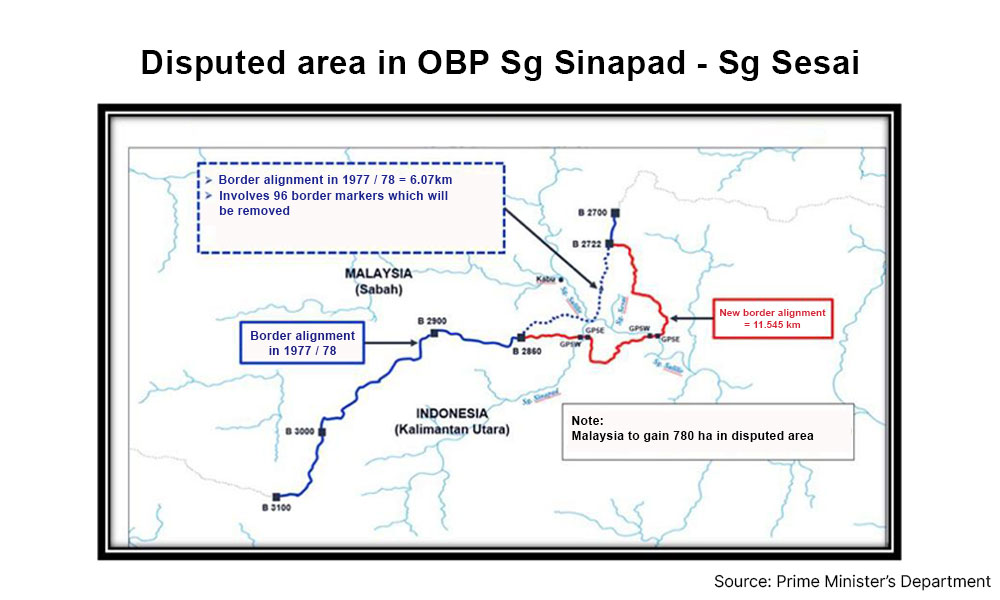
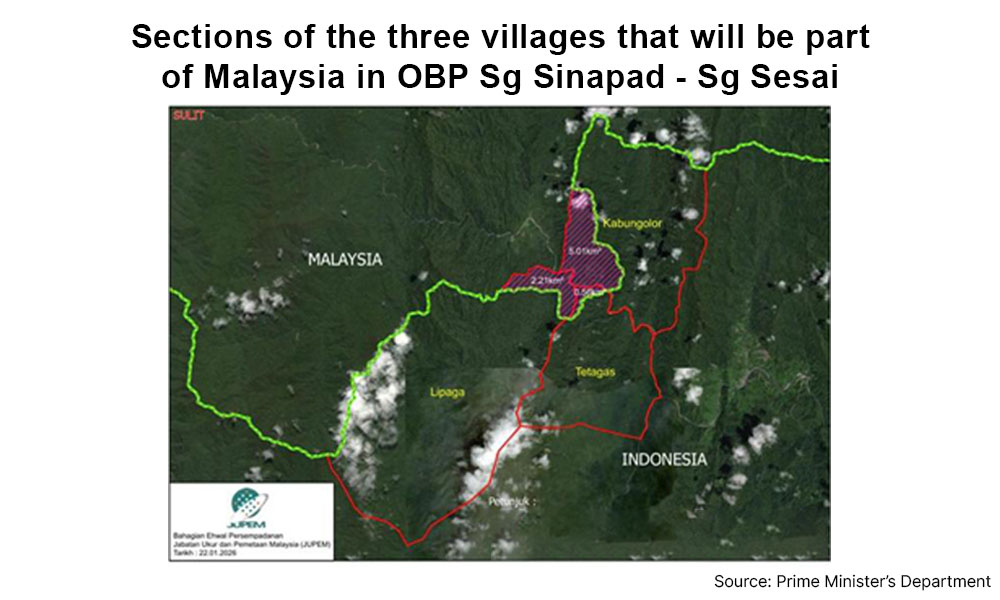
Prime Minister Anwar Ibrahim told the Dewan Rakyat that of the 5,987ha of land that had been disputed and negotiated at the southwestern border of Sabah, 780ha of it is expected to fall under Malaysian jurisdiction.
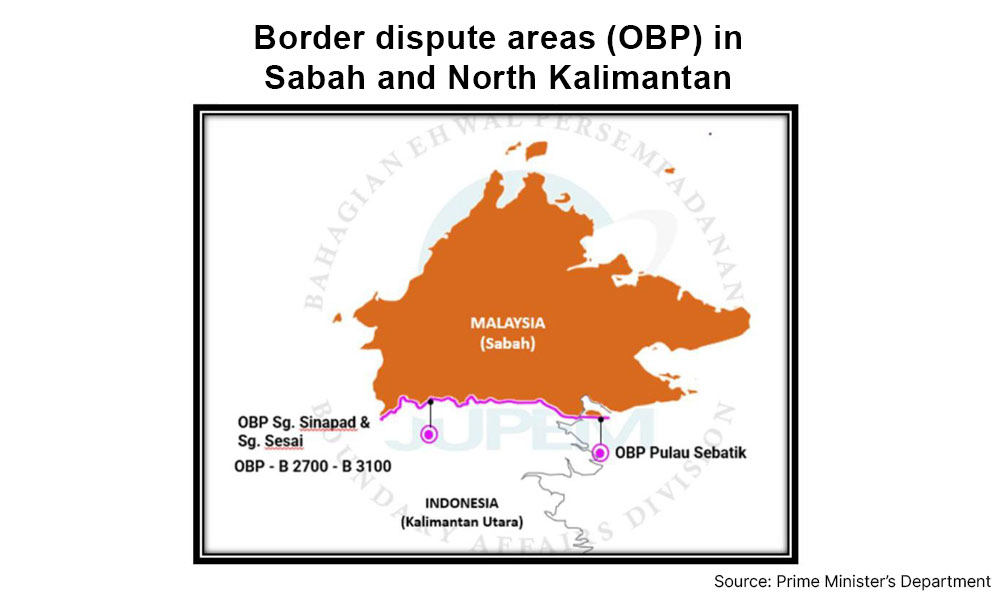
This area is classified as the Sungai Sinapad-Sungai Sesai OBP (outstanding border problem).
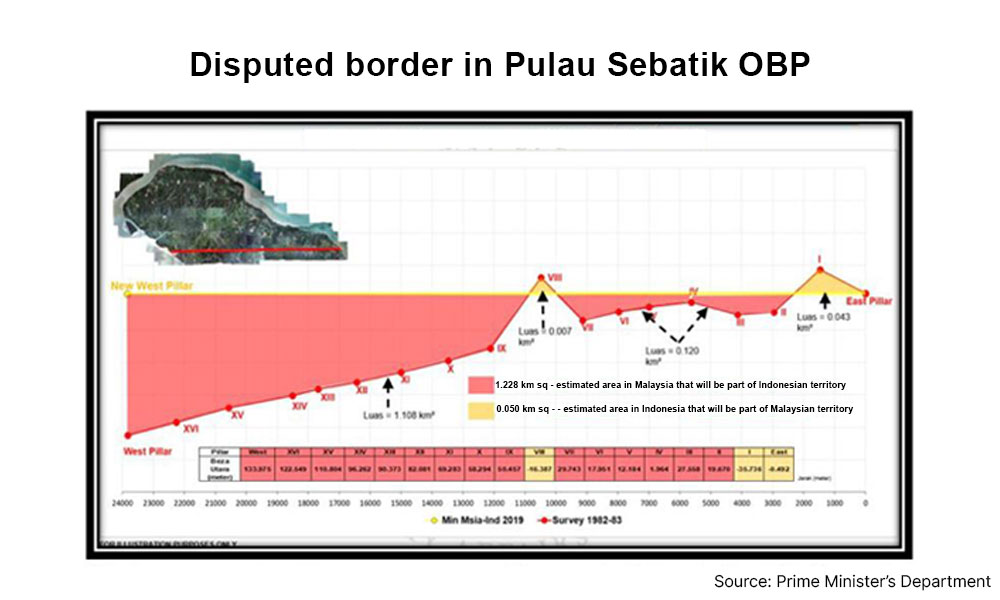
In Pulau Sebatik OBP, which lies off the coast of Tawau, the current border divides the island almost in half, with the northern part sitting in Malaysia and the other half in Indonesia.
According to documents provided by the Prime Minister’s Department, Pulau Sebatik’s new border will move slightly southwards after negotiations are completed.
The island’s new border will place 123ha of the disputed land into Indonesian territory, while 5ha will move into Malaysia.
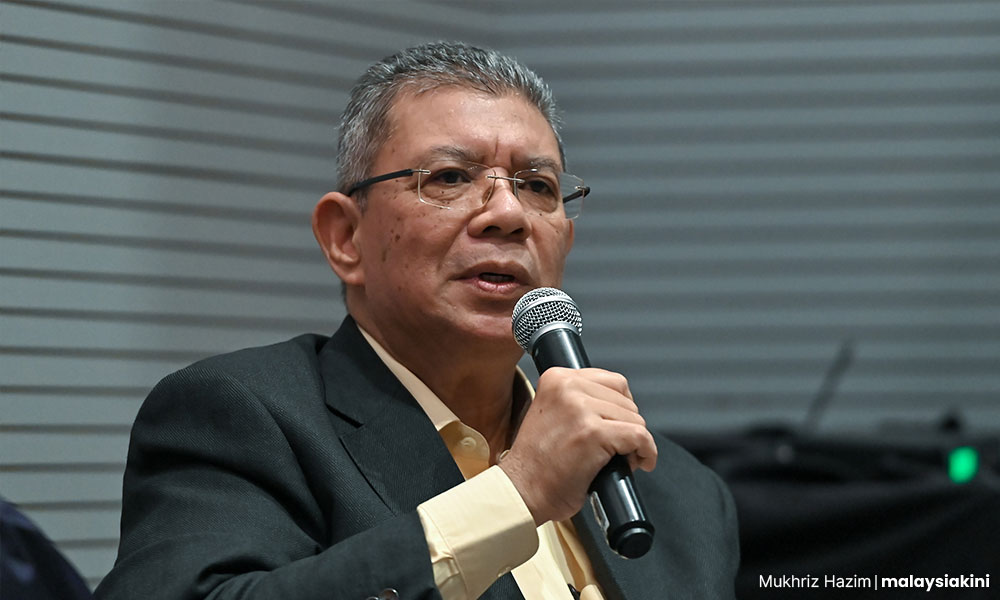
After listening to the briefing, former foreign minister Saifuddin Abdullah questioned why no details were provided on the residents on both sides who would be impacted by the negotiations.
“(The prime minister) should have stated how many people are affected by this agreement and how both governments agree to solve their issues, (provide) remedies and, more importantly, citizenship matters,” Saifuddin told Malaysiakini.
As part of the settlement, sections of three villages that had been part of Indonesia - Kabulangor, Lepaga, and Tetagas in Sungai Sinapad-Sungai Sesai OBP - will be part of Malaysian territory.
On Jan 28, a Sabah newspaper quoted Kalabakan MP Andi Suryady Bandy, whose constituency includes Pulau Sebatik, as saying that it was proposed that affected residents will have the option apply for citizenship either in Malaysia or Indonesia.
However, an Indonesian official, Irwan Sabri of Nunukan Regency in Kalimantan Utara, told Malaysiakini that this was not the case.
“Villages reported as ‘becoming part of Malaysia’ remain part of Nunukan Regency within the Republic of Indonesia, and the residents remain Indonesian citizens, even though a small portion of the land area is now legally part of Malaysia,” said Irwan, who is the regency’s head.
Neither the Malaysian government nor Indonesian officials have revealed how many people are expected to be affected once the new borders are set.
Malaysiakini has contacted the Foreign Ministry and the Natural Resources and Environmental Sustainability Ministry for information on affected residents and settlements, but has not received a response.
When asked whether those affected will receive compensation, Irwan said: “Since the borders have now been legally finalised by both countries, adjustments will naturally follow. Both the regional and central governments will place greater development focus on these border segments.
“At present, the central government in Jakarta is formulating special policies to improve development and the welfare of local communities in those areas.”
‘Govt should know from day one’
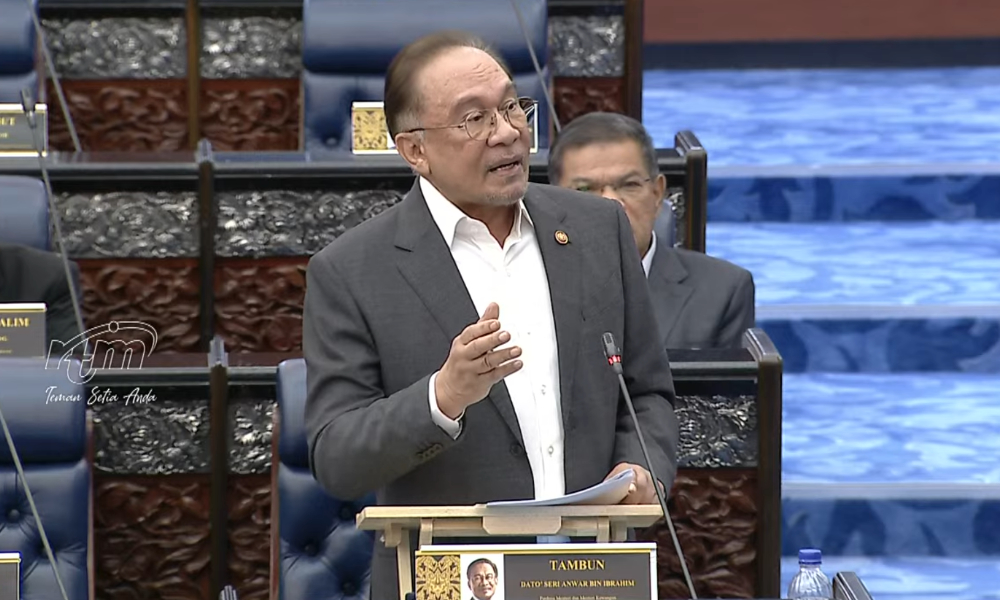
In his Parliament speech, Anwar revealed that the two areas being negotiated, Sungai Sinapad-Sungai Sesai OBP, and Pulau Sebatik OBP, did not previously belong to any nation and that their “boundaries have yet to be finalised”.
He added that the area did indeed fall within Indonesia’s administration based on a 1915 map attached to a boundary agreement between the British and Dutch colonial governments at the time.
However, since independence, Malaysia had not agreed to the claim as the map had not been finalised, Anwar said.
“All this time, since 1915, (Indonesia’s claim on the land) was not disputed… although it was not finalised because the agreement was not signed, it nevertheless became owned and administered by the Indonesian government,” said the premier.
Responding further to Anwar’s speech, Saifuddin said the confusion over the border negotiations could have been handled better by the Malaysian government.
This is because when news broke in the Indonesian media on the issue, it appeared that Malaysia had ceded land to its neighbour, thus sparking allegations that the Madani administration had bungled the negotiations.
“Our government should know from day one that the Indonesian side has to go through its Parliament in this kind of agreement, and that their debates would be known to our people and create unease or questions. So, our government should have been more proactive and explained earlier to the public.
“This is about land disputes, which are about absolute sovereignty. Hence, we should be more careful in handling both the content and process of the negotiation and agreement,” said Saifuddin. - Mkini

No comments:
Post a Comment
Note: Only a member of this blog may post a comment.