


Economists have described the government’s move to reduce the monthly quota for subsidised RON95 petrol from 300 litres to 200 litres as a reasonable move to address current global pressures.
Bank Muamalat Malaysia Bhd chief economist Afzanizam Abdul Rashid said the move is necessary as current oil prices have far exceeded assumptions made in the 2026 budget.
Oil prices were estimated to be around US$60 to US$65 per barrel when the subsidy was being planned, but current prices have exceeded US$100 per barrel.
“Therefore, there is a need to review fuel subsidy expenditure so that allocations for other sectors like education, health, infrastructure, and security are not affected,” he told Malaysiakini.
Afzanizam said this when asked to comment on the government’s decision to reduce the subsidised RON95 petrol quota following the prolonged crisis in West Asia.
Yesterday, Prime Minister Anwar Ibrahim announced the government’s strategic measures to strengthen the country’s readiness to face the growing global energy crisis stemming from the fighting.

Anwar said the move was taken with a firm, planned approach centred on the people’s interests and national resilience.
Most won’t be affected by lower RON95 cap
Among other measures, the subsidised RON95 purchase quota for Malaysian citizens will be reduced to 200 litres a month, effective April 1.
However, the retail price of subsidised RON95 will remain at RM1.99 per litre.
Once the 200-litre limit is exhausted, consumers pay a market-determined floating price for the fuel. Anwar said nearly 90 percent of Malaysians will not be affected as they use less fuel than allocated.
Afzanizam concurred that the quota reduction is not expected to have a major impact on the majority of the population, as the monthly petrol consumption of most users is below 300 litres.
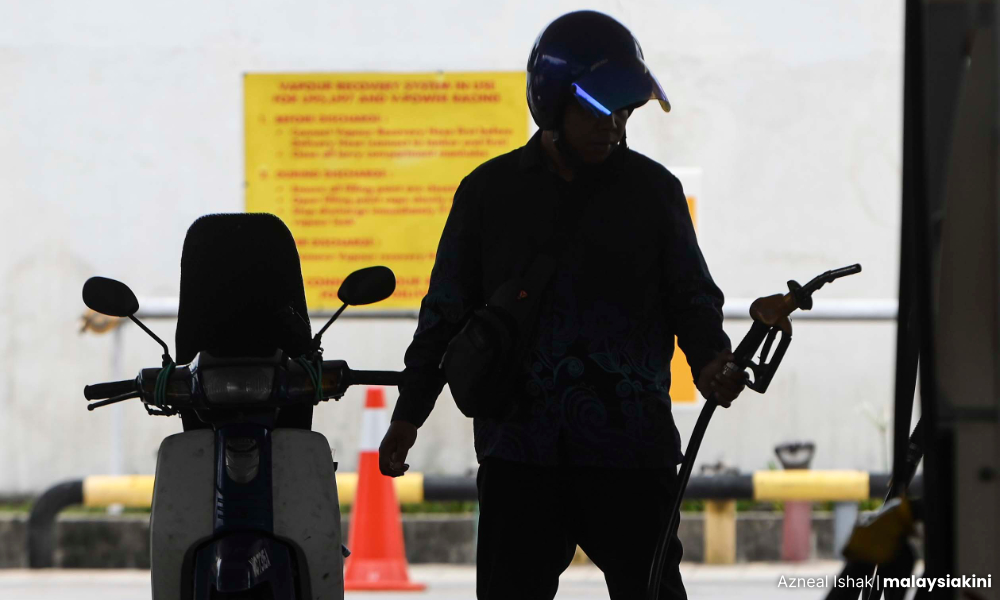
“Based on petrol consumption patterns, the 300-litre monthly allocation is higher than the average consumption among Malaysians.
“Therefore, the reduction should not involve most users,” he said.
He also suggested the government streamline its welfare delivery system by creating a one-stop portal to facilitate access and speed up the application process.
Aside from that, he said, price monitoring and law enforcement need to be strengthened to prevent traders from taking advantage by excessively raising prices.
Only intensive users will be affected
Meanwhile, Malaysia University of Science and Technology economist Barjoyai Bardai described the move as almost inevitable from a national fiscal standpoint.
He said the petrol and diesel subsidy bill has increased more than fourfold, from RM700 million to RM3.2 billion a month, following the rise in world oil prices, placing great pressure on government finances.
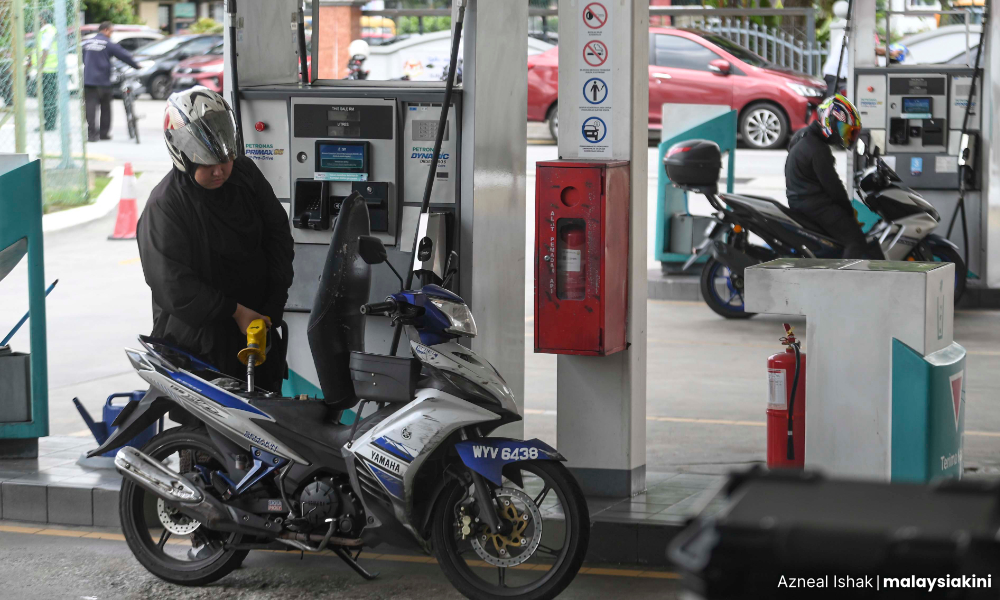
“If crude oil prices remain high, subsidies could reach RM24 billion a year. Even if the RON95 price is maintained at RM1.99 per litre, the actual cost is much higher, and the subsidy gap is widening,” he said.
At the same time, Barjoyai says the government’s decision will not have a significant impact on Malaysian consumers.
Based on data, he said about 90 percent of Malaysians use less than 200 litres of petrol a month, or an average of only 83 litres.
“This means the move only significantly affects intensive users such as long-distance drivers or gig workers.
“In conclusion, this government decision is a reasonable fiscal measure to avoid an unsustainable explosion in subsidy costs while minimising the impact on the majority of the people,” he said.
Transport sector hardest hit, but effects spread out
Commenting on how long the government can maintain current prices, Barjoyai said the country’s fiscal space is limited and may only be able to last in the short term if oil prices remain high.
He also cited Anwar, who recently stated that if world oil prices remain high, Malaysia can maintain RON95 sales at the current price for about two more months.
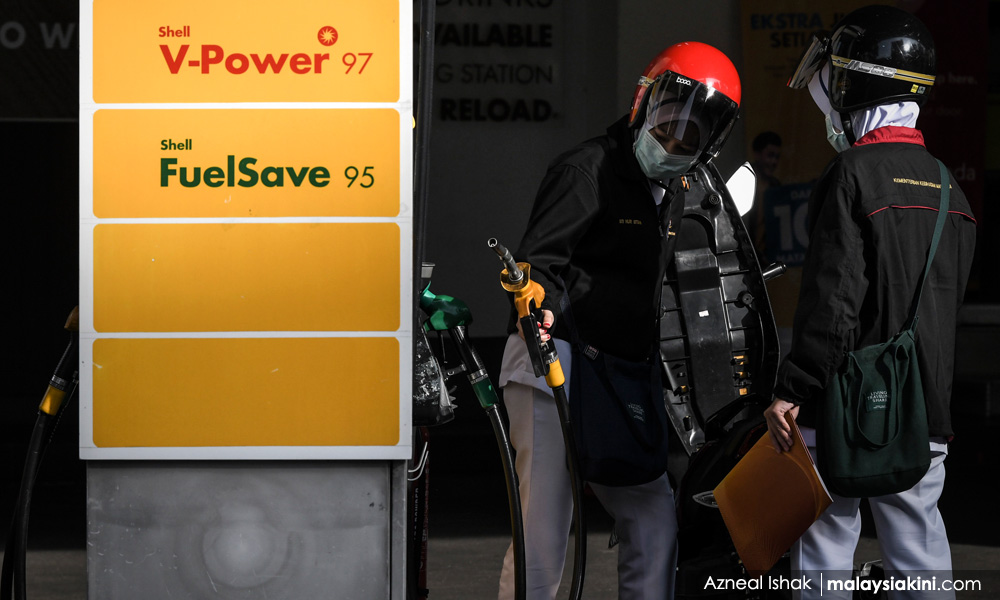
“The Finance Ministry itself warned that the global oil price situation is very unstable due to the Iran war, and forward-looking measures are required to reduce fiscal pressure.
“The implication is that Malaysia may be forced to further tighten subsidy targets (based on income or targeted models), or perform controlled price adjustments if global conditions persist for more than a few months,” he said.
From an economic perspective, Barjoyai said the quota reduction helps reduce fiscal pressure and deficit risks, besides curbing imported inflation through national financial stability.
However, he said the transport and logistics sectors may be more affected as operating costs rise, potentially contributing to increases in the price of goods.
In the long run, he said the move could encourage more efficient fuel use and accelerate the transition to a more targeted and sustainable subsidy system.
Unsustainable
In conclusion, Barjoyai said bulk petrol subsidies are no longer sustainable, especially in light of unstable global oil prices.
“A more effective approach is to move towards targeted mechanisms such as providing subsidies in the form of cash or quotas, aid based on actual travel needs, implementing price stabilisation schemes, investing in public transport, and the transition to electric vehicles (EVs) and alternative energy sources.
“A combination of several approaches should be more effective than relying on just one method, thus allowing Malaysia to reduce the subsidy burden without affecting the welfare of the people if implemented in an organised and targeted manner,” he added.

On Wednesday, the Finance Ministry announced that the retail price for RON97 and unsubsidised RON95 increased by 60 sen per litre from March 26 to April 1, while diesel in Peninsular Malaysia jumped another 80 sen to RM5.52 per litre for the same period.
This marks a drastic increase for three consecutive weeks.
The ministry also announced plans to introduce controls on diesel purchases, especially in Sabah, Sarawak, and Labuan, as part of efforts to curb subsidy leakage and smuggling. - Mkini

No comments:
Post a Comment
Note: Only a member of this blog may post a comment.