


IF THERE were an Olympic event for jumping to conclusions, Malaysia’s cyberspace would probably bring home gold, silver and bronze in the same afternoon.
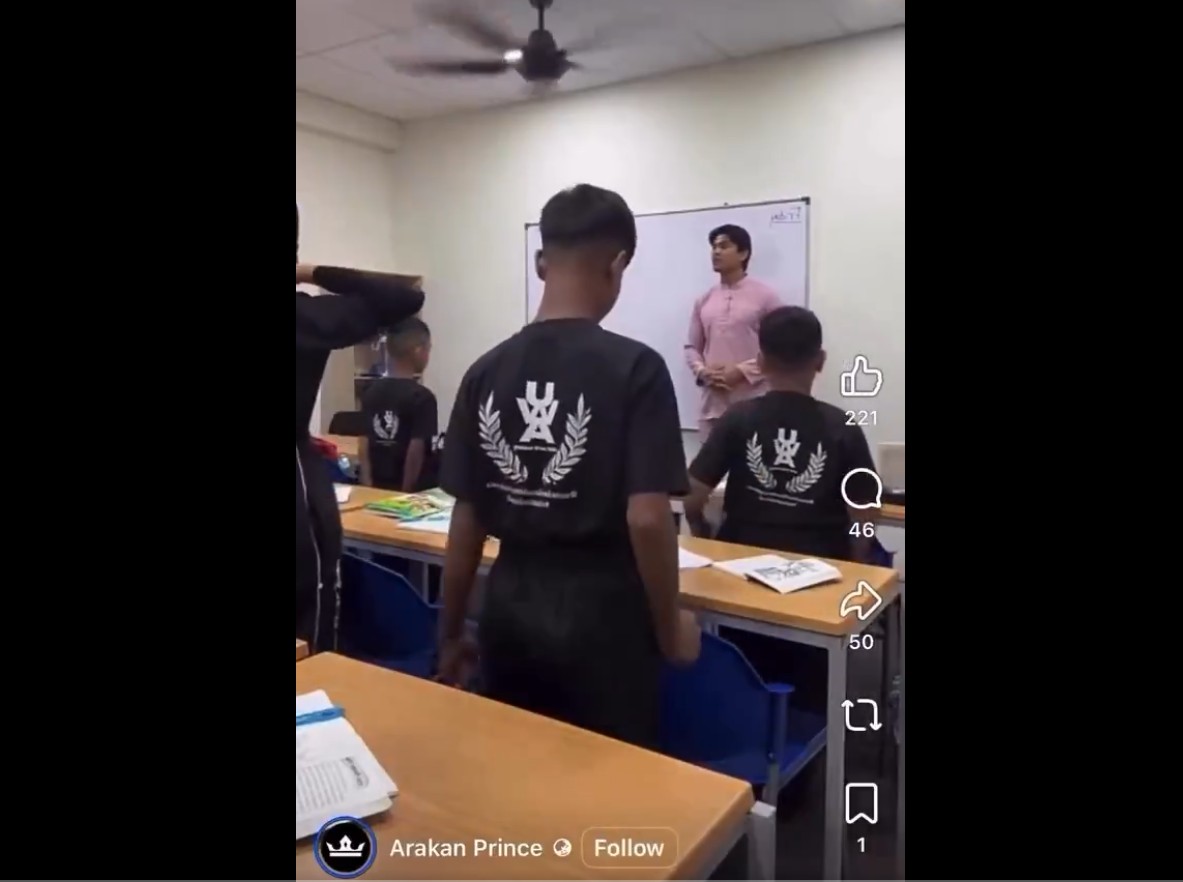
So when a viral clip surfaced showing Rohingya children learning to sing Negaraku under the guidance of advocate and model Arakan Prince, social media did what it does best.
That can only mean one thing, transforming a classroom singalong into a full-scale national symposium featuring immigration experts, conspiracy theorists and self-appointed demographic analysts.
The classroom scene itself appeared harmless enough. Children sat in rows, singing the national anthem while being coached by Arakan Prince, who has long been associated with education efforts for Rohingya refugee children.
But as with all things internet-related, the calm lasted roughly three seconds before social media transformed into what can only be described as a digital mamak debate operating on triple espresso.
One camp immediately questioned the motives behind the anthem lesson.
A netizen wrote that the kids are learning to sing the Negaraku to gain Malaysian citizenship.

Another commenter warned that the growing Rohingya population should worry Malaysians, with some predicting with the confidence usually reserved for amateur economists that their numbers might one day rival the Chinese and Indian communities.

For this group of commenters, the classroom looked less like music class and more like the trailer of an impending demographic thriller. Others took the conspiracy route.
A commenter claimed that there must be some evil sponsors behind this, proving once again that in Malaysian social media, nothing ever happens naturally.
Rain? Sponsored. Traffic jams? Sponsored. Refugee children singing an anthem? Definitely sponsored.
As expected, political football began bouncing across cyberspace faster than a last-minute election promise.
Others pointed fingers at political parties such as PAS and UMNO, arguing that these groups had historically been vocal about Rohingya humanitarian issues and refugee welfare.

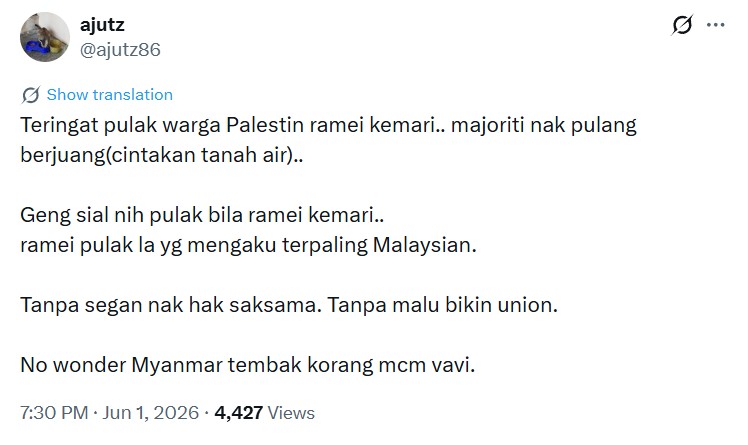
Comparisons with Palestinian refugees also surfaced. Take it from @ajutz86 who argued that Palestinians who sought refuge here wanted to return quickly to defend or rebuild their homeland.
@ajutz86 added that the Rohingya only wanted to take and claim things here in Malaysia.
But who is Arakan Prince? A well-known Rohingya advocate, he spent much of his life in Malaysia after his family fled persecution in Myanmar.
More recently, he gained attention as a fashion model and social media personality after relocating to the United States.
His story has drawn mixed reactions online, admiration from supporters who view him as a symbol of perseverance, and criticism from those uncomfortable with broader refugee issues.
Amid the noise and verbal fireworks, netizen @joy_ziz55738 adopted a calmer tone.
“Children exposed to good values and a positive environment will grow up to be good people,” he wrote, adding that people should not condemn them.
Perhaps refugee children singing Negaraku was not a national emergency after all that required panel discussions and investigative threads, but merely children learning about the country they currently live in.
The differing reactions perhaps say less about the children and more about Malaysia’s endlessly complicated relationship with migration, identity and belonging. - Focus Malaysia

No comments:
Post a Comment
Note: Only a member of this blog may post a comment.