


MP SPEAKS | I am one of 30. Out of 222. That is how many women sit in the Dewan Rakyat - 13.5 percent of the people's house - in a country where women are more than half the population, outnumber men in our universities, and decide the result of every election with their votes.
Good enough to put us in power. Apparently not good enough to share it.
I write this not as an outsider throwing stones, but as a member of the governing coalition who believes we can do far better - because we have reformed before, and because the alternative is to keep failing in slow motion.
Let me be honest about where we stand. A parliamentary committee spent much of this year studying exactly this question, and its report makes for uncomfortable reading.
In the Global Gender Gap Index, Malaysia ranks 114th out of 146 countries overall. But on political empowerment - who holds decision-making power - we sink to 134th. Near the very bottom of the world.
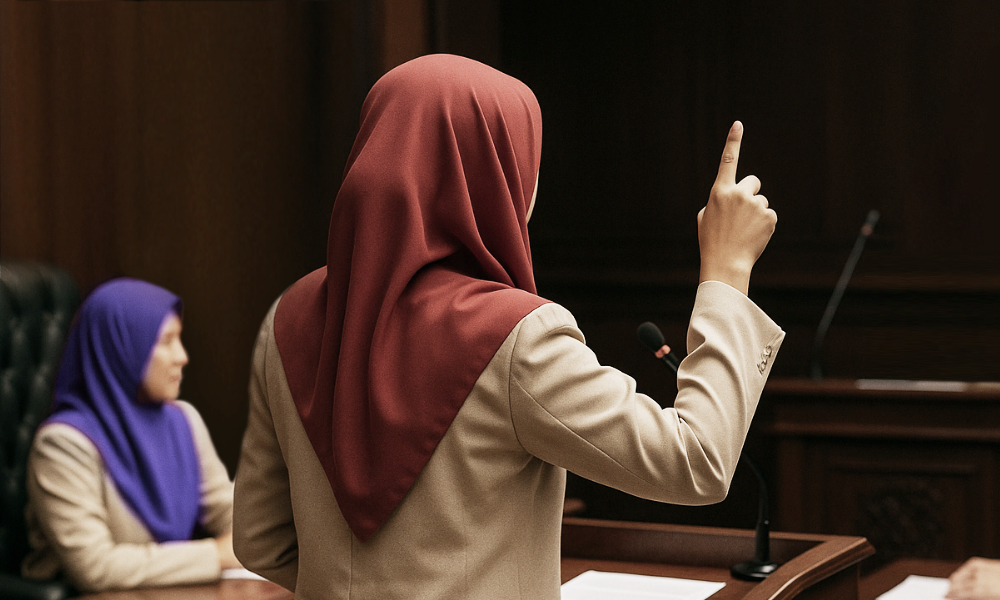
Look around our own region. According to the Inter-Parliamentary Union, Indonesia has crossed 21 percent women in Parliament. Vietnam has reached 30 percent. Timor-Leste, a nation that only restored its independence in 2002, now seats 35 percent.
The Philippines and Thailand are both ahead of us too. They began far behind Malaysia. Today, they are in front. 71 countries have already legislated candidate quotas. We are still debating whether to begin.
And at the current pace? The report warns it will take 135 years to close our political gender gap. Not 135 days. Not one electoral cycle. A century and a half. The granddaughters of today's schoolgirls will be old women before this country delivers the fairness it keeps promising.
Structural barriers
Why are we so far behind? Because for 30 years - across governments of every stripe, not the failing of any single party - we leaned on the voluntary goodwill of political parties. Three decades of good intentions.
The result: the number of women candidates rose from eight in 1982 to 127 in 2022, yet the share who won crept from five percent to barely 14.
The barriers are structural, not accidental. Party rooms dominated by men. The stale assumption that a woman belongs in the "kitchen" of a campaign - making the calls, never making the decisions.
The unpaid weight of family care. The punishing cost of contesting. A first-past-the-post system that quietly shields sitting incumbents, who are overwhelmingly male.
And then there is the part I know first-hand. Women who step into Malaysian politics are met with a flood of abuse - about our faces, our families, our faith - engineered to make the price of public life unbearable. I have lived it. I am still standing.
But how many capable women take one look at that gauntlet and quietly decide it is not worth it? That, too, is a barrier - and we almost never name it.
Let me be equally honest about the cure. A quota is not a magic wand. If we chase nomination numbers alone, parties will game them - fielding women to lose, not to win.
Any law we pass must reward victories, not just candidacies; strategic seats, not sacrificial ones; and it must be audited so the incentives cannot be abused. Justice done halfway is not justice.
Finish what we started
So what now? I am proud that this came from us. That a unity government Parliament commissioned this report and looked honestly into the mirror is itself progress. But a report that gathers dust changes nothing. Let us finish what we started.
Pass a Gender Parity in Political Representation Act, phased in by the next general election. And while legislation runs its course, let us act on what the government already controls - today, without waiting for voters: a firm 30 percent of women in the cabinet, the Senate, the boards of our GLCs, and local councils.
Then build the scaffolding that makes it real - childcare, flexible work, fair campaign financing - so that a talented woman never has to choose between her family and her country.
Thirty percent is not a ceiling. It is the floor of a serious democracy - and we are still crawling beneath it.

Malaysian women are not asking for sympathy, and they are certainly not asking for a favour. They are demanding a seat at the table where their own lives are decided.
A nation that locks half its people out of power is not guarding tradition. It is squandering its talent and gambling with its future.
We began this journey. Let us finish it - not in 135 years, but in our generation. - Mkini
SYERLEENA ABDUL RASHID is Bukit Bendera MP.
The views expressed here are those of the author/contributor and do not necessarily represent the views of MMKtT.

No comments:
Post a Comment
Note: Only a member of this blog may post a comment.