


As Parliament begins its Second Meeting of the year, Malaysia edges ever closer to legislating a Freedom of Information (FOI) Act.
This legislation is crucial in facilitating the right to information, a right that is not only pivotal in bringing to light acts of corruption and accountability within the government but, more generally, is a fundamental human right in any functioning democracy.
Article 10(1)(a) of the Federal Constitution guarantees freedom of speech and expression. A progressive and purposive constitutional interpretation would justify that meaningful expression requires access to information held by public bodies and authorities.
Without the right to seek, receive, and engage with information which is essential to public discourse, individuals would be unable to hold opinions, express themselves effectively, and participate in democratic governance.
Therefore, the undersigned organisations and individuals unequivocally state that the following elements are non-negotiable for an effective, progressive, and rights-focused FOI Act and framework.
In drafting this new FOI regime, the federal government must fully commit to implementing these elements if it truly intends to forge a new path of transparency, public accountability and democratic governance.
1. Fundamental principles underlying the Malaysian FOI regime
The following non-negotiable fundamental principles must be incorporated into the FOI Act.
These principles are based on international human rights standards and are essential for a viable and progressive FOI regime.

a. All information held by the government belongs to the public and must be openly available by default.
The government is merely a custodian of this information and should restrict access to, or withhold, such information only where there are legitimate and clearly defined grounds for exemption from disclosure.
b. Access to information must not be conditional. Terms or conditions cannot be imposed on a prospective applicant before they are entitled to receive information.
In particular, applicants should not be required to declare or justify their reasons for making an application and seeking said information.
c. Statutory grounds for non-disclosure must be exhaustive, specific, clear, and unambiguous.
All exemption grounds must be balanced against the public interest and harm tests when determining whether disclosure should be granted.
Any restrictions on disclosure and access to public information must be grounded in international human rights standards of legality, necessity, and proportionality.
d. Legal harmonisation is a prerequisite for a progressive FOI regime.

A comprehensive harmonisation of all laws and regulations that may impact the creation and implementation of a robust FOI framework must be undertaken in tandem with the drafting of the FOI Act, such as the Official Secrets Act 1972, Section 203A of the Penal Code, and the Personal Data Protection Act 2010.
2. Scope of the Act
The Federal FOI Act must apply without restriction to all federal government ministries, departments, and agencies, as well as federal statutory bodies.
There cannot be any exemptions for entire ministries or departments. Exemptions should only be based on the nature, sensitivity, and demonstrable harm, rather than by the identity of the public authority holding it.
3. Regulation and oversight of the FOI regime
An independent regulatory and oversight body must be established to monitor the implementation of the FOI Act, issue binding determinations on appeals or disputes concerning FOI requests, and develop guidelines to operationalise and elaborate on the Act’s basic principles.
Structural and institutional safeguards must be implemented to preserve the independence and autonomy of this body, and it must have full access to all relevant documents or information, notwithstanding other secrecy laws.

Regarding its function as an arbiter of disputes, the independent body must be empowered to conduct de novo merit reviews of an executive department/agency’s decision on a FOI application and not be limited to reviewing procedural compliance alone.
This function may be assigned to the proposed ombudsman office, as long as sufficient resources (financial and staffing) are allocated to account for and effectively fulfil these dual functions.
4. Proactive disclosure schemes
In order to encourage a cultural shift towards transparency and accountability, legislating the FOI Act alone is insufficient.
The government must also commit to creating broader policies to ensure information is published and routinely updated in an easily accessible manner.
The goal should be to create an efficient proactive publication system so that an FOI request is a last resort for members of the public.
Conclusion
Beyond this, we emphasise that there must be an absolute cultural shift within the government towards greater openness, transparency, and accountability.
As Malaysia’s democracy matures, the culture of secrecy by default and paternalistic view that “the government knows best” is no longer tenable.
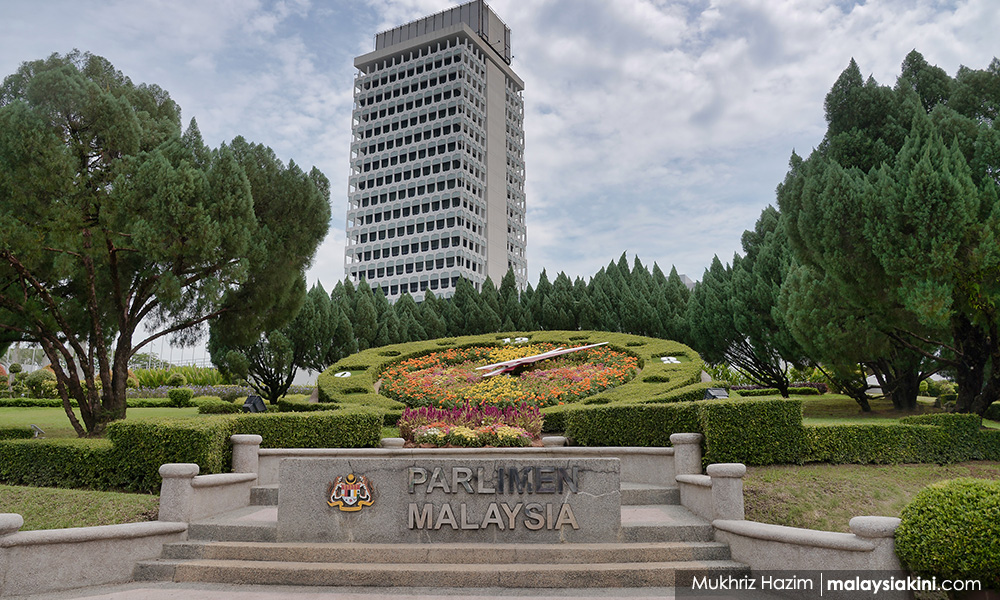
This Parliamentary meeting presents an opportunity for the Madani government to move beyond rhetoric and demonstrate its commitment to reform by establishing an information regime that truly empowers the people and fosters trust in the government.
To achieve this, the government must work towards a framework that recognises access to information as a right rather than a privilege.
It is vital that the government does not waste this chance.
Issued by (Organisations):
1) The Center to Combat Corruption and Cronyism (C4 Center)
2) Centre for Independent Journalism (CIJ)
3) Article 19
Endorsed by (Organisations):
1) Advocates for Non-Discrimination and Access to Knowledge (Anak)
2) Aliran
3) All Women's Action Society (Awam)
4) Angkatan Belia Islam Malaysia (Abim)
5) Architects of Diversity
6) Association of Women Lawyers (AWL)
7) Badan Bertindak Penduduk Flat Kos Rendah Kuchai Entrepreneurs Park, Jalan Kuchai Lama, Kuala Lumpur
8) Bersih
9) Childline Foundation
10) Child Rights Coalition Malaysia
11) Community Action Nexus Berhad
12) Consumers' Association of Penang
13) Damansara Utama Residents Association B1
14) ECPAT Malaysia
15) Freedom Film Network
16) Gabungan Darurat Iklim Malaysia Berhad
17) Gerakan Media Merdeka (Geramm)
18) Hai Mandak!
19) I Care Community Center
20) Ikatan Anak Muda Tawau
21) Impactlution
22) Justice for Sisters
23) Klima Action Malaysia (Kamy)
24) KLSCAH Civil Rights Committee
25) Kolektif Seni dan Budaya Malaysia
26) Kuala Lumpur Residents Action for Sustainable Development Association (KLRA+SD)
27) Lawyer Kamek
28) Mandiri
29) Migrant care
30) National Union of Journalists Malaysia
31) North South Initiative
32) OHMSI Sdn Bhd
33) OKU Rights Matter Project
34) People Like Us Hang Out (Pluho)
35) Persatuan Martabat Untuk Semua
36) Persatuan Pemangkin Daya Masyarakat
37) Pertubuhan IKRAM Malaysia
38) Pertubuhan Pelindung Khazanah Alam
39) Project Stability and Accountability for Malaysia (Projek Sama)
40) Protect Karpal Singh Drive
41) Pusat Komas
42) RA Section 14 Petaling Jaya
43) RA Section 20 P.Jaya
44) Reproductive Rights Advocacy Alliance Malaysia (RRAAM)
45) Sabah Journalists Association
46) Sabah Youth Movement
47) Sahabat Alam Malaysia
48) Save Malaysia Stop Lynas
49) Save Rivers
50) SAWO
51) Saya Anak Bangsa Malaysia [SABM]
52) Sinar Project
53) SIS Forum (Malaysia)
54) Siuman Collective
55) Suara Rakyat Malaysia (Suaram)
56) Teoh Beng Hock Association for Democratic Advancement
57) Third World Network
58) Women's Aid Organisation
Endorsed by (Individuals):
1) Alice Chan Ai Lee
2) Andrew Aeria
3) Andrew Khoo
4) Ann Lee
5) Anne James
6) Anwar Fazal
7) Azira Aziz
8) Beatrice Aren
9) Chamil Wariya
10) Chang Teck Peng
11) Cindy May Justin
12) Dania Amani
13) Dr Amar-Singh HSS
14) Dr Linda Lumayag
15) Dr Tricia Yeoh
16) Farrah Nur Fareena Binti Farid Azran
17) Gayathry Venkiteswaran
18) Glen Pengiran
19) Goh You Ping
20) Gowri Subramaniam
21) Heng See Lin
22) Ho Yi Jian
23) Ho Yock Lin
24) Ivy Josiah
25) Juvita Tatan Wan
26) K Sudhagaran Stanley
27) Lee Ren Xin
28) Lee Shook Fong
29) Lim Yean Nyok
30) Lisa Wong
31) Loo Wuen Yuen
32) Mahyuddin Ahmad Abdul Rahman
33) Mariammah Subramaniam
34) Ishak Abdillah Ngah
35) Ariff Nizam
36) Nasrun Abd Wahab @ Ismail
37) Naziaty Yaacob
38) Ng Tien Eng
39) Ngo Sheau Shi
40) Parimala Nesamany
41) Prakash Gopalakrishnan
42) Pushpa Dorsisamy
43) Pushpan Murugiah
44) Roger See Ewe Chee
45) S S Yoga
46) Sakuntala Devi Dev Raj
47) Shanti Somasundram
48) Sharmila Sekaran
49) Sheila Gopal Krishnan
50) Shyamala Ponniah Maha Balasandren
51) Sonia Randhawa
52) Sonya Liew Yee Aun
53) Sukumaran
54) Syahila Zainal
55) Terence Ooi
56) Thulasi Munisamy
57) U K Menon
58) Vasanthi Nagappan
59) Yuenwah SAN
The views expressed here are those of the author/contributor and do not necessarily represent the views of MMKtT.

No comments:
Post a Comment
Note: Only a member of this blog may post a comment.