



Food prices have climbed steadily over the years, with Malaysian favourites such as nasi lemak and roti canai costing more than they did a decade ago.
Yet cigarette prices have not kept pace with inflation, making smoking increasingly affordable in comparison.
According to local think tank Social and Economic Research Initiative (Seri) senior researcher Muhammad Daniel Kittu, this growing contrast reflects a gap in Malaysia’s tobacco tax policy.
“Compared with the affordability trends of common Malaysian food items, many of these foods have become more expensive in real terms,” he says.
“Unfortunately, cigarettes have actually become a lot cheaper.
“That’s a very concerning trend, which is why it’s important for us to address cigarette consumption through tobacco taxes.”
Less than inflation
According to Statistics Department data analysed by Seri, the average price of nasi lemak increased from RM2.51 in 2015 to RM3.71 this January (2026).
Over the same period, the price of a plate of white rice rose by 29%, roti canai by 27% and satay by 48%.
In contrast, the think tank’s analysis, based on data from Bank Negara, the World Health Organization (WHO) and the World Bank, found that cigarette prices have moved in the opposite direction.
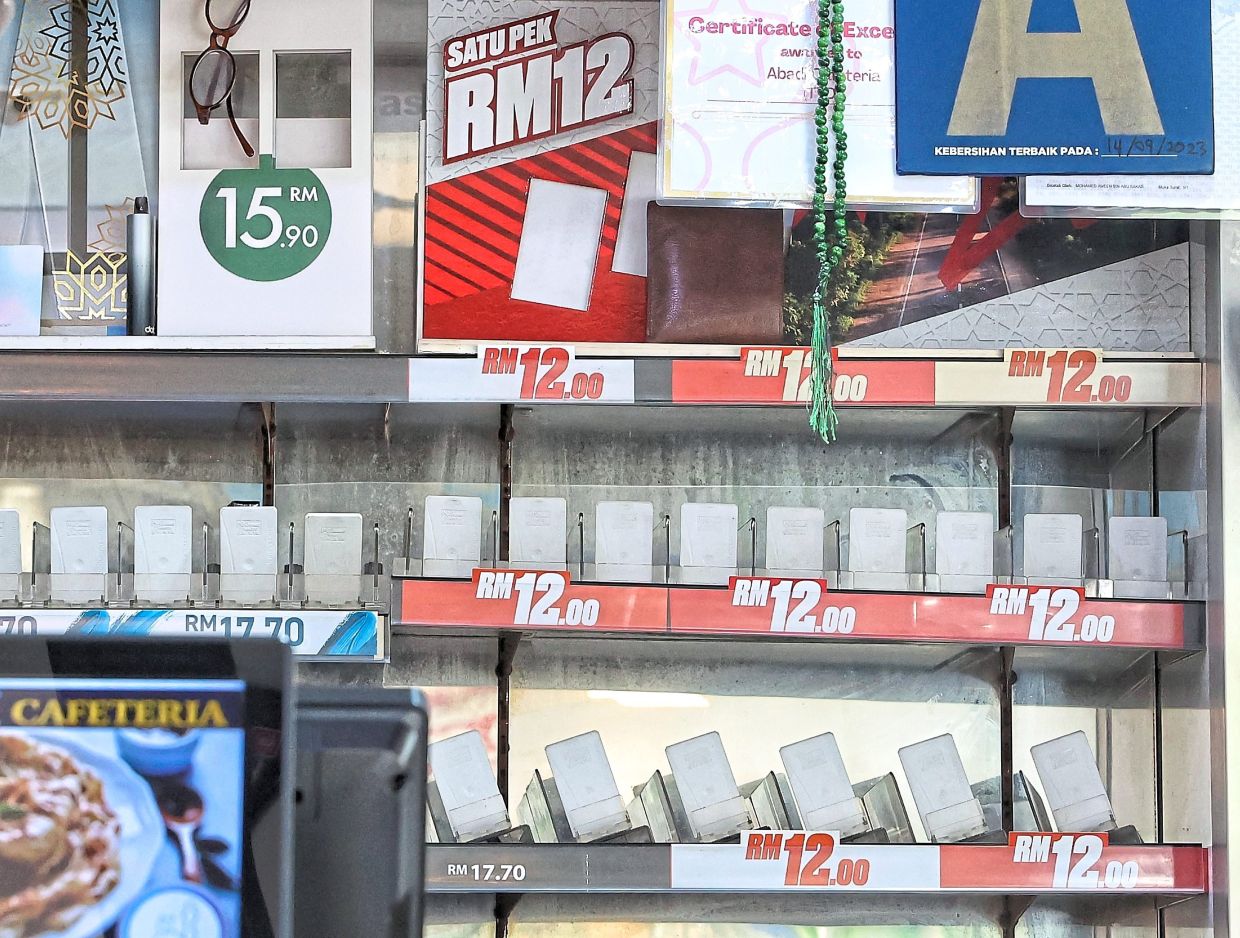
For example, one popular cigarette brand that retailed at RM17 in 2015 would need to cost RM20.73 today to maintain the same purchasing power.
Instead, it currently retails at RM18.20, making it about 12% cheaper after adjusting for inflation.
A similar trend was observed in another popular cigarette brand.
Following a RM0.40-per-stick tobacco excise increase in 2015, duties have remained largely unchanged for almost a decade, with only a modest RM0.02-per-stick increase in 2025.
Daniel says this has created a policy gap.
“When tobacco taxes are not regularly adjusted for inflation, cigarettes become increasingly affordable,” he notes.
An annual increase
The November 2025 tobacco tax increase marked the first adjustment in a decade.
While Daniel describes it as a positive step, he says it was not enough to stop cigarettes becoming more affordable over time.
“We are advocating for a minimum annual tobacco tax increase of 5%,” he says.
He explains that annual adjustments would help ensure cigarette prices keep pace with inflation, while preventing a repeat of the decade-long gap between 2015 and 2025 when tobacco taxes remained stagnant.
The recommendation also appears to have strong public backing.
A survey conducted by Seri, involving 3,200 respondents, found that 86% of the respondents supported last year’s tobacco tax increase, while more than half believed the increase should have been more.
Support was high across all demographic groups, including youths, while around two-thirds of smokers also backed the tax increase.
When asked about future policy, about four out of five respondents supported another tobacco tax increase this year (2026).
The findings are encouraging, Daniel says, given the substantial health and economic burden smoking continues to place on the country.
Smoking causes an estimated 25,000 to 27,000 deaths each year in Malaysia.
It also costs the country about RM18.4bil annually through healthcare expenditure and productivity losses.
And it doesn’t just affect smokers.
The 2022 National Health and Morbidity Survey (NHMS) found that about two out of five adolescents in Malaysia are exposed to second-hand smoke and its accompanying health effects.
Reducing smoking
Seri also modelled the likely impact of increasing tobacco taxes.
The thinktank estimates that a minimum annual tobacco tax increase of 5% would generate an additional RM146mil in its first year, with tobacco excise revenue reaching RM4.5bil next year and around RM5bil by 2030.
Daniel says that while some smokers reduce or quit smoking when prices rise, many continue buying cigarettes.
As a result, the additional tax collected outweighs the decline in cigarette sales, allowing government revenue to continue growing.
At the same time, Seri projects that cigarette consumption would decline by about 5.6% by 2030.
The analysis also accounts for illicit cigarettes, including the possibility that some smokers may switch from legal to illicit products following a tax increase.
Even after accounting for this, overall cigarette consumption is still expected to decline.
Daniel says smokers who switch to illicit cigarettes are more likely to buy lower-priced brands, while most legal smokers in Malaysia purchase premium brands, making a large-scale shift less likely.
He adds that stronger enforcement against illicit trade should accompany tobacco tax increases, as enforcement capacity, rather than taxation itself, remains the main challenge.
Funding cost-of-living support
Besides reducing smoking, Daniel says higher tobacco taxes could generate additional revenue to support programmes that directly benefit Malaysians.
The additional revenue could help fund programmes such as fishermen’s subsistence allowance, the National Health Screening Initiative, Perbadanan Tabung Pendidikan Tinggi Nasional (PTPTN) support for low-income students, the Madani Medical Scheme and the Dapur Siswa Madani food assistance programme.
“These programmes not only help ease cost-of-living pressures, but also improve public health,” he notes.
Most respondents, including smokers, said that they would support a periodic tobacco tax increase if the additional revenue was channelled into these initiatives.
While higher tobacco taxes are sometimes criticised for increasing living costs, Daniel says the survey findings suggest these concerns may be overstated.
Most respondents said higher tobacco taxes did not have a significant impact on their cost of living, mainly because the majority of Malaysians do not smoke.
Even among smokers, only a minority said tobacco tax increases had a moderate or significant effect on their household expenses.
Daniel explains that when cigarettes become more expensive, smokers may buy fewer cigarettes and use the money they save on other necessities or things that improve their quality of life, such as healthcare or education.
Encouraging quitting
The survey also found that last year’s (2025) tobacco tax increase had already influenced smoking behaviour.
About 47% of smokers said they smoked fewer cigarettes and 27% smokers had tried to quit following the tax increase.
Daniel says the findings suggest even a modest tax increase can encourage some smokers to cut down or quit.
However, he says larger and more regular tobacco tax increases will be needed to encourage more substantial behavioural change.
The survey found that a tax increase of more than RM2 per pack would be needed to influence a larger proportion of smokers to reduce or quit smoking.
Among younger smokers, however, the second most common response was switching to vaping, with 37% saying they would do so.
“It isn’t entirely surprising because vaping is already popular among youths,” he says.
Daniel adds that this highlights the need for tobacco control policies to address cigarettes and vape products together.
The survey also found that health concerns remained one of the main reasons smokers chose to reduce or quit smoking, suggesting that tobacco control measures reinforce their motivation to quit.
Family medicine trainee Dr Mohd Faiz Mohd Yusop, who has been running a smoking cessation clinic for the past three years, says the survey findings reflect what he sees in practice, where many smokers want to quit, but struggle to do so.
He says he sees about 30 to 40 patients each year, with around 30% successfully quitting smoking.
“When fighting tobacco use, even smokers support this 5% tobacco tax increase.
“The number one reason they want to quit is financial pressure, while the second reason is health,” he says.
He adds that quitting can be challenging because access to smoking cessation medicines in Health Ministry facilities remains limited, with nicotine replacement gum and patches among the few treatment options available.
Dr Faiz says higher tobacco taxes should therefore be accompanied by stronger smoking cessation services to give smokers the support they need to quit successfully.
“Smoking has become an addiction.
“Addiction is not something that should simply be punished by law,” he says.
“We need to be patient with them. We need to advise them and support them.” - Star

No comments:
Post a Comment
Note: Only a member of this blog may post a comment.