


Aside from post-election coalitions and the mixed member proportional (MMP) system, something else in the German political system that Malaysia can learn from is the public funding of political parties.
Every year, German taxpayers pay up to €133 million (RM660 million) to support political parties that win sufficient votes and are able to raise their own money.
The amount is equivalent to 0.04 percent of Germany’s €328.7 billion federal budget. If the same percentage of Malaysia’s RM260 billion federal budget were spent on political parties, that would come up to RM106 million.
Without going into the question of whether our political parties are actually worth that kind of money, let us take a brief look at how the German system works.
Section 18 of the Political Parties Act stipulates two bases of funding. First, for votes won in the latest Bundestag, European and state elections, €0.85 is given for the first four million votes, and €0.70 thereafter.
Second, for financial contributions received in the form of membership fees, contributions by elected representatives, and personal donations (which are capped at €3,300 per annum), an additional €0.38 is given for every €1 received.
But the actual amounts received by parties are capped by two limits. First, parties cannot receive an amount from the state that is higher than the revenue they bring in themselves. In other words, if they don’t make any money, they don’t get any money from taxpayers.
Second, as the annual total available for all parties is capped (€133 million) parties may just end up getting a proportionate share of that instead of the full amount.
Take, for example, the public funding of political parties in 2007.
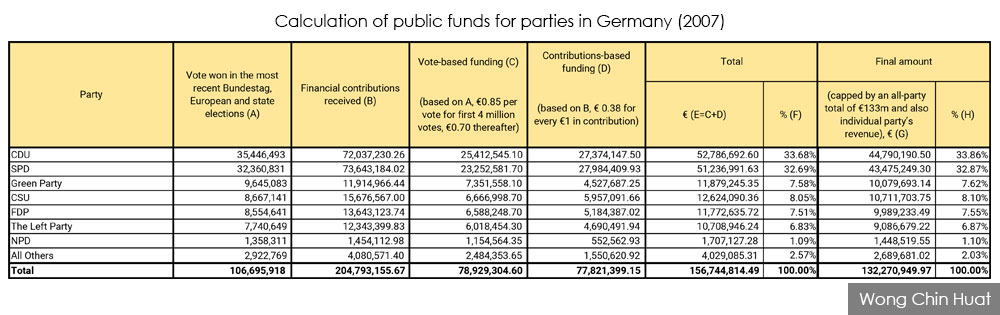
In that year, the Christian Democratic Union (CDU) won 35,446,493 (A) votes in the federal, European and state elections, which were translated into a claim of €25,412,545.10 (C) for vote-based funding. The party also received a total contribution of €72,037,230.26 (B), which entitled it to claim another €27,374.147.50 (D).
So, CDU should be getting €52,788,692.60 (E), which constitutes 33.68 percent of the total €156,744,814.49. But since the annual funding for all parties cannot exceed €133 million, CDU eventually only got €44,790,190.59 (G) – that is, 33.86 percent of the €132,270,949.97 claimed by all parties.
This, of course, benefited the six larger parties that were represented in the Bundestag. But it also benefited the far-right National Democratic Party (NPD) and the 14 other smaller parties.
So why should taxpayers fund political parties including those they do not support? Here are a few reasons.
No democracy without parties
Shaped by the bitter lessons of Nazi rule, Germans have come to believe that multiparty democracy can only be defended when citizens are willing to join and support political parties. Section 1 of the Political Parties Act makes this absolutely clear.
“Political parties are integral to the free democratic basic order and required under the Constitution. Through their free and continuous participation in the formation of the people’s political will, they perform a public function that is required of them and guaranteed by the Basic Law.”
The same section further spells out the expected functions of parties, which are: forming the people’s political will and shaping public opinion; promoting civic education, political participation, and assumption of public responsibilities; participating in federal, state and local elections; influencing parliaments and governments in public decision-making and policy formation; and ensuring a continuing active interrelationship between the people and the state institutions.
Unlike frustrated Malaysians who tend to negate political parties, Germans, who know all too well the fatal price of political nihilism, put their money where their mouth is and actually invest in their parties to make sure they keep working.
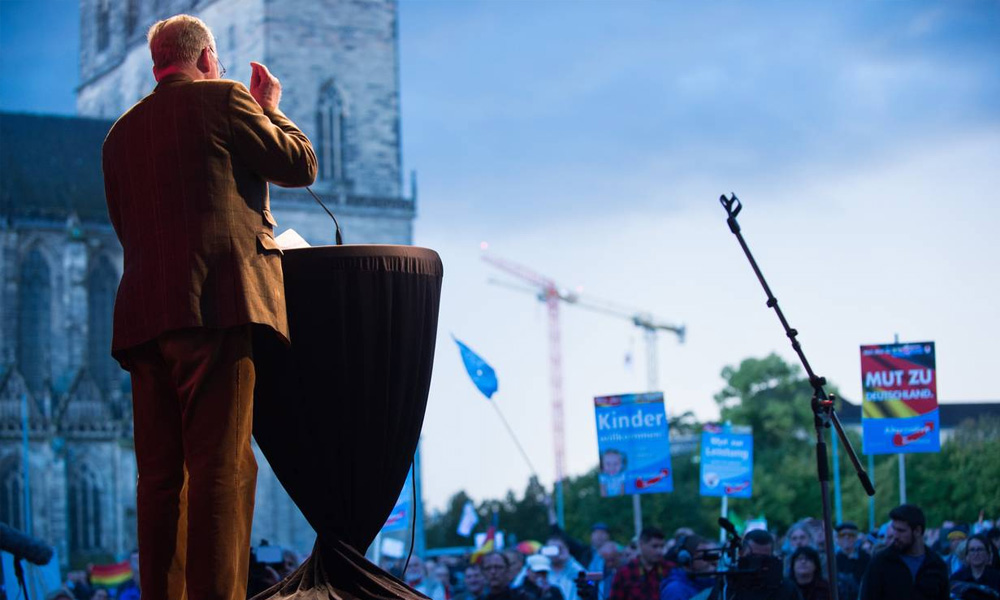
Public funding allows new parties to be set up, gain support and challenge established parties. Although the anti-democratic NPD was disqualified from receiving public money this July, this is certainly not the norm. And thanks to their rising support, the far-right Alternative for Germany (AfD) party will have even more money next year to expand their influence. Even satirical parties, like The Party (Die Partei), do get their share of public money.
While some of us may think that allocating public funds for radical, right-wing or even parody parties is harmful or a waste, it does serve a purpose: it is meant to keep alienated voters in the system, and keep check on established parties to stop them from becoming complacent.
Besides funds for votes and revenue, parties represented in the Bundestag for more than two consecutive terms can also apply to obtain additional funds for their affiliated foundations to carry out training and capacity building, both at home and abroad—such as the CDU-linked Konrad Adenauer Stiftung (KAS), the Social Democratic Party (SPD)-linked Friedrich Ebert Stiftung (FES), and the Free Democratic Party (FDP)-linked Friedrich Naumann Stiftung (FNS).
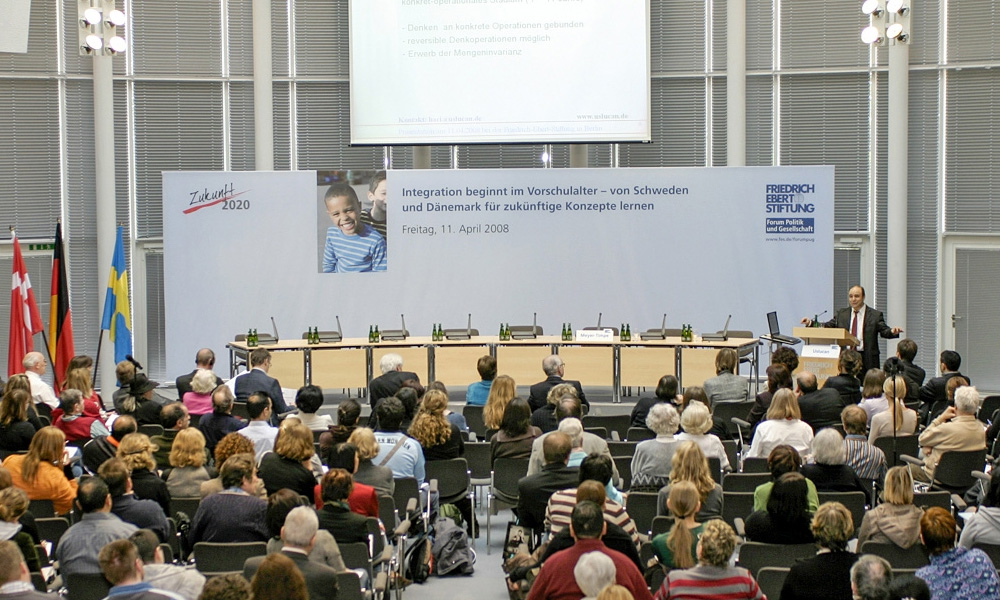
Just to get a sense of the size of these foundations, FES’s overall budget for 2016 was €148 million.
Keeping parties clean and accountable
Running parties and contesting elections are expensive endeavours. As such, providing public money to parties reduces their dependence on private money – which may have strings attached, and lead to conflicts of interests, if not outright corruption.
Even if politicians are wealthy enough to foot their own bills, this may still mean politics risks becoming a self-interested game of, by and for the rich.
Like Singapore paying ministers well to prevent corruption, funding parties to keep them clean simply manifests an appreciation of economic logic that “there is no such thing as free lunch.” Hence, one does not even need to believe in liberal democracy to believe in public funding of political parties.
Moreover, this system means that German parties cannot afford to keep their finances hidden. To qualify for public money, they must submit valid and detailed account statements.
Supporting intra-party democracy
One may also argue that the German system of public funding for political parties – as with other aspects of its party law and vigorous federalism – ensures power within political parties is not overly concentrated.
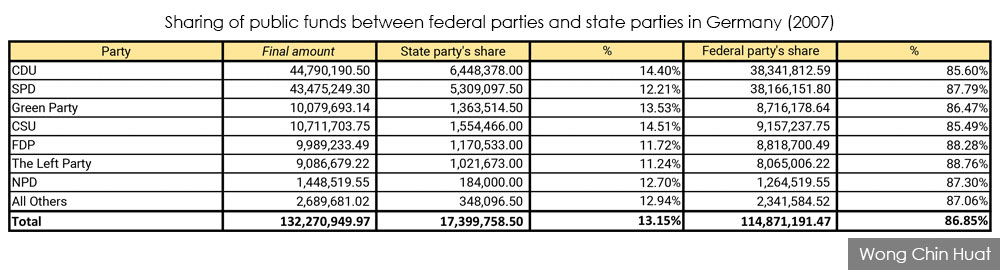
Money given to the parties are split between the federal (national) headquarters and state chapters. In most cases, state chapters get to keep between an eighth and a seventh of the funds.
Would public funding of parties work in Malaysia?
The public funding of political parties is perhaps better understood by more Malaysians than post-election coalitions and MMP (see part 1 and 2).
Public funding is even part of the “Reforms for transparent and accountable political funding in Malaysia” proposal prepared by Terence Gomez and championed by an NGO coalition made up of G25 and 70 other NGOs.
Many are wary that with selective enforcement and prosecution, strict regulations on private funding may make the playing field even more uneven for the opposition.
But there is no reason why the public financing of political parties cannot be started by reformists at the state level.
WONG CHIN HUAT is a research fellow with Penang Institute, the state government think-tank on public policy.- Mkini

No comments:
Post a Comment
Note: Only a member of this blog may post a comment.