


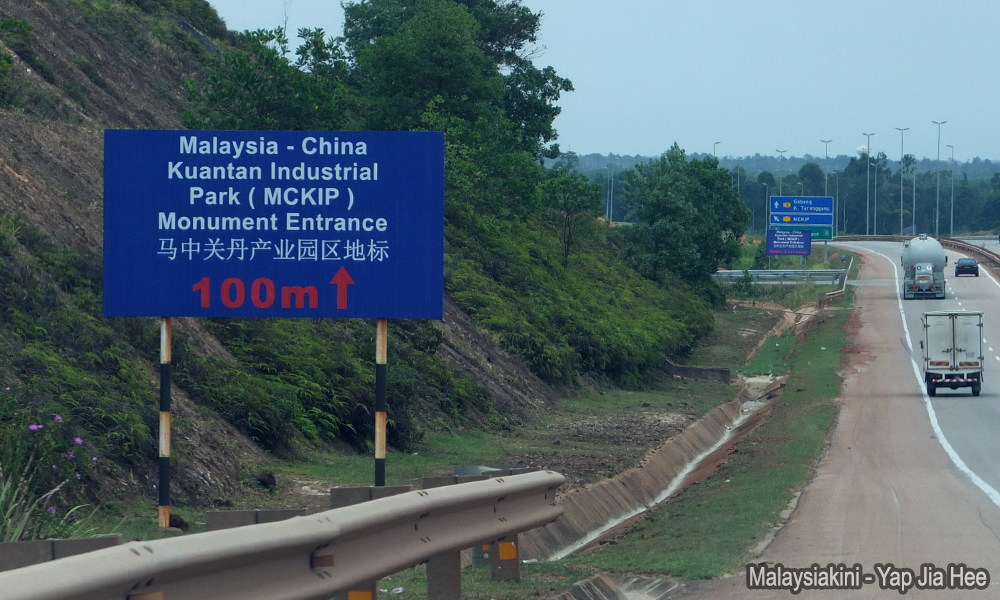
SPECIAL REPORT | When Prime Minister Najib Abdul Razak officiated the Malaysia-China Kuantan Industrial Park (MCKIP) in February 2013, many business owners in Kuantan were elated.
Among them was Pahang Hardware and Machinery Merchants Association president Kent Lew, who saw it as an opportunity to expand his business in a city where industrial activities were only just picking up, despite its proximity to the Kuantan Port.
Lew had even urged other local merchants to capitalise on the business opportunities.
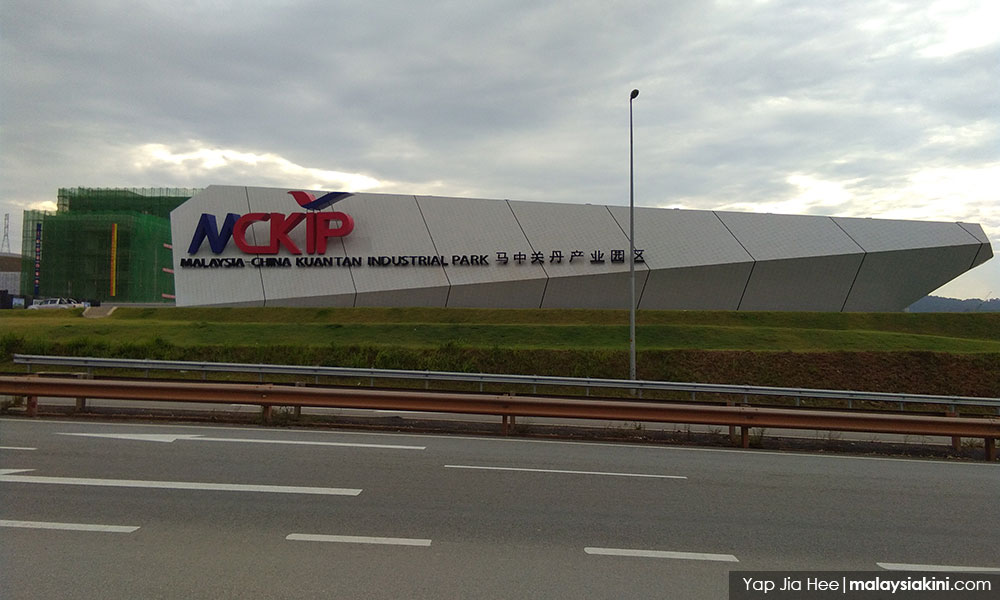
More than four years later, the structures of the first phase of the MCKIP are now visible and the wall surrounding the 1,219-acre development, which locals refer to as Kuantan's "Great Wall of China", is now part of the landscape.
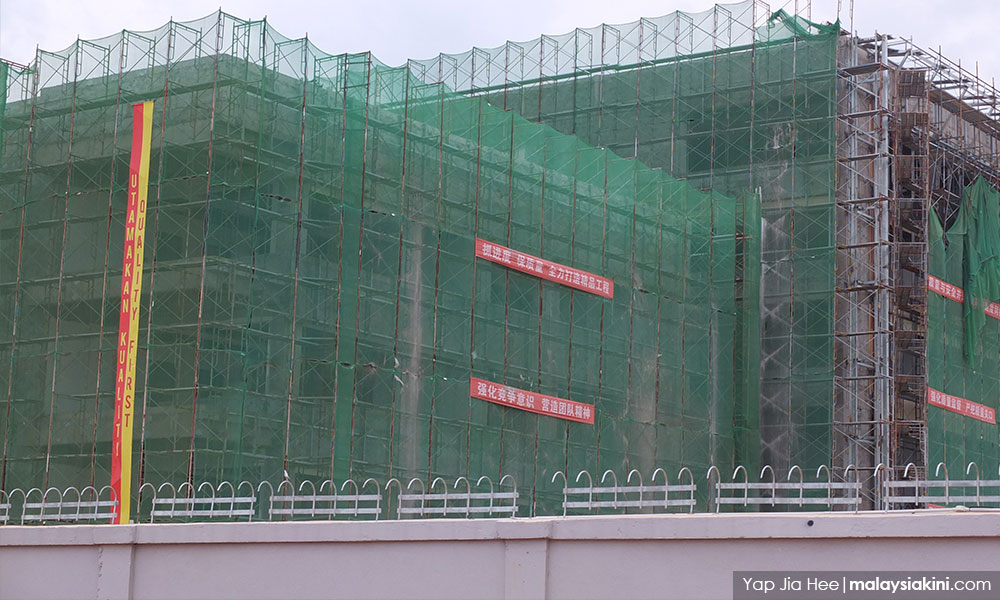
But for some, the promise of economic prosperity and thousands of new jobs have yet to be felt. The initial excitement and anticipation have been replaced with mixed feelings.
As the construction of the first phase of the MCKIP proceeded full steam, there was indeed business to be made, but not everything turned out as expected.
Lew said MCKIP procurement personnel would purchase items such as screws, wood, cement, steel, gravel, iron, plywood and other basic materials from local hardware merchants.
Curiously, the MCKIP personnel were never interested in larger and more profitable construction materials or equipment. Lew later learnt that the larger supplies were imported from China.
"Large materials such as steel frames will be welded and assembled in China, then shipped to the MCKIP construction site and installed," he told Malaysiakini.
Likewise, Lew said, MCKIP was only interested in renting certain local heavy machinery.
"Cranes, such as bridge cranes, are also shipped in from China. They only rent excavators or bulldozers locally," he said.
Lew, who is also the Federation of Malaysia Hardware, Machinery and Building Materials Dealers' Association (FMHMBA) vice-president, added that MCKIP personnel were also shrewd in the procurement process, causing fierce competition among local suppliers and compressing profit margins.
As such, Lew said the profit from dealings with MCKIP was thin and could only complement local businesses in a small way.
Chew Teck Kian, a hardware and machinery wholesaler, was more optimistic and believes the MCKIP has indeed boosted the Kuantan economy.
Chew said his business revenue increased by 10 to 20 percent due to MCKIP.
However, like Lew, he acknowledged that the impact was not as big as expected due to the limited goods procured by MCKIP.
"Usually they will buy things that are needed urgently, such as safety nets, safety helmets, shoes and clothing for the workers," Chew told Malaysiakini.
Local businesses face stiff competition
Apart from procurements, certain projects within MCKIP were also opened to local businesses, but Lew lamented that it was tough to secure them.
He acknowledged that local businesses may lack the capacity in meeting MCKIP's high standards.
"It is hard to get (projects) and maybe we are not capable enough because their (China workers) pace of work is very fast.
"Projects that we may need five years to complete, they can finish in two years," he said.
Another local businessman, who spoke on condition of anonymity and only wanted to be referred to as "Tan" (not his real name), said he previously supplied local workers for a project inside MCKIP.
"I felt ashamed because the local workers built the same shelf as the China workers but when the China workers finished their job, our local workers only managed to complete 30 percent," he told Malaysiakini.
Tan said local workers who are hired to work alongside China workers eventually leave as they were not able to keep up with the China workers.
Kuantan Construction Association president Chua Say Chai said local businesses, instead of complaining, should find ways to upgrade themselves.
Chua told Malaysiakini that MCKIP had engaged with the Kuantan Chinese Chamber of Commerce and Industry (KCCCI) it was prepared to provide projects to local businesses.
For example, he said, part of the perimeter wall around the MCKIP was built by an associate. But for other projects, there were constraints involved.
"They (MCKIP) told us they are building a high technology steel plant and the technology used by local construction companies may not be able to support it.
"The major problem is we are unable to keep up with them. It is not to say we did not get any projects. They (MCKIP) do welcome us to approach them... but for some projects, we cannot do, for the technology is too advanced," said Chua, who is also KCCCI's Young Entrepreneur Committee chairperson.
Chua is hopeful that the foreign investments can allow for technology transfer, which can help local businesses to advance.
He added that this could be facilitated by the government by requiring 30 percent of workers to be local, where they can learn about the foreign technology.
Chua said it was necessary to help local companies to compete, not only within the context of the MCKIP, but also in the wider construction industry, which is beginning to see increased participation of companies from China with advanced technology.
Enterprising China restaurants set up shop
While local businesses in Kuantan adjust to China’s growing influence in the area, not only from the MCKIP but also from the partially China-owned Kuantan Port and the Beijing-funded East Coast Rail Link project, enterprising Chinese citizens have also set up shops in Kuantan town.
Malaysiakini, in a brief survey around Kuantan town, found at least three new restaurants opened by Chinese citizens, such as Golden Spice Restaurant, Chang An Noodle Restaurant and Chongqing Steamboat.
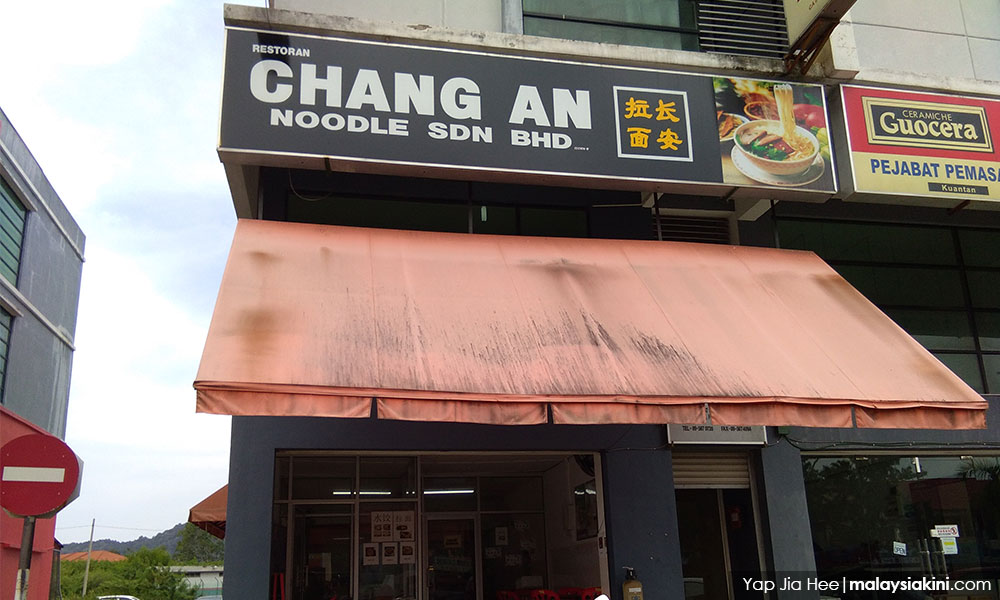
These restaurants cater to Chinese citizens who are not accustomed to Malaysian food and crave cuisine from their home provinces in China.
But locals too have begun patronising these restaurants, seeking authenticity and novelty.
The owner of Chang An Noodle, who hails from Dongbei, or Northeast China, said she set up the shop half-a-year ago to cater to the growing population of Chinese citizens in Kuantan.
"Their number is increasing due to the MCKIP, ECRL and the Kuantan Port's new deepwater terminal project," she told Malaysiakini.
While regular workers from China are often confined to their living quarters and have to depend on canteen food, the executives are not.
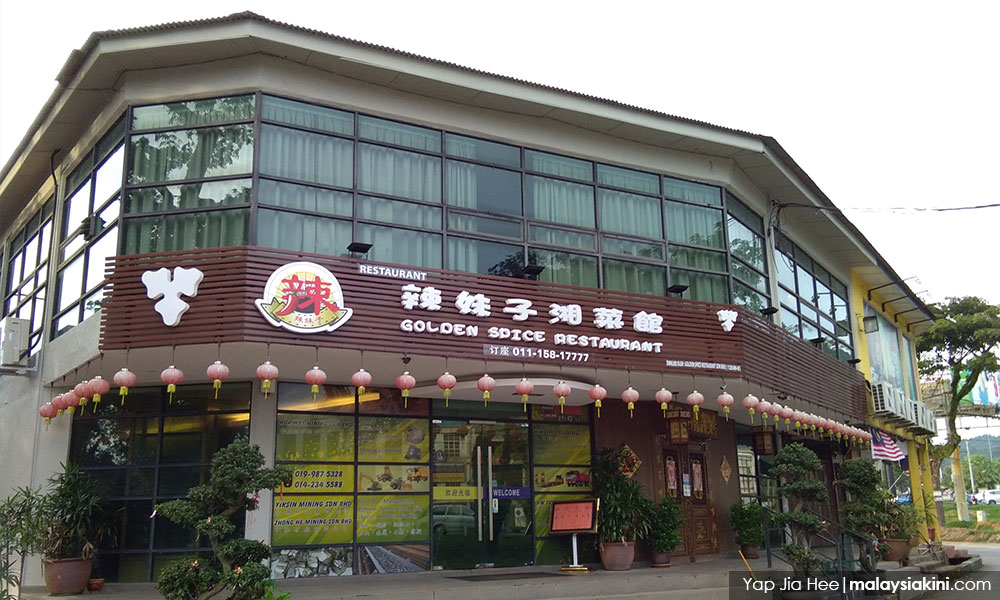
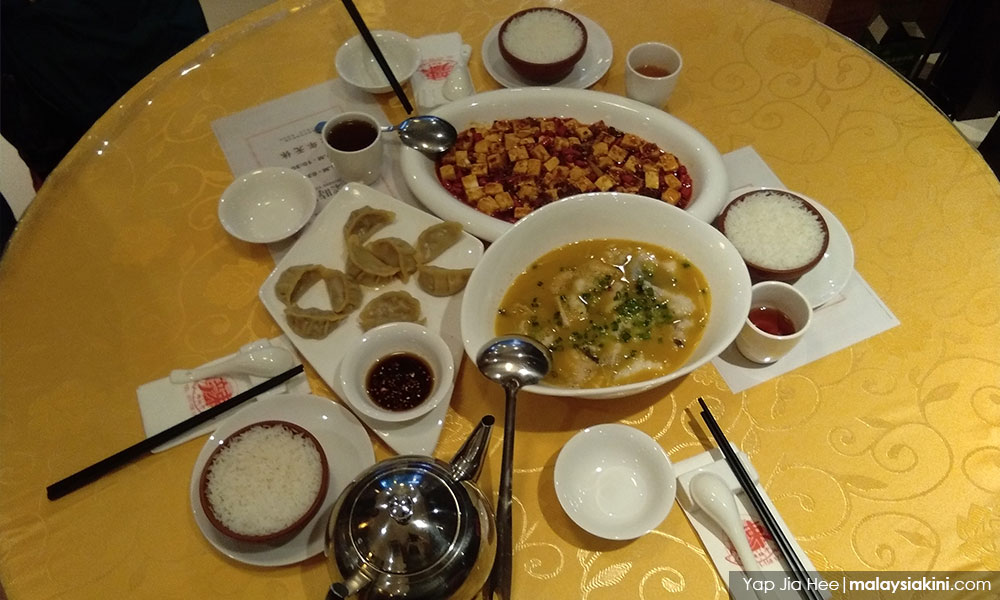
Meanwhile, at Golden Spice Restaurant, or its Chinese name Lameizi, the restaurant has done its best to ensure an authentic Chinese food experience, so much so that every item - including its stock, wallpaper, tables, chairs, tablecloths, tableware and decorations, were all brought in from China.
Opened in December last year, its manager, who spoke with a mainland Chinese accent, proudly told Malaysiakini that his restaurant was the only one serving Hunan food in Kuantan. Hunan is a southern province in China.
"Our spices and chefs are from China and it is absolutely authentic Hunan cuisine. All the items and decorations are also from China because it is more efficient this way.
"It takes a few months for us to order a wallpaper here but when we fly back to China, we can bring it over in a day," the owner said.
MCKIP taking off
While some locals have grumbled that the economic benefits have not been up to expectations, others argue that this may soon change.
Already, two billboards by Alliance Steel (M) Sdn Bhd, a joint venture by two China entities, Guangxi Beibu Gulf Port International Group Co Ltd and Guangxi ShengLong Metallurgical Co Ltd, have gone up in Kuantan town.
The company, which owns 710 acres out of the 1,219 acres of the first phase of the MCKIP, advertised that it is recruiting 4,000 production line workers for its soon-to-be-completed high-tech integrated steel plant.
One of the billboards reads: "In Malaysia, for Malaysia, 4,000 vacancies!" Another billboard reads: "Countless jobs, all in the same place... We recruit, join our team".
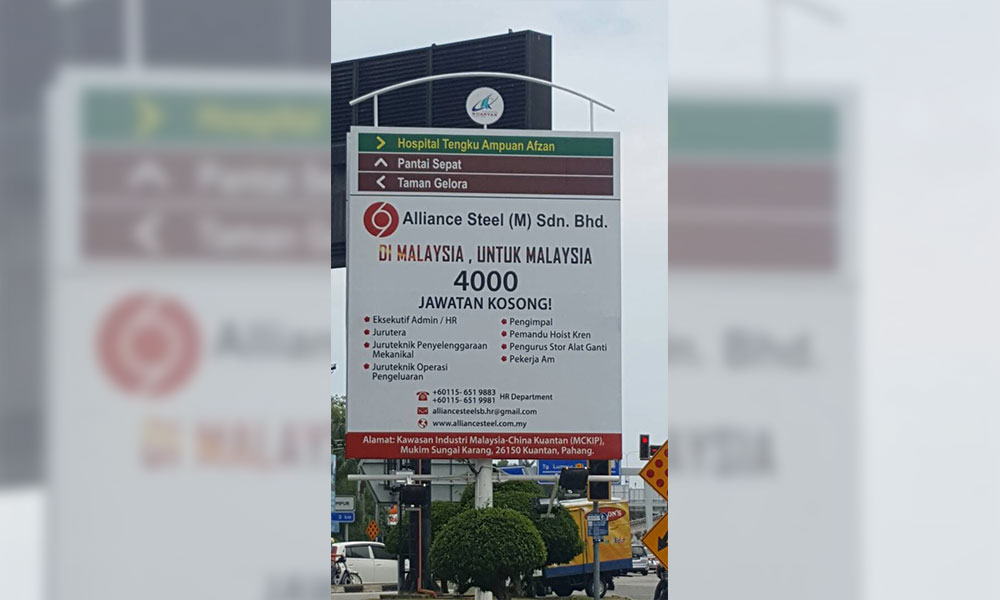
Among the positions available include administrative workers, engineers, mechanical maintenance technicians, production operation technicians, welders, crane drivers, store managers, drivers, logistic assistants, accountants, secretaries, cleaners and general workers.
MCKIP's reclusiveness during the construction stage, which is dominated by China workers, had fuelled speculation about what was going on beyond the grey walls of the industrial park, with locals even coining it as Kuantan's "Great Wall of China".
But the beginning of a recruitment drive for local workers for the operation of the Alliance Steel plant may finally put to rest the speculation in Kuantan about the MCKIP.
It remains to be seen whether the local population can meet the requirements for a high-tech plant amid constant complaints from employers, even long before MCKIP's arrival, about the mismatch of skill sets among Malaysian graduates.
The Pahang government is optimistic that Malaysians can take up two-thirds of the jobs when the steel plant becomes operational.
According to a written reply to Teruntum state assemblyperson Sim Chon Siang dated Sept 14, the state government expects 70 percent of the 4,000 workers for the plant's operation to be Malaysians. The remaining 30 percent are expected to be from China.
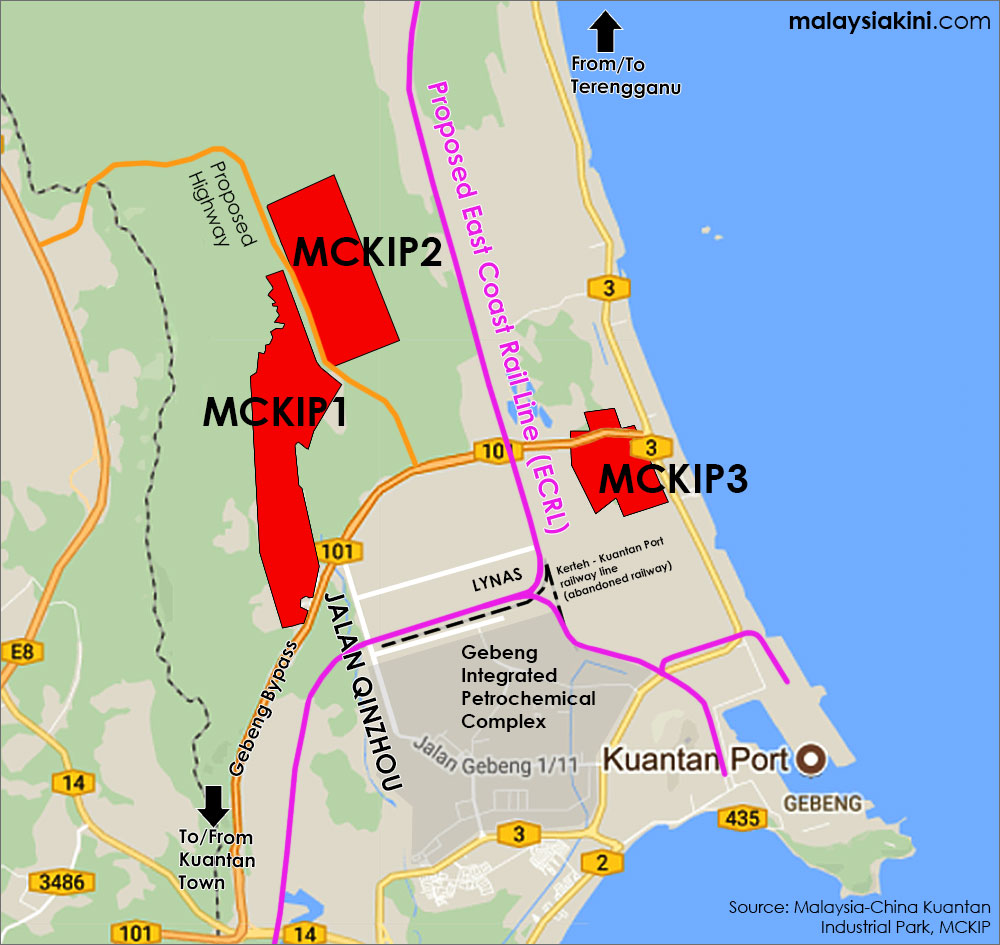
In the first phase of the MCKIP, the state government said, besides the 710 acres sold to Alliance Steel, the remaining 509 acres had been offered to interested investors and construction is expected to start soon.
"As for MCKIP 2, negotiations for land sale have concluded and MCKIP has paid an earnest deposit to the Pahang State Development Corporation.
"MCKIP 3 will include industrial, commercial, logistics, warehouses and housing, which will be readily offered to investors," the state government said in the written reply.
In total, the state government expects the MCKIP, over three phases, to generate 15,000 jobs and RM19.4 billion in investments as well as entrepreneurship opportunities for at least 500 local businesses.
-Mkini

No comments:
Post a Comment
Note: Only a member of this blog may post a comment.