


AN ATTEMPT by a Kuala Lumpur guarded neighbourhood to impose facial scans as part of its security upgrades has raised privacy concerns.
The Taman Desa Phase 1 Residents Association (TDP1RA) had intended for non-subscribing residents and visitors to lower their windows for their faces to be scanned before the boom gate opens.
The requirement stated in an Aug 14 notice has angered some residents, who questioned why they should have to submit to facial scans to access their own neighbourhood.
A Taman Desa resident who wanted to be identified only as Ong, said the system was intrusive and impractical during bad weather.
“It is an invasion of privacy. If it is pouring, we still have to lower our windows and risk getting drenched just to enter or leave our own neighbourhood.
“This is also a public road. What right do they have to force people to scan our faces?” Ong said.
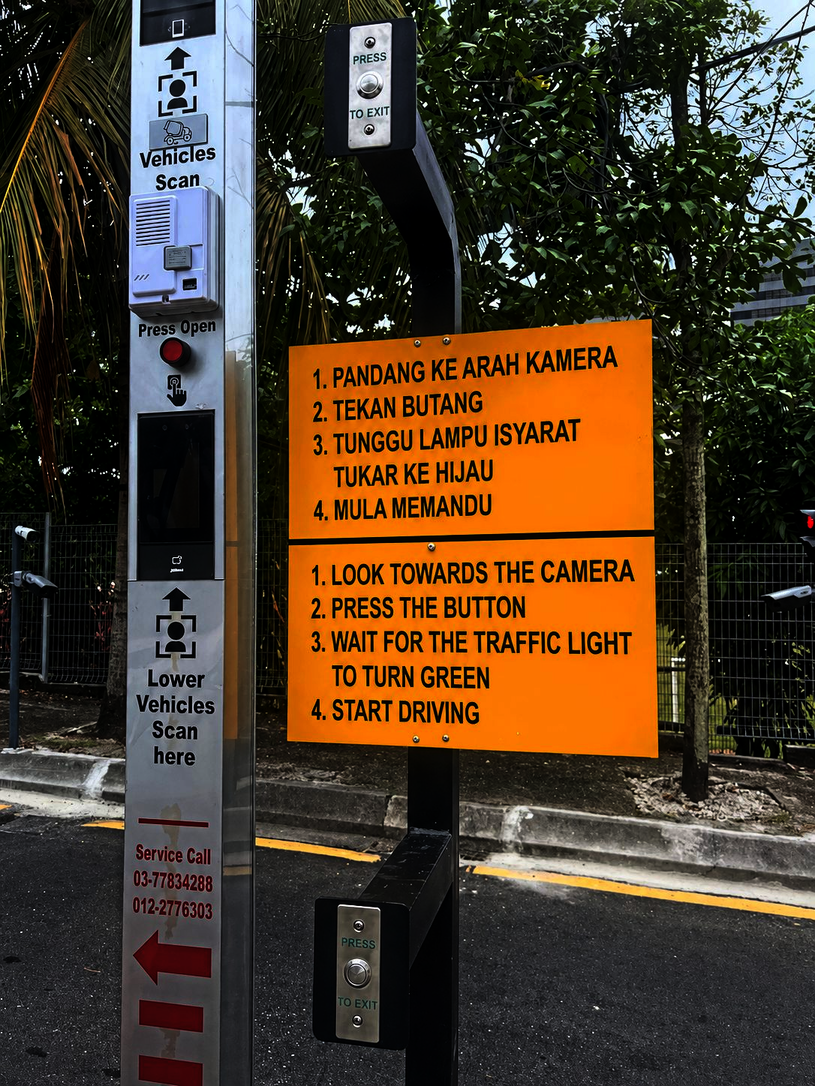
Non-subscriber Charles C. said that choosing not to join the scheme did not amount to consent to the association scanning his face.
“My family and visitors should not have to surrender their facial images simply to visit me.
“Who will store the images, who can access them and how long will they be retained? These are public roads,” he said.
Charles said the amended Personal Data Protection Act 2010 classified biometric data as sensitive personal data, whereby the processing generally required explicit consent unless a statutory exception applied.
Another long-time resident, CK Lee, said he had refused to subscribe to the scheme and opposed the facial-scanning requirement.
Lee also raised the issue of closing off entry points into the housing area.
He warned this could delay ambulances and fire engines, while navigation applications could send visitors on a “wild goose chase”.
“When several exits are closed, valuable time can be lost in an emergency,” he said.
Cheng Wei, whose family has lived in Taman Desa for 48 years, said they had subscribed to the security arrangements from the start and believed the scheme had helped keep the neighbourhood safe.
He regarded facial recognition as a security improvement that could speed up visitor processing, noting that subscribers entered using registered number plates and were not required to undergo facial scans.
Annual subscriptions for the security scheme range from RM1,440 to RM2,280, depending on the type of property, with residents also asked to contribute a one-off RM300 towards new security equipment.
In a March 5 letter, Kuala Lumpur City Hall (DBKL) said CCTV cameras and a facial- recognition system had been installed without its approval.
TDP1RA president Frank Yeh said it followed the required procedures and secured the support of 81% of residents. - Star

No comments:
Post a Comment
Note: Only a member of this blog may post a comment.