


The air at the foot of Gunung Kanthan, Tambun, Perak is cool and pleasant, accompanied by the chirping of birds and the sounds of insects amid the greenery surrounding the century-old Sakyamuni Caves Monastery.
However, the area is no longer easily accessible, with an auxiliary police booth at the monastery’s main entrance controlling the entry and exit of visitors, who are greeted by signs declaring the Buddhist sanctuary as “private property”.
A volunteer at the monastery, Yap Seong Yee, told Malaysiakini that boulders were placed by volunteers to restrict movement towards the spiritual and meditation centre.
After squeezing through small gaps between the boulders, visitors must climb stairs that cross a rocky, damp corridor before reaching the main place of worship located higher up in a cave.
As Malaysiakini journalists climbed the stairs with sweat-drenched faces despite a chill in the air, repeated reminders of “be careful, there is moss” were issued.
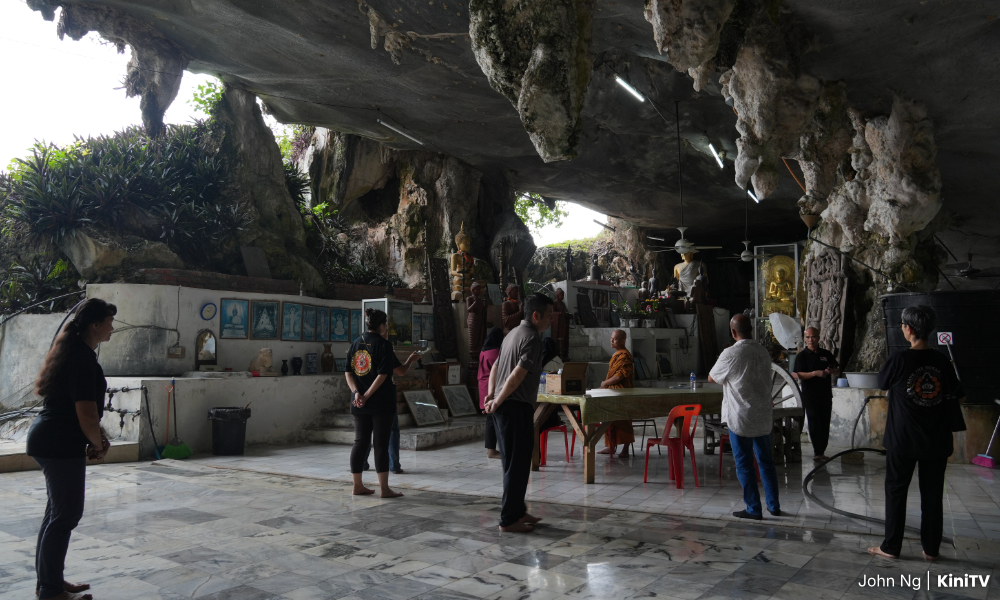
“The closer to this place, the cooler the air feels. If you go inside, it’s even cooler,” the head monk of the place, Bhante Kusala, said while leading journalists up the stairs where limestone formations act as natural walls and roofs, with stalactites hanging above the place of worship.
When Kusala stopped to talk, a few flies occasionally landed on his face. He ignored them and continued to share about the monks’ lives at Gunung Kanthan as if that minor annoyance did not exist, hinting at a calmness that comes after years of meditation.
The Sakyamuni Caves Monastery is a place of worship and retreat for a group of monks threatened by development due to a land dispute with the cement company Associated Pan Malaysia Cement (APMC), a subsidiary of YTL Corporation Berhad.
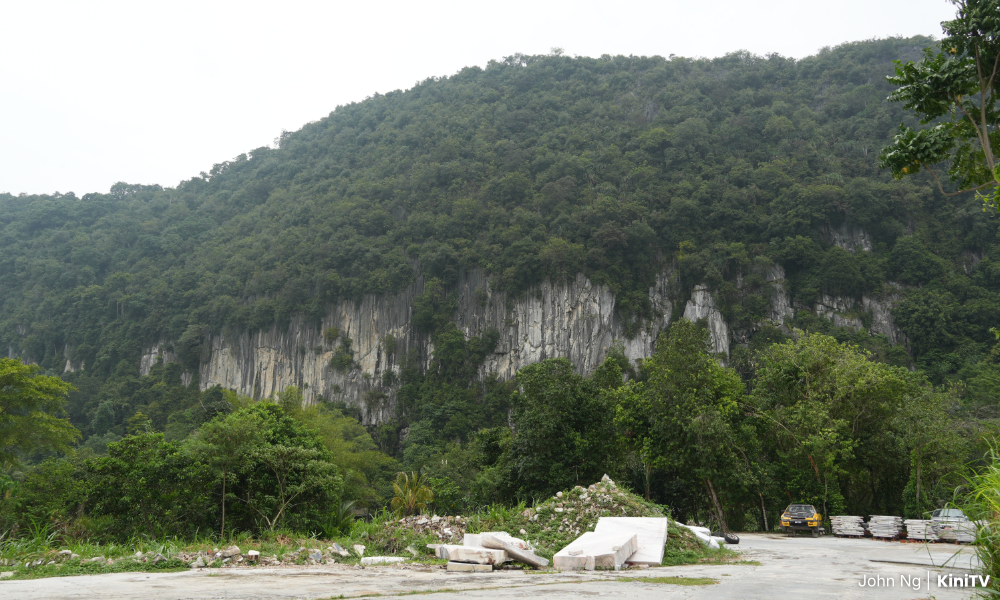
A Court of Appeal decision three years ago ruled against the monastery, which now faces potential demolition.
However, for its inhabitants, relocation is no simple matter as the monastery holds great significance for them, especially from a spiritual aspect.
With Malaysiakini’s attempt to contact YTL Corporation yet to yield a response, Perak Menteri Besar Saarani Mohamad told Malaysiakini that the state government will not comment on the matter as “the court has made a decision”.
Malaysiakini visited the monastery to understand why the place was important to the 15 Buddhist ascetics who remain there.
‘Calmness, serene air’
When most people are still fast asleep, a monk’s day at the Sakyamuni Caves Monastery begins between 2am and 3am, using the time before sunrise for meditation.
“It is very quiet here in the morning, no disturbance at all. The air is clean; all the sounds are natural.
“(Meditation) starts from 3am until it turns bright (with the first signs of daylight),” said Kusala, a former veterinarian who has distanced himself from the comforts of the material world for 25 years.
Conditions outside of the monastery, Kusala said, are not the same.
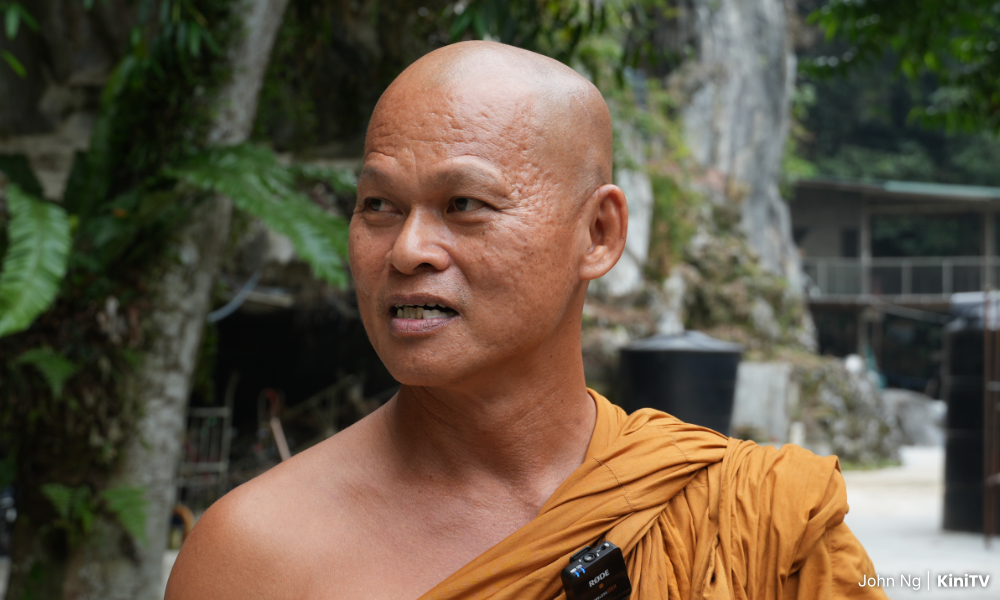
“There is the noise of cars, people shouting, the sounds of handphones, but here, everything is natural,” he added.
The meditation sessions can last until 6.30am or 7am before time is spared for breakfast, with some monks eating only once or twice a day from home-cooked meals brought by devotees or food prepared by themselves in the monastery’s kitchen.
A monk’s life, however, involves more than just quiet meditation, as they also perform various chores around the monastery.
For example, if any part of their home is damaged, they try to repair it themselves.
“If we only sit and meditate, our health won’t be so good. If we do work, it’s like a form of exercise,” Kusala explained, noting that their time is also filled with reading religious texts, listening to teachings of Buddha, and seeking guidance from more experienced monks.
For over 30 years, a Bodhi tree with seeds originating from India has stood near the path leading to the caves as a silent witness.
The Bodhi tree is significant in Buddhist tradition as the founder of Buddhism, Siddhartha Gautama, attained enlightenment while meditating under a Bodhi tree.
Weekend teachings, guidance
On weekends, some devotees come to the monastery to meditate, learn Buddhist teachings, or seek views on life problems, including issues with their families and work.
“Money is only temporary. What is important is the heart, how it can be quiet,” Kusala said, noting that “quiet” is not merely a condition where birds do not chirp, or humans do not talk.
Expounding on the state of “Nirvana” (blissfulness), the Ipoh native said “quiet” also refers to what happens within a person - including being free from desires, anxieties, anger, and other emotions that could disturb the mind.
Kusala, who spent five years working before choosing to become a monk in 2001, admitted that like any other normal person, he had also pursued worldly achievements typically deemed as indicators of one’s success.
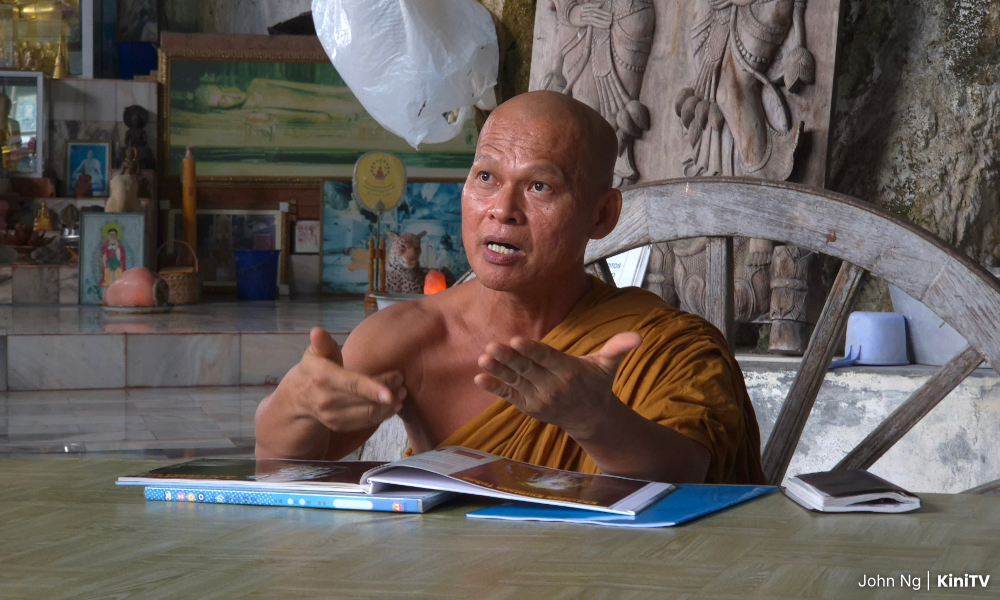
“Finding money was not what I truly wanted. The material world is important, but can everything I gained give me a quiet heart or soul? No,” he said.
At a lower part of Gunung Kanthan, there are several small spaces between tree trunks and rock surfaces green with moss used by monks to meditate.
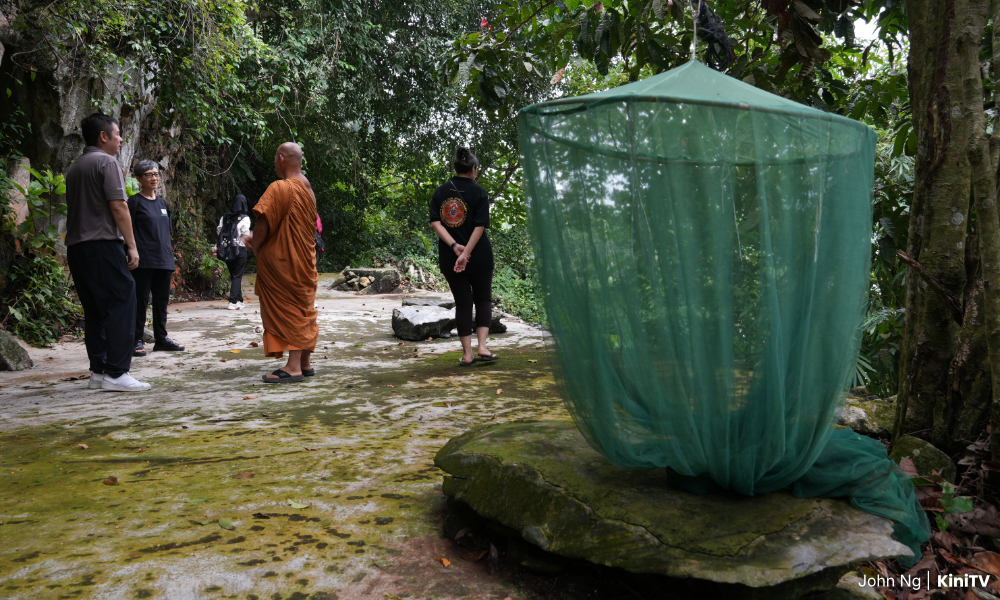
One enclosure looks far from how one would typically imagine a “room” by average standards.
A green mosquito net is hung at the entrance of a small cave-like space nestled between rocks, forming a thin boundary between the monk sitting inside and the mountain environment.
“Sometimes, we want fresh air, so monks will come out and sit here, but if we want a truly serene and quiet atmosphere, we go inside the cave.
“Mobile phones are completely useless. Signals cannot enter,” Kusala said, adding that some monks have camped in the outdoor space for up to a year.
‘Buddha statue in the belly of the mountain’
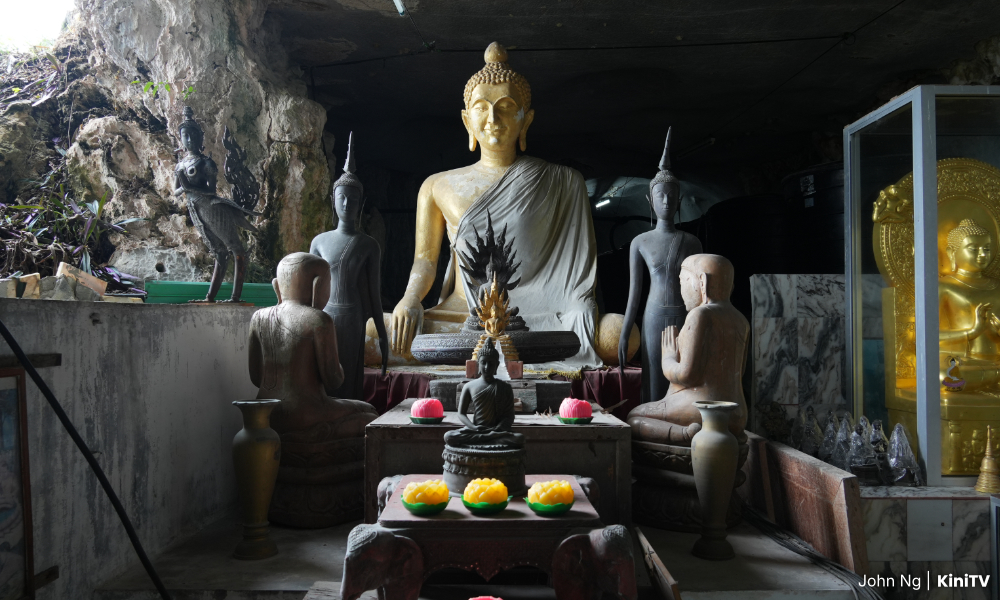
In its main place of worship, man-made structures seem to adapt to the cave’s natural shape, with stalactites hanging over a marble-laid floor and Chinese calligraphy on its walls proving that the place of worship has existed since at least 1951.
According to Kusala, building materials were arduously brought in by previous generations of monks, who did not enjoy the luxury of modern equipment - a feat made even more impressive when gazing at a golden Buddha statue over two metres tall in the cave.
Inside that statue is a smaller Buddha statue which, according to tales, was brought from Thailand by the monastery’s founder known as “Lao Shi Fu” (grandmaster) when he arrived at Gunung Kanthan a century ago after travelling to seek the place he had seen in a vision.
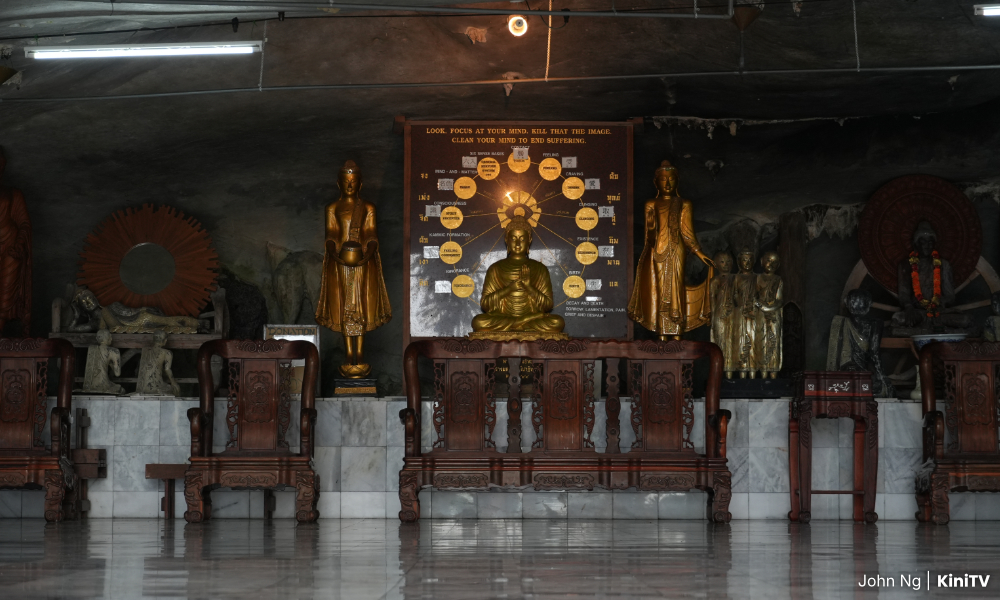
In the past, when the trees in front of the cave were not as tall as they are now, the statue could even be seen from outside the cave.
‘For those seeking solace’
Kusala, who was named Chiong Sai Tin before his ordination, is among the fourth generation of monks to live at the monastery, and has experienced firsthand why the place of worship is so vital, not just for him and his peers, but also for others seeking solace.
Although its surroundings offer views rarely seen in the middle of a city, Kusala, who has resided at the monastery for around 25 years, does not consider the monastery a tourist destination.
“People who come really know they want to learn, (then) only they come. They come here, they make this place their home. That is why we say this place is not just ours,” he said.
Malaysiakini also saw several dogs roaming around the monastery area, occasionally following those walking from one section to another.
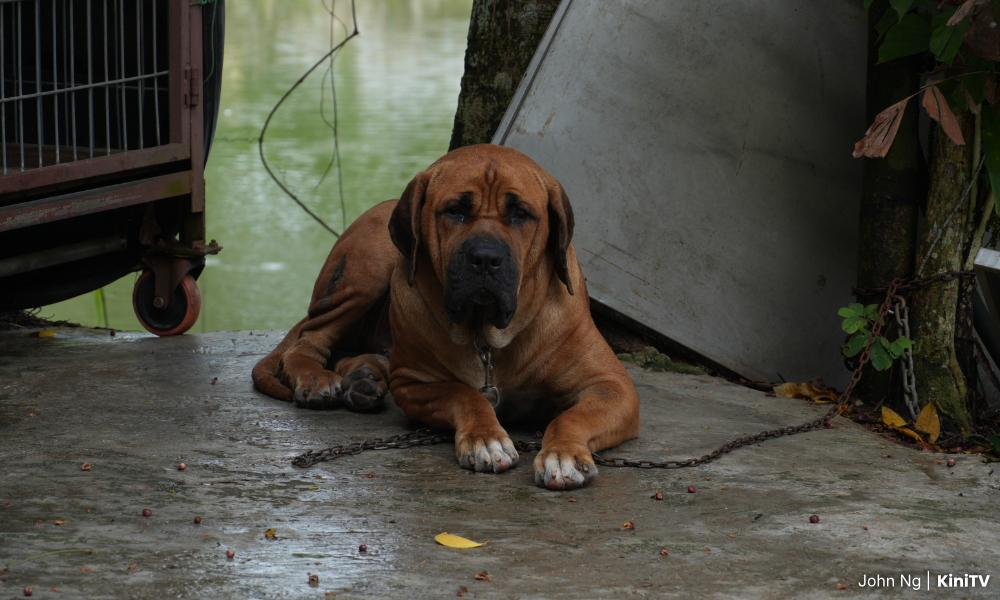
Kusala said some of the dogs were abandoned by people around the area before being taken in and cared for by the monastery dwellers, while some were passed on to the monks after owners fell ill and were no longer able to care for their pets.
‘Come here and experience’
After traversing the monastery area, climbing the stairs, entering the cave, and seeing the small spaces where monks meditate, one question remained: what actually makes the Sakyamuni Caves Monastery special from others of its kind?
When the query was posed to Kusala, he did not cite architecture, statues, or the monastery’s age.
Instead, he said evidence of the location’s speciality is something difficult to explain to people who have never set foot there, adding: “Even if I speak, you will not feel it is special. If people want to feel that specialness, they must walk in here and feel it.”
While ongoing efforts to defend Gunung Kanthan require much time and energy, Kusala said his religious convictions, shared by many others, have eased their concerns in some way.
“It would be a waste for these mountains to be ruined… what is God’s property cannot be destroyed.
“How can money buy God?” he asked. - Mkini

No comments:
Post a Comment
Note: Only a member of this blog may post a comment.