


In November, a lone gunman ambushed two United States National Guard personnel in Washington, DC, near one of the most heavily defended political zones in the world.
It underscores a central reality of modern security: even sophisticated systems can fail when intelligence coordination, surveillance, and situational awareness break down.
The attack’s symbolism lies not only in its location but in its exposure of institutional blind spots.
For Malaysia, the incident offers important lessons for understanding long-standing vulnerabilities in Sabah’s eastern maritime frontier, the northern peninsula bordering Thailand’s Patani region, and the ongoing process of strengthening border governance through the newly established Malaysian Border Control and Protection Agency.
The Washington shooting demonstrates that visible patrols or physical barricades alone cannot guarantee security; effective protection requires anticipatory intelligence, rapid coordination, and integrated, multi-layered systems of threat detection.
Sabah’s porous coast
Sabah’s security environment remains profoundly shaped by instability in South Mindanao in the Philippines, where militant fragmentation, clan disputes, and criminal networks intersect.
The 2013 Lahad Datu intrusion was not an isolated event but a manifestation of structural vulnerabilities embedded in Sabah’s geography.
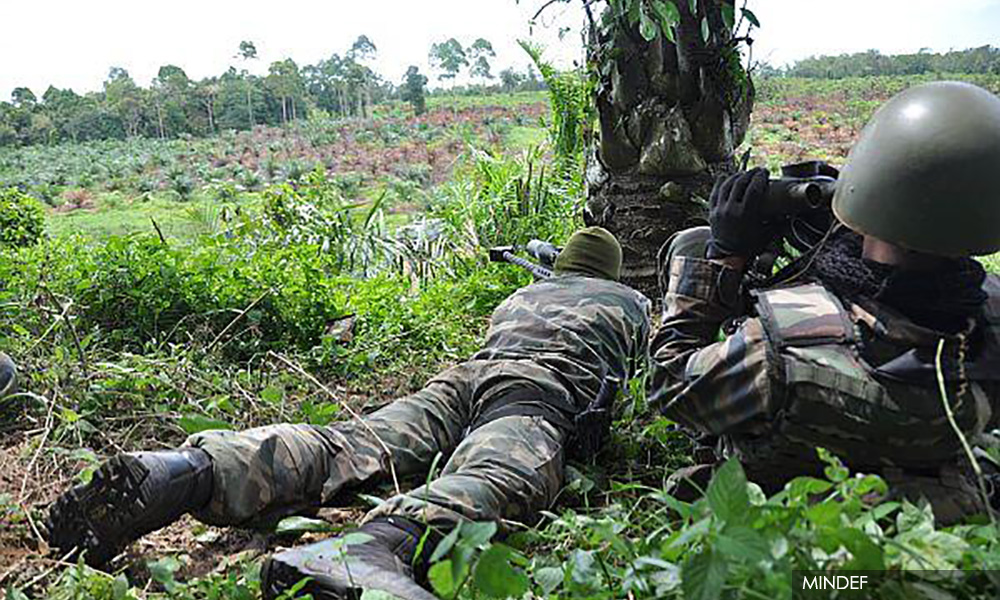
The state’s coastline stretches more than 1,400km and contains hundreds of unofficial landing points, making it one of the most porous maritime borders in Southeast Asia.
Kidnappings-for-ransom, smuggling operations, and small-group militant infiltrations have repeatedly exploited these weaknesses.
Much like the Washington assailant who bypassed layered security in a high-threat zone, cross-border actors in Sabah understand how to manoeuvre around conventional patrol routes, taking advantage of the region’s island clusters, shallow waters, and close proximity to conflict-prone areas of the southern Philippines.
Repeated incidents illustrate that maritime presence alone, no matter how visible, cannot secure Sabah without real-time intelligence, data sharing, and coordinated enforcement involving Malaysia, the Philippines, and Indonesia.
Ties that bind
Migration and identity management form another area of parallel concern. In the US case, the gunman’s entry pathway sparked debate about vetting, documentation gaps, and oversight mechanisms.
In Sabah, the challenge is exponentially more complex due to the presence of large populations of undocumented migrants, stateless families, and communities with long-standing cross-border kinship ties.
While the majority are peaceful and deeply integrated into local economies, the absence of proper documentation and systematic monitoring creates blind spots that can be exploited by militants, smugglers, or ideological networks moving between Mindanao and Sabah.

Here, the role of the Malaysian Border Control and Protection Agency becomes critical. By unifying multiple border and inspection agencies under one command, it is intended to strengthen identity verification, create consistent inspection standards, and enhance data-driven screening at air, sea, and land entry points.
This does not resolve the challenge of undocumented communities already within Sabah, but it does improve Malaysia’s ability to detect irregular arrivals, dismantle trafficking corridors, and prevent illicit actors from exploiting administrative loopholes.
Malaysia’s northern border with Thailand presents a different yet equally challenging security dynamic. The Patani insurgency, driven by ethno-religious grievances and historical identity politics, continues to generate sporadic violence in southern Thailand.
Although Malaysia is not a direct target, the borderlands of Kelantan, Kedah, and Perlis act as buffers where ideological spillover, cross-border smuggling, and militant movement can occur.
Insurgents sometimes seek shelter or logistical support on the Malaysian side, and smuggling networks funnel weapons, narcotics, and contraband through established informal routes.
Moreover, the cultural-linguistic affinity between Patani Malays and northern Malaysian communities allows insurgent narratives to flow across social networks.
Fragmented response
As with the Washington case, where investigators examined the shooter’s digital footprint for ideological cues, Malaysia must recognise the role of online platforms in amplifying Patani-related grievances, potentially radicalising at-risk individuals.

The Malaysian Border Control and Protection Agency’s centralised border management can help tighten scrutiny of cross-border movements, but countering ideological spillover requires collaboration between intelligence agencies, community leaders, and digital-monitoring units.
The Washington attack also highlighted the dangers of unclear institutional mandates during crises. Conflicting statements, coordination delays, and operational confusion undermined public confidence.
Malaysia faces similar risks, especially in Sabah, where the security architecture includes the Royal Malaysian Navy, Malaysian Maritime Enforcement Agency (MMEA), Eastern Sabah Security Command (Esscom), marine police, army units, immigration, and state authorities have overlapping roles.
Fragmentation can hinder rapid response, weaken intelligence flow, and create gaps in enforcement.
The Malaysian Border Control and Protection Agency is designed partly to address these weaknesses by centralising border control functions, standardising procedures at checkpoints, and reducing agency overlap.

While the agency does not replace maritime or military actors, it introduces clearer command lines for border operations and helps create a more cohesive interface between security branches.
Its effectiveness, however, depends on strong inter-agency cooperation, interoperable data systems, and joint operational planning.
Online radicalisation
Another dimension exposed by the Washington incident is the growing importance of digital ecosystems in shaping modern threats.
The attacker’s devices reportedly contained key evidence of motivations and planning, reflecting how radicalisation, coordination, and ideological alignment increasingly occur online.
Malaysia faces similar risks: Abu Sayyaf-associated propaganda circulates through encrypted messaging apps, Patani insurgent content spreads through Malay-language networks, and youths in border regions face heightened exposure to recruitment narratives, misinformation, and extremist symbolism.

Effective security, therefore, requires proactive digital monitoring, counter-messaging initiatives, and partnerships with technology platforms, alongside strengthened cyber-literacy in vulnerable communities.
The Malaysian Border Control and Protection Agency’s adoption of digital screening technologies and unified data systems can support this effort, but digital threats extend far beyond border checkpoints and require whole-of-government coordination.
Ultimately, the Washington shooting, Sabah’s recurring maritime threats, and the Patani conflict reflect a fundamental truth: security lapses often expose deeper structural weaknesses rather than isolated failures.
Malaysia’s vulnerabilities stem from porous borders, inconsistent enforcement, socio-economic marginalisation in border communities, fragmented agency roles, and an evolving digital landscape that accelerates radicalisation and cross-border networks.
The agency represents a structural reform aimed at addressing some of these issues by centralising border management, improving identity verification, enhancing screening processes, and supporting coordinated intelligence flow.
However, the agency must be embedded within a broader ecosystem of maritime surveillance, community-driven intelligence, regional cooperation, and digital resilience.
By integrating the lessons of the Washington attack with the realities of Sabah’s maritime insecurity and the Patani insurgency, Malaysia can work toward a security strategy that is anticipatory, intelligence-driven, technologically modernised, and socially grounded.
Borders are not static lines but complex ecosystems involving people, networks, and narratives.
A forward-looking Malaysian security framework must therefore combine the operational capabilities of the Malaysian Border Control and Protection Agency, the maritime vigilance of Esscom and MMEA, the diplomatic engagement of Thailand and the Philippines, and the digital resilience needed to counter 21st-century threats.
This holistic approach is essential for safeguarding national stability, strengthening public trust, and preparing Malaysia for the evolving security landscape of the years ahead. - Mkini
R PANEIR SELVAM is the principal consultant of Arunachala Research & Consultancy Sdn Bhd (Arrescon), a think tank specialising in strategic national and geopolitical matters.
The views expressed here are those of the author/contributor and do not necessarily represent the views of MMKtT.

No comments:
Post a Comment
Note: Only a member of this blog may post a comment.