


For days after Sabah’s political collapse, political pundits and the social media chattering classes have performed an elaborate dance around the central question: who is responsible?
Party officials blame “local dynamics”. Coalition partners whisper vaguely about “unique Sabah conditions”. Federal voices hide behind the evergreen cliché that “Sabah is unpredictable”.
Yet, the simplest, most unavoidable truth is the one almost everyone refuses to articulate: Prime Minister Anwar Ibrahim bears responsibility for the defeat.
This is not to say that he engineered the loss, but because his administration created the conditions that made it almost inevitable.
There is no avoiding it. Anwar's government is paralysed by caution, coalition partners are afraid to speak honestly, and the premier is unwilling to risk his Malay vote bank or disturb his carefully curated Islamic posture.
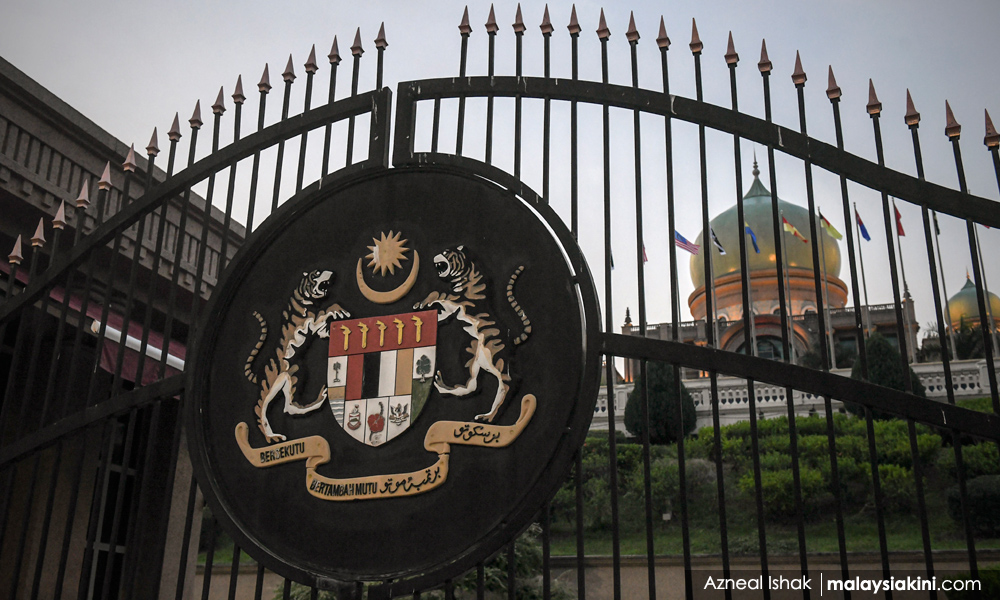
The result was not merely a messaging failure. It was a leadership vacuum, and Sabah voters filled that vacuum with a verdict of their own.
One characteristic of this Madani administration is that this government governs by avoidance.
From the moment the unity government was formed, its challenge was clear: bind together ideologically incompatible parties while delivering enough reform to maintain credibility. What followed was predictable. Instead of leading decisively, Anwar adopted a strategy of political risk-avoidance.
Policies that might alienate the Malay electorate were diluted, delayed, or dressed in softer language. Institutional reforms promised for decades were reduced to slogans.
Coalition grievances were managed privately but never resolved. The bottom line was that the promises of the manifesto remain largely unfulfilled.
This strategy might have worked, perhaps, in Peninsular Malaysia, where incumbency and fatigue with extremism still carry weight.
However, Sabah is not Peninsular Malaysia. Sabah voters punish complacency. They punish arrogance. More importantly, they punish leaders who speak of equality while practising hierarchy.
Putrajaya conveniently ignored that Sabah wanted partnership, and not paternalism, because for decades, Sabah’s demand has been consistent: not charity, not rhetoric, but respect.
Respect in decision-making, in resource allocation, in representation, and in the federal relationship. Sabah saw ministries in paralysis, and few, if any, were willing to take political responsibility.
The political pundits spoke of “structural challenges”, and the extremely vocal and very dominant chattering classes on social media spoke more bluntly: KL only remembers Sabah when it is convenient.
Corruption scandal
This sense of federal condescension may not have been created in 2025, but it was the unity government which amplified it by refusing to confront the political cost of being honest with its own base.
Putrajaya proudly boasts about the Madani principles of governance, whereby corruption will be swiftly dealt with, but if one moment crystallised the disillusionment, it was the Albert Tei affair.
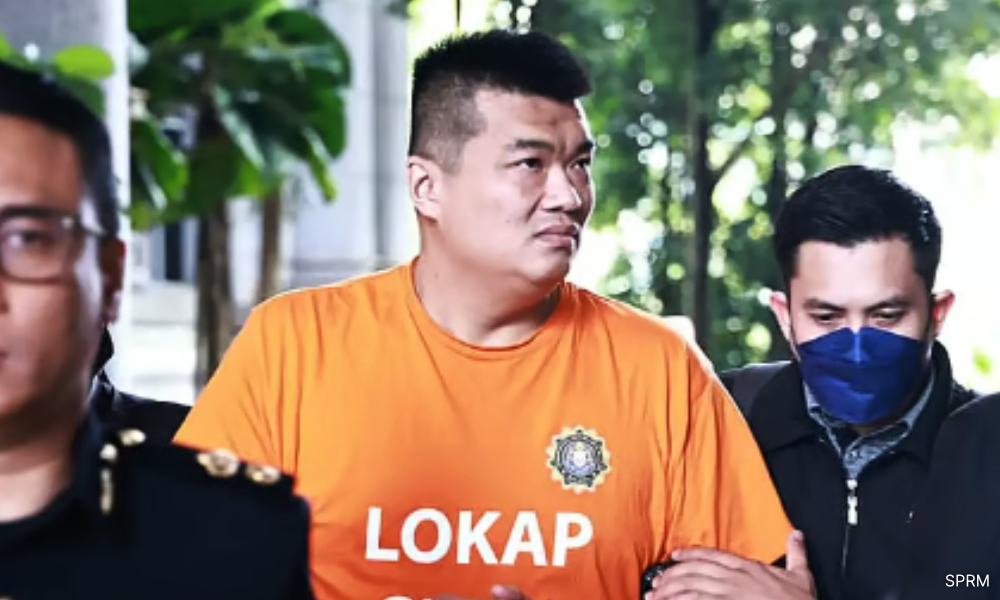
Tei's arrest was itself a flashback to 1998 when Anwar was arrested under the orders of the then-prime minister, Dr Mahathir Mohamad, in a dramatic midnight raid, confronted by masked officers.
He later appeared in court with visible injuries. Malaysians realised then how state machinery can be weaponised against individuals who challenge entrenched interests.
Today, ironically, under Anwar's leadership, Tei exposed possible corruption and faced a strikingly similar display of intimidation. Did Anwar not recall that frightening chapter in his life? For many Malaysians, this feels like history looping back on itself.
Then came the foot-dragging investigations, contradictory statements, and the spectacle of enforcement agencies appearing reactive only after public pressure.
So, if Madani was marketed as moral governance: transparent, fair, “civil”, but when confronted with allegations that tested this claim, the government responded with the same lethargy, opacity, and selective urgency that Malaysians have experienced under previous administrations.
Thus, to Sabahans, this was not a legal episode; it was a symbolic moment. This was a government that trumpets reform yet acts familiarly. A slogan that promises moral clarity but delivers bureaucratic fog.
It was a painful reminder that “Madani” functions more as branding than as a governing philosophy.
The political pundits debated due process. The chattering classes saw something simpler: nothing has changed. Or snafu.
Sabah’s rejection was not sudden. It was the culmination of discontent that stretched across three administrations: the BN era’s broken commitments, Warisan’s instability, and Perikatan Nasional’s short-lived federal alignment.
Sabahans’ message
The unity government had something those governments did not, which is goodwill. Sabahans wanted it to succeed. They believed in the idea of a national reset, shared governance, and a politics less defined by fear.
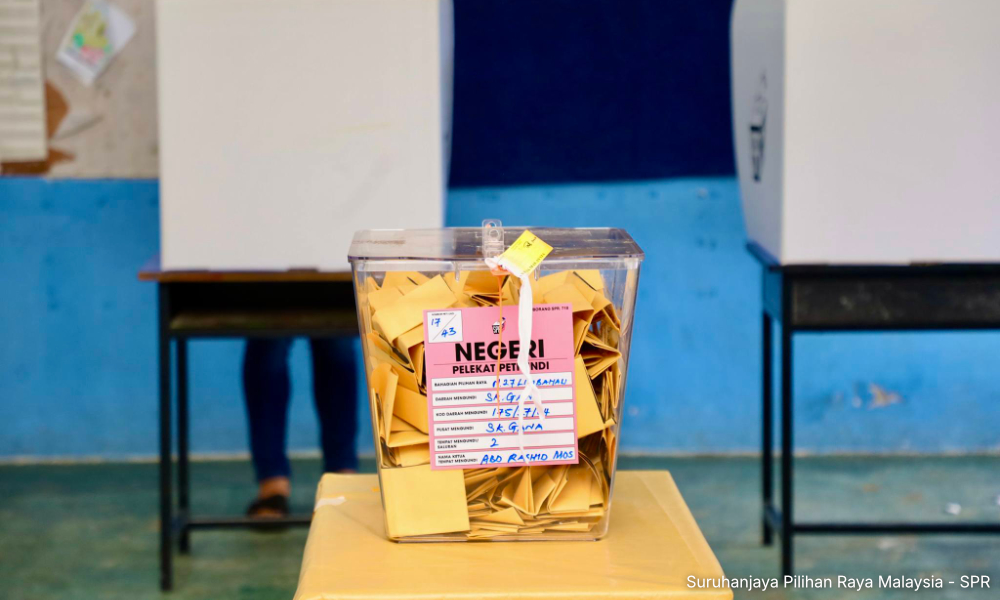
That goodwill was squandered through hesitation, political over-calibration, and the refusal to make difficult decisions. A government afraid to offend anyone eventually convinces everyone that it stands for nothing.
Framing the Sabah collapse as a “Sabah problem”, by many political pundits, is to miss the point entirely. This was not a protest against individual candidates, local party feuds, or campaign logistics.
It was a judgment on leadership at the top.
Not that Anwar micromanaged Sabah, because he didn’t.
Not that he sabotaged his own allies, because he didn’t.
However, he allowed drift to replace direction. Unsurprisingly, Sabah voters responded accordingly.
Sabah sent a message not just about representation, but about the credibility of the entire governing project. If the unity government hopes to stabilise itself before GE16, then it must move beyond slogans and adopt measurable governance.
Leadership cannot be delegated. Therefore, Anwar must acknowledge the political failures, accept his share of responsibility for Sabah's collapse, recognise Putrajaya's strategic mistakes, and commit to correcting them. - Mkini
MARIAM MOKHTAR is a defender of the truth, the admiral-general of the Green Bean Army, and the president of the Perak Liberation Organisation (PLO). Blog, X.
The views expressed here are those of the author/contributor and do not necessarily represent the views of MMKtT.

No comments:
Post a Comment
Note: Only a member of this blog may post a comment.