



KUALA LUMPUR, Jan 24 — In strata properties, one resident’s decision to stop paying maintenance fees can compromise fire safety for the entire building.
This is because unpaid fees often leave the joint-management bodies (JMB) of these high-density developments like flats, condominiums, townhouses with shared facilities, and stratified commercial buildings without the funds to properly maintain shared fire safety systems, increasing the danger during emergencies.
“Do not default on your payments, because sometimes when we conduct inspections and issue fire-hazard abatement notices to joint-management bodies they inform us of budget constraints they faced,” Fire and Rescue Department of Malaysia (Bomba) director-general Datuk Seri Nor Hisham Mohamad said in a recent interview.
Malay Mail wanted to know the fire risk for Malaysians living in highrises following the nightmare blaze at the Wang Fuk Court apartment complex in Wai Po, Hong Kong last November that burnt for nearly two days and claimed the lives of 161 people, most of them residents in seven out of the eight blocks, as well as a firefighter on duty.
Hisham Mohamad stressed that payment defaulters are the main reason critical fire protection installations are poorly maintained in many inspected strata properties in Malaysia.
“Our findings revealed that some of these JMBs have had to prioritise other essential systems other than maintaining their fire extinguishment systems with whatever funds they have,” he said.
The findings point to a continuing problem, as poorly maintained fire protection systems remain a recurring issue in many inspected strata properties.

Fire hazards carry jail terms and fines
Nor Hisham said fire-fighting equipment or fire safety installations that are not in efficient working order are considered fire hazards under the Fire Services Act, adding that a fire hazard abatement notice may be issued to compel the premises owner to make the necessary rectifications.
He highlighted that non-compliance carries a penalty of up to RM5,000 in fines or imprisonment of up to three years, or both, in addition to a further daily fine of RM100 for each day the offence continues after conviction.
“Imagine those fines which can be used for the betterment of the strata property if residents have a sense of responsibility to their own dwelling.
“Vice-versa, occupants must also work in tandem to compel errant JMBs to maintain these essential systems as a priority,” he said.
Under the Strata Management Act (Act 757), parcel owners who ignore a written notice to pay their management charges without a reasonable excuse can also face a fine of up to RM5,000, up to three years’ imprisonment, or both.
Vandalism worsens fire response delays
Unpaid maintenance fees are not the only challenge undermining fire safety in strata living, Nor Hisham said, pointing to growing cases of vandalism involving fire extinguishment systems in common areas.
He said such acts range from petty theft of metal components to misuse, including unauthorised water diversion, leaving the equipment inoperable during real emergencies.
“Sometimes when we respond to a call, we discover either the fire hose reel or the hose head is missing, further delaying fire extinguishing operations because we have to make double trips.
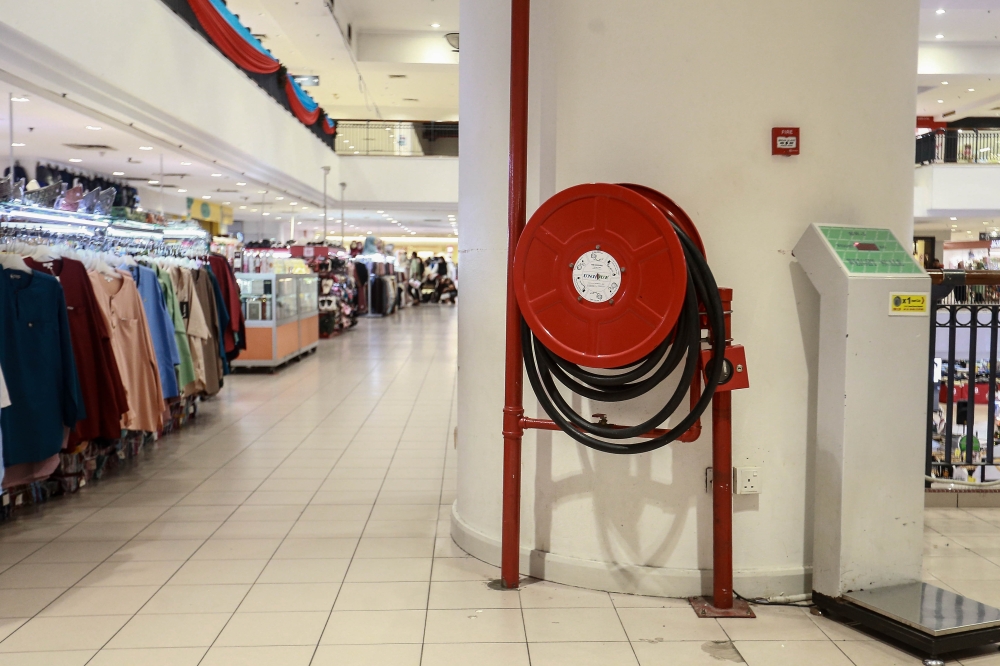
Nor Hisham said vandalism has also forced some JMBs to isolate highly pressurised water pump systems from illegal public use by switching them from automatic to manual mode, inadvertently slowing down firefighting efforts.
“All of these small, irresponsible acts set off a domino effect that can compromise fire safety in strata properties,” he said.
Awareness and basic knowledge can save lives
Despite these challenges, Nor Hisham stressed that basic firefighting knowledge among residents remains a critical line of defence.
Last year, Bomba conducted more than 42,000 fire safety awareness activities nationwide, including demonstrations and mock fire drills.
Nor Hisham said the department plans to intensify outreach this year by engaging more JMBs through town hall sessions to clarify responsibilities and compliance requirements.
“Even knowing how to use a fire extinguisher, ensuring emergency exits remain unlocked, keeping keys in a consistent and accessible spot can mean life or death,” he added. - malaymail

No comments:
Post a Comment
Note: Only a member of this blog may post a comment.