


The management of a Hindu temple in Kajang, Selangor, has rejected a proposal by the state government to construct a new 383m roadway to connect it with a main street.
According to the Sri Maha Mariamman Temple committee, the plan would force its devotees living at the nearby Taman Cuepacs to take a detour of about 6km to get to the temple.
This was opposed to an earlier plan to pave a 50m roadway that would directly connect the neighbourhood and the temple.
Speaking to Malaysiakini, temple committee deputy chairperson Tanabalan Arumugam said they were puzzled as to why the Selangor government wants to build an alternative road that would cost RM3.3 million.
“We will continue to reject any alternative road as proposed by the state government.
“Why should we have to detour 6km via an alternative route when the original road approved by the local authority is only 50m?” he asked.
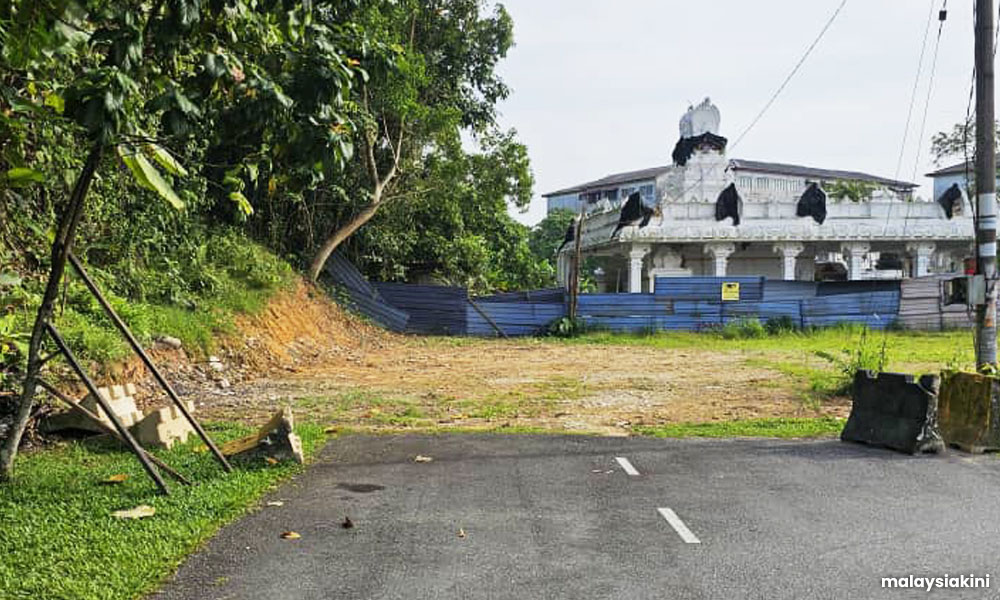
According to Tanabalan, the road proposed by the Selangor government is to connect the temple with Jalan Sungai Long.
The temple committee objected to the plan and instead urged the state government to approve the shorter road, which was said to have received a nod from the Kajang Municipal Council (MPKj).
Potential resident objections, safety concerns
On Feb 6, Selangor state executive councillor V Papparaidu said the state government had reached a final decision on the issue, which has dragged on since 2009.
“Although the site has been registered for temple use since 1988, its construction was frequently delayed due to access route issues and non-compliance with stipulated approval conditions.
“The approved planning permission stipulates that access to the temple site is only permitted via the road reserve from Jalan Sungai Long.

“Proposals to use existing residential roads and to build temporary roads were rejected as they could potentially trigger residents’ objections and raise safety concerns.
“As a final solution, the construction of a new road from Jalan Sungai Long with an estimated length of about 383m has been proposed, at a cost of around RM3.3 million,” Papparaidu said.
‘No problem’ under Khalid, Azmin
However, Tanabalan claimed the issue only arose after the Selangor government came under the leadership of Menteri Besar Amirudin Shari.
“The fact is, the temple is located only 50m from the housing estate. The temple is not illegal. It owns its own land. MPKj had approved several access roads for the temple in the era before Amirudin, before later retracting them.
“You can build a 6km road or even a 1,000km road, but the fact remains that the temple will still be within 50m of the residential area.
“So what is the state government’s problem that they can’t approve the 50m road? We are not building the temple on the road. Since when does Selangor have a new law on who can and cannot use public roads?” he asked.
Tanabalan also compared Amirudin’s leadership with that of his two predecessors from PKR, the late Khalid Ibrahim and now Bersatu lawmaker Azmin Ali.
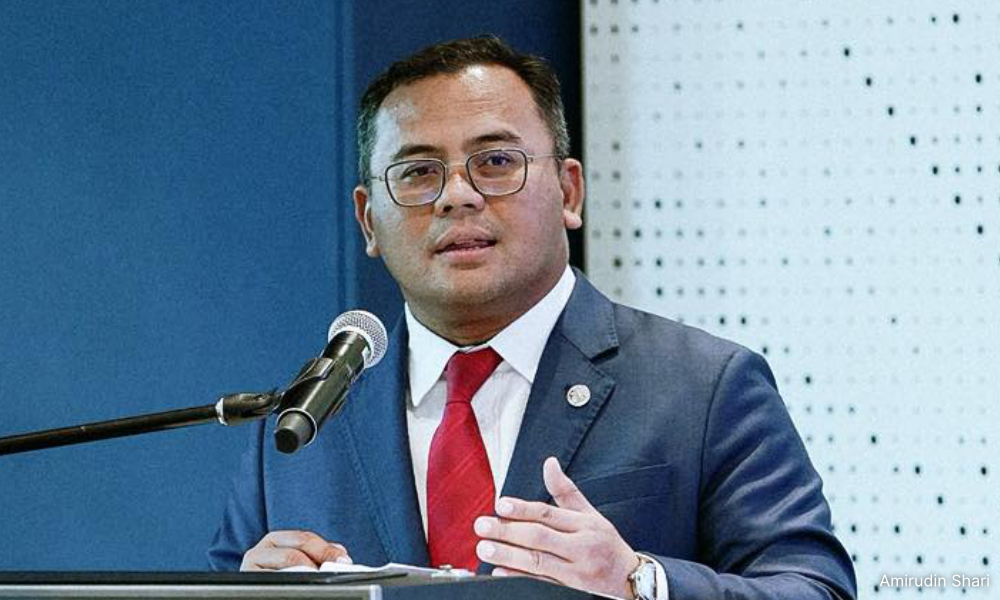
“There was no problem with this temple during Khalid’s and Azmin’s time. Applications for temple construction were processed properly. There were no issues with the local authorities. Everything ran smoothly. But once Amirudin became menteri besar, everything was turned upside down.
“Today’s Selangor government seems unwilling to resolve this issue. It is as if they want people here to fight among themselves,” said Tanabalan.
Racial composition of the area
The dispute over access to the temple has exposed a long-standing issue involving land rights, local authority approvals, and questionable law enforcement.
Although the temple is frequented by devotees who live only 50m away, the lack of access has forced the temple management to refrain from making any preparations for a religious celebration scheduled for.
Previously, the state government also cited objections from residents, claiming that Muslims form the majority in the area and had opposed the access road to the temple.
However, checks by Malaysiakini found that property ownership data from MPKj up to February 2024 showed that non-Malays form the majority in the area.
For landed properties in Taman Koperasi Cuepacs, the owners include 379 Malays, 38 Chinese, 359 Indians, and nine from other ethnicities. When combined with Taman Desa Baru and Taman Cuepacs, the total landed property ownership stands at 590 Malays, 261 Chinese, 731 Indians, and 60 others.
As for strata properties (high-rise residences), ownership in the area includes 126 Malays, 351 Chinese, 140 Indians, and 101 others, with the vast majority concentrated in Taman Koperasi Cuepacs, which records 331 Chinese and 127 Indian owners.
Malaysiakini has contacted the menteri besar’s office and Papparaidu for comment. - FMT

No comments:
Post a Comment
Note: Only a member of this blog may post a comment.