


FEW policies appear as instinctively correct as protecting children from harm. As Malaysia observes World Teen Mental Wellness Day, the proposal to restrict social media access for those under 16 has sparked renewed debate among parents and policymakers.
After all, social media has been linked to cyberbullying, harmful comparison culture, self-harm content and mental health risks ranging from anxiety to low self-esteem.
In a world where digital platforms shape childhood experiences more than ever before, decisive action feels reassuring.
The proposed regulations under Malaysia’s Online Safety Act 2025 aim to require platforms to prevent under-16 users from accessing social media, potentially through strict age-verification measures.
On the surface, it looks like a straightforward solution. But psychology rarely rewards straightforward solutions to complex human behaviour.
Child protection vs human development
From a developmental standpoint, the intention behind the ban is understandable. Adolescents are still building key capacities such as emotional regulation, impulse control and identity formation. Shielding them from harmful digital environments seems logical.
Yet adolescence is not simply a stage of vulnerability; it is also a stage of experimentation and connection. Young people learn who they are through interaction with peers.
In today’s reality, that interaction takes place both offline and online. Social media has become part of the social landscape where friendships are maintained, identities explored and belonging negotiated.
Psychologist Erik Erikson described adolescence as a critical period for identity formation. Excluding teenagers from shared social spaces—even digital ones—can heighten feelings of exclusion rather than reduce distress.
The risk is that in trying to eliminate harm, policymakers may unintentionally create a different psychological problem: isolation.
Australia’s warning shot
Malaysia does not have to speculate about possible outcomes. Australia already moved ahead with a world-first under-16 social media restriction, which came into force in December 2025.
Its experience has been instructive. Debates there quickly shifted from moral support to practical questions: How do platforms verify age without invading privacy? Can restrictions truly be enforced? And perhaps most importantly, will teenagers simply find ways around the system?
Early signs suggest these concerns are far from theoretical. Critics have pointed out that young users may migrate to smaller or less regulated digital spaces, where risks are harder to monitor and parental oversight is weaker.
Behavioural psychology predicts this outcome. When an activity meets core psychological needs—especially social connection and belonging—restricting access rarely eliminates the behaviour. It simply redirects it.
Malaysia still has time to learn from this experiment instead of repeating its mistakes.
What psychology says that policymakers often miss
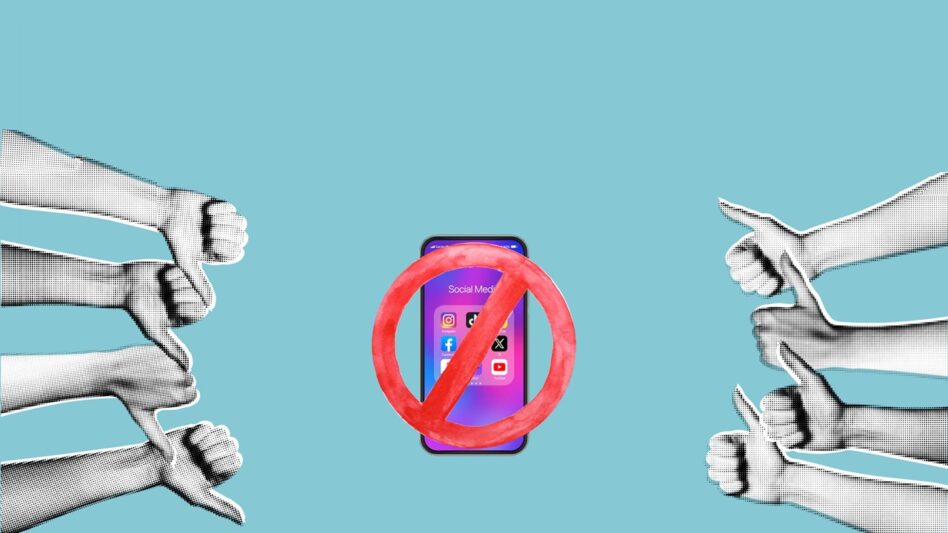
Blanket bans assume that removing access removes risk. Psychological research suggests otherwise.
Self-Determination Theory identifies three core needs essential for healthy development: relatedness, autonomy and competence. Blanket restrictions may frustrate all three.
Teenagers may feel cut off from peers, lose a sense of agency, and miss opportunities to develop the very digital skills they will eventually need as adults.
Social exclusion itself is a well-established risk factor for emotional difficulties. In other words, exclusion can cause the very distress policymakers are trying to prevent.
Research also increasingly shows that the quality of digital engagement matters more than simple access. Social media can expose adolescents to risks but it can also provide peer support, creative expression and community, particularly for vulnerable youths who may struggle to find acceptance offline.
Reducing the issue to “access equals harm” ignores the complexity of adolescent development.
The substitution problem nobody talks about
There is another psychological reality policymakers cannot ignore: when a behaviour fulfills emotional needs, young people will seek substitutes if it is blocked.
Restrict mainstream platforms, and adolescents may move toward lesser-known apps, anonymous forums or unmoderated spaces. From a safety perspective, this could be a step backwards rather than forwards.
A law may change behaviour on paper, but human needs do not disappear because regulations say they should.
The strongest behavioural evidence suggests that bans alone rarely address underlying risk mechanisms such as social stress, emotional regulation challenges or digital naivety.
What works better is guided engagement: digital literacy education, emotional resilience training, parental involvement and supportive boundaries. Young people eventually enter the online world as adults. The real question is whether they arrive prepared or protected only until the day protection ends.
Digital resilience is learned through practice, not avoidance.

Malaysia’s moment of choice
Malaysia has a rare advantage. Unlike Australia, it is not yet locked into implementation. Policymakers still have the opportunity to shape a more balanced approach that protects children while respecting the psychology of adolescent development.
This debate should not be reduced to whether social media is good or bad. The real question is whether policy prepares young Malaysians for the realities of modern life or attempts to delay those realities.
Protecting children is essential. But protection that isolates rather than guides may ultimately do more harm than good.
The most effective safeguard for Malaysia’s youth will not come from shutting the digital door but from teaching them how to walk through it safely.
Dr Tan Jia Rou graduated from Newcastle University in 2018, and is an active member of the Royal College of Psychiatrists with training experience across different psychiatric sub-specialties.
The views expressed are solely of the author and do not necessarily reflect those of MMKtT.
- Focus Malaysia

No comments:
Post a Comment
Note: Only a member of this blog may post a comment.