


The Attorney-General’s Chambers’ (AGC) decision to charge a driver with murder doesn’t mean the accused will be acquitted if the prosecution fails to prove intent, a lawyer said.
However, other lawyers argued that it was still erroneous for the chambers to pursue a murder charge in the first place.
Arguing in favour of the murder charge, lawyer Haniff Khatri Abdulla said that even if the prosecution fails to make a case under Section 300 of the Penal Code stick, the law allows for a different charge to be applied at the end of the prosecution.
“The court can, on the application of any party or of its own volition, change the charge to something more appropriate.
“So, for example, the judge may rule that the prosecution failed to prove a crime under Section 302 of the Penal Code (for murder), but that there is a prima facie case under Section 44 (of the Road Transport Act),” Haniff told Malaysiakini.
In such a circumstance, he said, it would mean that the accused would then have to enter a defence on the revised charge.
Yesterday, 28-year-old R Saktygaanapathy was charged with murder over the death of warehouse worker and delivery rider Amirul Hafiz Omar in a crash on Sunday.
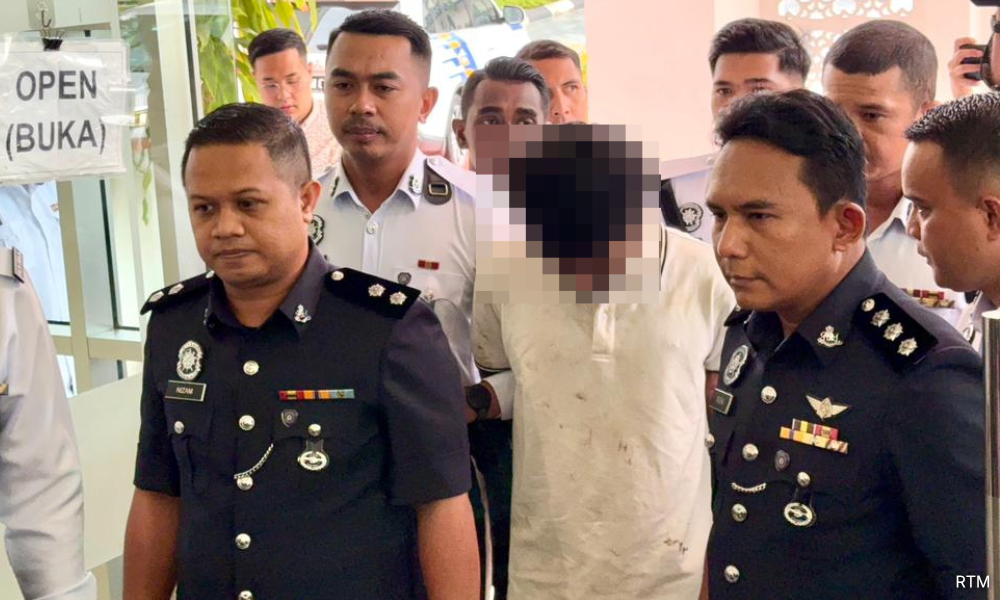
He also pleaded guilty to a charge of self-administering drugs.
Questions were raised due to the perceived difficulty in proving a murder charge, which requires the prosecution to prove either intent or that the accused knew their actions could cause death.
This is in comparison to Section 44 of the Road Transport Act, which criminalises driving under the influence of alcohol and drugs and causes death.
Haniff suggested that the AGC might believe they have strong evidence due to the amount of time the accused was on the wrong side of the road.
He said while he disagreed with Attorney-General Dusuki Mokhtar on many issues, on this matter, the latter made the right decision.
‘That’s not how it works’
However, Lawyers for Liberty (LFL) co-founder Latheefa Koya criticised the decision to pursue a murder charge with the mindset that a different charge can stick if they fail to prove a crime under Section 300 of the Penal Code.

“That’s not a rational way of deciding what charge to be brought - it should be an exercise based on the law and facts of the case.
“It should not be a gamble or bringing serious charges simply for the sake of doing so in order to appease public anger.
“The correct charge must be decided from the beginning and not left for a later point at the end of the prosecution case. That’s not how a professional body should conduct itself,” she told Malaysiakini.
Fellow lawyer Eric Paulsen echoed Latheefa’s sentiment.
Speaking to Malaysiakini, Paulsen said the public prosecutor in the case must rely on evidence and legal principles, not emotions or public pressure.
He said it is possible to invoke limb (d) of Section 300 of the Penal Code, which applies where a person commits an act knowing it to be so imminently dangerous that it will, in all probability, cause death.
However, he added that characterising the accused’s act of swerving into the opposite lane in this way is unlikely to succeed.

“Swerving onto the opposite lane is ordinarily treated as recklessness or dangerous driving, not as an act so imminently dangerous that death must in all probability follow.
“To hold otherwise would mean that most, if not all, deaths caused by a vehicle crossing into oncoming traffic would now warrant a murder charge. That cannot be the state of the law,” said Paulsen, another co-founder of LFL.
Effective punishment before conviction
Paulsen also pointed out that murder is a non-bailable offence and, as such, the accused will remain in remand pending the disposal of their case.
“When the charge is disproportionate to the facts, remand becomes, in effect, punishment before conviction.
“This is fundamentally inconsistent with the presumption of innocence, which remains a cornerstone of our criminal justice system,” the former representative of Malaysia to the Asean Intergovernmental Commission on Human Rights (AICHR) explained further.
Paulsen said the law already provides adequate and serious recourse for such conduct, pointing to Section 44(1) of the Road Transport Act.
“This is not a lenient option; it is the legally appropriate charge,” he added.

On the question of why Saktygaanapathy was not charged with both murder and drink driving, Haniff said it was not legally possible.
He said, unlike a corruption case where one crime results in different offences, such as abuse of power and money laundering, both the murder and drink driving charges would have been about causing death.
Thus, he said, the only other option would have been to put drink driving as an alternative charge to murder.
However, he said this would have defeated the purpose of pursuing a murder charge in the first place.
This is because when an alternative charge is present, the accused can plead guilty to either the principal or alternative offence, giving them an opportunity to evade a heavier punishment. - FMT

No comments:
Post a Comment
Note: Only a member of this blog may post a comment.