


When activist John Davidson shouted a racial slur at the Bafta Awards in February, the room went quiet. Those who did not know him assumed the worst. Those who did, knew better.
Davidson, a Tourette syndrome activist and executive producer of the film “I Swear”, had not chosen those words. His condition had.
The involuntary outburst, broadcast to millions on the BBC, thrust Tourette syndrome into the spotlight in the most uncomfortable of circumstances.
It has also reignited a long-overdue conversation about how little the public truly understands a condition that has shaped the lives of many people around the world.
Tourette or Tourette's, is a neurodevelopmental condition linked to imbalances in the brain's basal ganglia, which play a key role in regulating movement and motor control.
It causes involuntary, repetitive movements and vocalisations known as tics- ranging from simple actions such as blinking or throat-clearing, to more complex outbursts including echolalia, the involuntary copying of sounds, and coprolalia, the involuntary use of obscene or inappropriate language.
For the small community of people living with Tourette's in Malaysia, the Bafta incident was a double-edged moment; a rare flash of global visibility, yet one still clouded by misconception and sensationalism.
Conversations with three Malaysians diagnosed with the condition paint a clearer picture. One shaped by misunderstanding, resilience, and the quiet exhaustion of navigating a world that cannot seem to make room for what it does not understand.
Three lives, one condition
Marcus Chua, 24, was diagnosed with Tourette’s 13 years ago, after he began exhibiting tics such as sudden vocal sounds and uncontrollable blinking.
Since then, life has not been easy. His tics frequently interfere with daily activities, at times becoming physically harmful. To protect himself, Chua has to frequently wear a mouthguard or risk biting his tongue or lips during intense tic episodes.
The condition has also left other lasting consequences. Chua is partially blind in one eye, the result of a repetitive poking tic he developed during his school years, which he described as a source of immense stress.
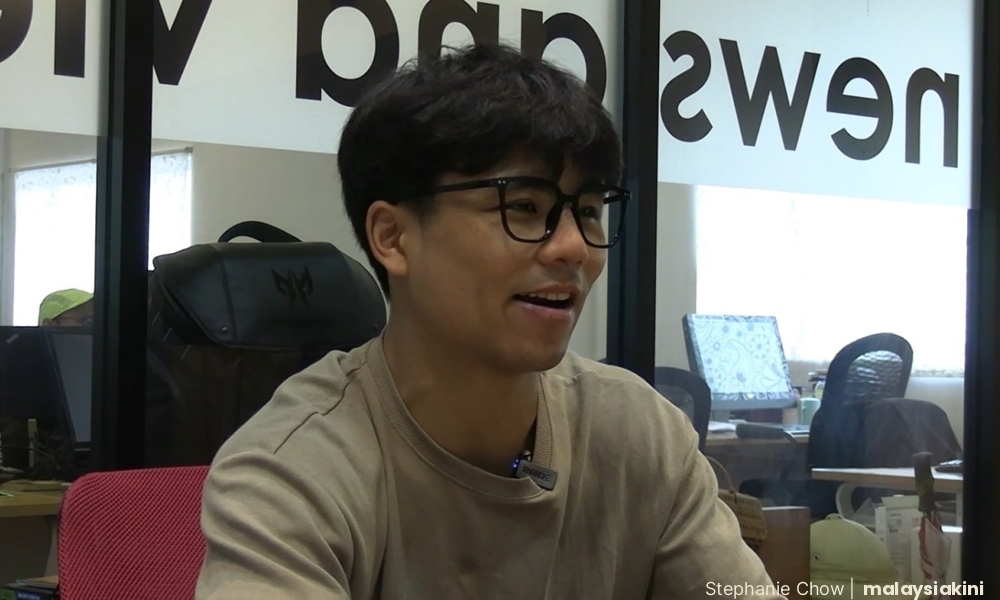
The quiet, high-pressure environment of exam halls made his tics more pronounced, heightening his anxiety at times.
“I didn’t finish my SPM. It was during Covid-19, and I was very stressed. During exams, the hall gets very quiet, so I get very anxious, and my tics become worse,” he told Malaysiakini.
In daily life, Chua often finds himself having to explain or apologise for behaviours beyond his control - a routine he has grown accustomed to, particularly in public settings.
“Since I don’t drive, I rely on e-hailing or public transport. Every time I get into a Grab, I will explain my condition first because I don’t want to scare the driver.
“But I’ve had drivers reject me. They ask me to cancel the ride. Maybe they’re scared,” he said.
Like many living with Tourette’s, the challenges extend into adulthood. Chua said he has faced repeated rejection while job hunting, which he believes is partly due to misunderstandings about his condition.
Chua is not alone in his struggles.
‘Anxiety, rejection’
For friends Ho Lee Ching and Ann Khoo, living with Tourette’s also meant navigating a world that often misreads, excludes, or rejects them. Both women say daily life often comes with anxiety and rejection.
Ho described a “social tax” attached to leaving the house, saying crowded places like trains and cafes can be overwhelming.
Khoo, meanwhile, shared that she had once been offloaded from a flight after being told that the pilot refused to fly with her on board.
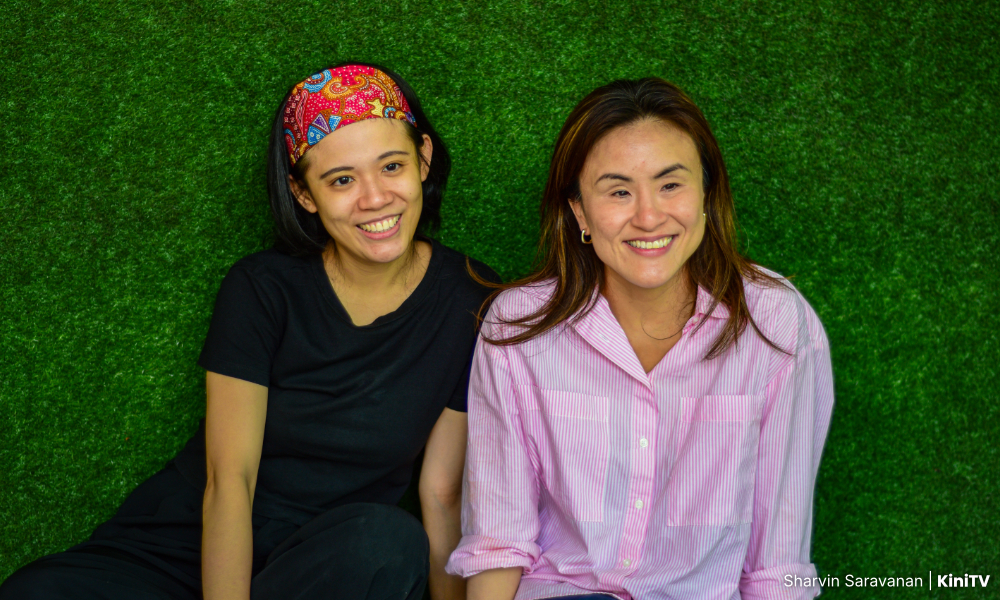
“People can be kind, but when it comes to a system, it still fails us,” Khoo said, pointing to what she describes as systemic gaps in Malaysia’s approach to disability inclusion.
This frustration extends into their professional lives, where discrimination and ableism often prevent others from seeing beyond their disability.
“My ex-boss once told me: You are disabled, so you have to work twice as hard as other people, just to like, do something.
“So, I feel like we take that in, and then it becomes internalised ableism. We believe that we have to work harder to prove and make sure we get somewhere,” Khoo said.
Ho echoed similar frustrations, describing the emotional toll of constantly having to create her own opportunities in the absence of structural support.
Despite this, both have gone on to build meaningful careers for themselves. Khoo works in marketing, while Ho found solace in theatre, calling movement and acting her form of therapy.
She later founded “Siapa Cacat” (who is disabled), a cross-disability theatre collective focused on authentic representation in the theatre community.
“I just hope to see more representation of disability in the arts and media. Have stories made of us, by us,” Ho added.
Moving towards an understanding future
Despite these hurdles, there is a palpable shift for the Tourette’s community in Malaysia.
At the centre of this is the Tourette’s Association of Malaysia (TAM), the country’s first organisation dedicated specifically to Tourette’s Syndrome.
Established in February 2024 and led by chairperson Subri Safar, the group is working to address long-standing gaps in recognition, support and policy.
A key priority is building a national database to determine how many locals are actually living with Tourette’s.
Current estimates suggest that approximately 0.3 percent of the population is affected by the condition, though comprehensive data remains lacking.
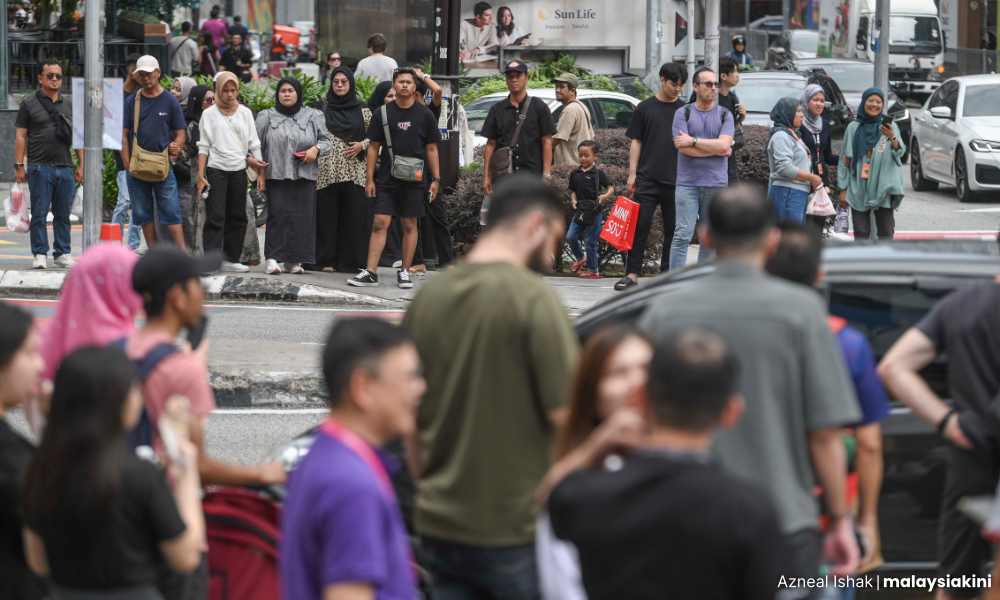
The void of data, compounded by limited knowledge of Tourette’s in Malaysia, leaves TAM with a huge burden to bear in disseminating awareness of the syndrome.
“Sometimes, people with the condition don’t come forward or seek a diagnosis due to stigma and social perceptions.
“So, we can see how the lack of data and awareness build upon each other. Many parents and caregivers think it's just a bad habit that goes away with time,” Subri explained.
Beyond awareness, TAM also advocates for structural change by pushing for Tourette’s to be recognised under Malaysia’s persons with disabilities framework, as well as suggesting anti-discrimination laws to protect those with the condition in schools and workplaces.
Yet even as policy changes remain a work in progress, there are quieter signs of progress on the ground.
Enlightened youths
Khoo and Ho said they are seeing a growing sense of awareness, particularly among younger Malaysians.
Khoo recalled a recent interaction with a shop assistant who immediately recognised her condition.
“I go to shops, and the shop assistant is like, ‘Oh my god, you have Tourette's, miss?’ So, they know about it (Tourette’s), and they're all young people.
“Compared to when I was growing up, it was socially unacceptable. I went through a lot of hardship in terms of public acceptance.
“I think the younger generation is going to heal the world,” Khoo said light heartedly.
For Chua, Khoo and Ho, the road ahead is still uncertain. But for the first time, it is no longer one they have to walk entirely alone.
- Mkini

No comments:
Post a Comment
Note: Only a member of this blog may post a comment.