


Malaysia was never meant to be governed by status and personality. It was meant to be governed by the Constitution.
Our Federal Constitution was never written to serve the ambitions, sensitivities, or expanding influence of elites. It was written to protect the rakyat and to ensure that power, whether political, royal, military, or institutional, remained bounded by law.
That is why the recent controversy surrounding the Pahang crown prince’s decree over military exercises should alarm Malaysians far beyond the immediate issue itself.
Truth be told, this is no longer merely about military drills.
It raises a far larger and more uncomfortable question: what happens if every royal institution in every state begins issuing its own “decrees” over matters already governed by federal constitutional authority?
What happens if one state places conditions on military exercises, another on policing, another on education, another on federal land use, another on public events, another on infrastructure projects, another on investment approvals, and another on environmental enforcement?
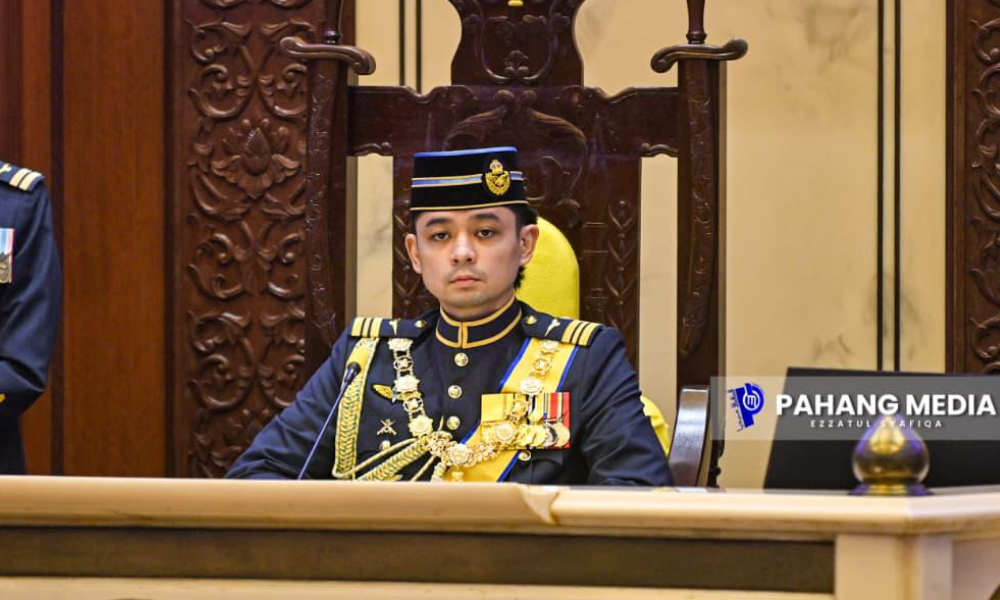
At what point does a constitutional monarchy quietly drift into competing centres of influence?
And at what point does the rakyat become trapped between overlapping authorities, sensitivities, and unofficial expectations that were never intended by the Constitution?
Malaysia is a federation governed by constitutional law, not a patchwork of personalised spheres of influence.
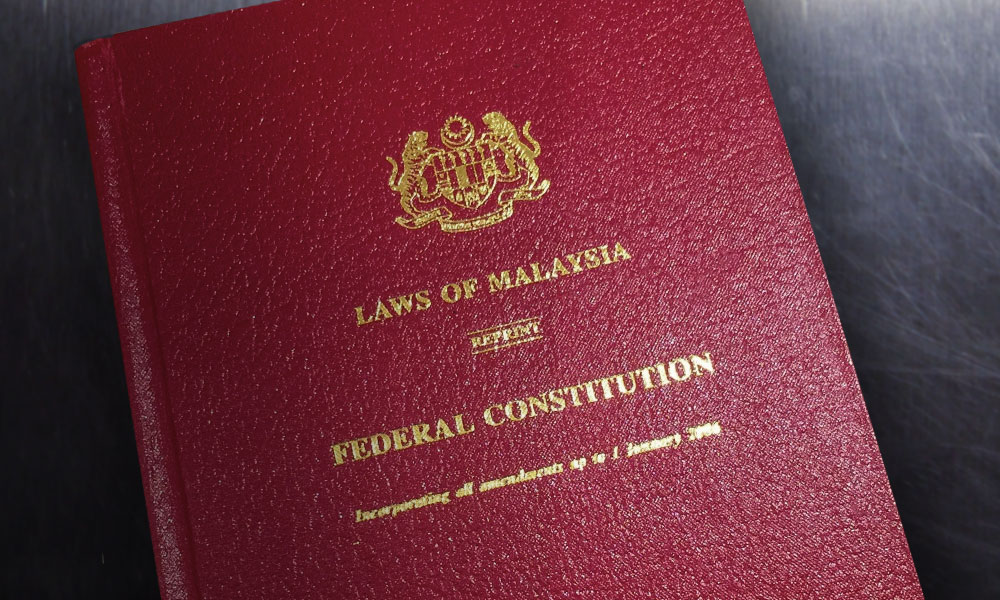
The Constitution is very clear: defence is a federal matter. The armed forces answer constitutionally to the Yang di-Pertuan Agong within the framework of federal executive authority.
This arrangement exists because national security cannot function according to fragmented state-by-state interpretations, personalities, or symbolic assertions of authority.
No functioning nation can operate effectively if strategic institutions must navigate multiple layers of unofficial approval beyond what the Constitution itself requires.
The danger here is not merely legal confusion. It is the gradual normalisation of constitutional excess.
A constitutional monarchy survives precisely because constitutional limits exist. The monarchy’s legitimacy comes not from unrestricted authority, but from its recognised and respected place within a democratic constitutional framework.
Once any institution begins operating beyond clearly defined boundaries, even symbolically, the entire balance of governance begins to shift.
Erosion of constitutional clarity
This shift rarely happens dramatically. It happens gradually through silence, hesitation, and fear.
Statements begin carrying the weight of unwritten commands. Public institutions comply not necessarily because the law compels them, but because nobody wishes to appear disrespectful.
Legal ambiguity becomes politically safer than constitutional clarity. Over time, influence expands not through formal amendments but through accumulated deference.
That is how constitutional cultures erode.
The worrying reality is that many Malaysians have become increasingly afraid to openly discuss constitutional boundaries involving royalty, even respectfully.
Lawyers must measure every word carefully. Politicians retreat into vague statements. Institutions prioritise avoiding offence over defending constitutional principle.
Public debate becomes emotionally charged the moment legality is discussed.
Constitutional democracies cannot survive on sensitivities alone. Respect for royalty does not mean suspending constitutional scrutiny.
In fact, the opposite is true. If Malaysians truly wish to preserve the monarchy as a respected institution, then constitutional boundaries must remain visible, understood, and consistently defended.
Otherwise, the monarchy itself risks being pulled into political and administrative spaces it was never intended to occupy.
When that happens, the rakyat pays the price.
Ordinary Malaysians are already struggling with rising costs, stagnant wages, underfunded public services, environmental anxieties, weak institutional trust, and growing frustration over unequal treatment between elites and citizens.
Yet while the public grapples with daily survival, national attention increasingly shifts toward symbolic contests over prestige, hierarchy, and implied authority.
The rakyat should never become collateral damage in elite contests over influence.
Once constitutional lines blur, uncertainty spreads everywhere.
Civil servants become hesitant about whose “approval” matters most. Enforcement agencies become cautious. Federal-state relations become strained. Investors question institutional predictability. Governance slows beneath layers of unofficial sensitivities and overlapping expectations.
Don’t override constitutional limits
Eventually, ordinary citizens internalise a dangerous lesson: that some individuals and institutions operate above scrutiny while everyone else remains fully subject to the law.
No democracy remains healthy under such conditions.
The irony is that Malaysia’s rulers already enjoy immense constitutional respect, symbolism, and protection.
Few constitutional monarchies in the world provide such deeply embedded ceremonial standing and public reverence, but prestige without restraint risks becoming excess, and excess, despite being elegantly packaged in tradition, protocol, or symbolism, will eventually weaken institutional legitimacy rather than strengthening it.

The Federal Constitution was specifically designed to prevent precisely this kind of uncertainty.
It established a system where institutions cooperate within defined boundaries, where legal authority remains clear, and where the rakyat, not elite sensitivities, remain at the centre of governance.
Malaysia, therefore, faces a defining question.
Do we still believe that the Constitution is the highest law of the land? Or are Malaysians slowly being conditioned to accept a system where constitutional boundaries become flexible depending on status, symbolism, and influence?
Constitutions rarely collapse overnight. They erode slowly through exceptions, selective obedience, institutional fear, and the quiet expansion of authority beyond what was originally intended.
So, once governance becomes shaped more by personalities than by principles, the rakyat inevitably become secondary to the preservation of elite power.
This is precisely what the Federal Constitution was created to prevent. - Mkini
MARIAM MOKHTAR is a defender of the truth, the admiral-general of the Green Bean Army, and the president of the Perak Liberation Organisation (PLO). Find her on X.
The views expressed here are those of the author/contributor and do not necessarily represent the views of MMKtT.

No comments:
Post a Comment
Note: Only a member of this blog may post a comment.