


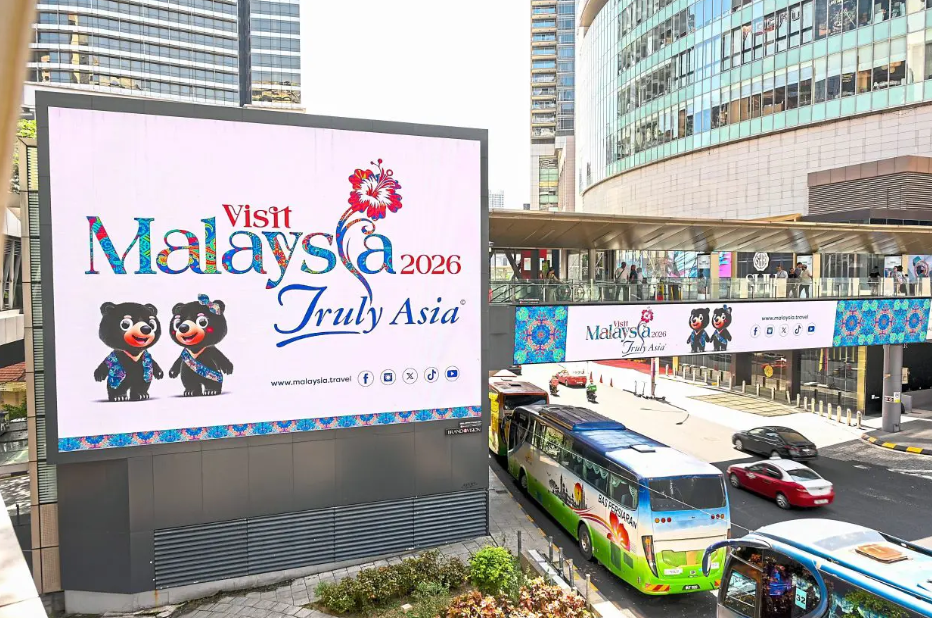
MALAYSIA continues to attract millions of foreign visitors each year. Last year alone, the country recorded 26,613,597 tourist arrivals and 15,583,295 excursionist arrivals, bringing total visitor arrivals to 42,196,892.
In 2025, immigration checkpoints cleared an average of 4,804 foreigners every hour.
There are many reasons why Malaysia remains a popular destination. The country is highly accessible by air, road, rail, and sea. In addition, nationals from 168 countries can enter Malaysia visa-free, with permitted stays ranging from 14 to 90 days depending on nationality.
Visitors come for different reasons. Many arrive for holidays, while others visit for business, education, medical treatment, employment, or economic opportunities. Malaysia is also seen as relatively affordable and easier to navigate compared to many other countries.
Tourism campaigns and promotional materials often highlight Malaysian culture as one of the country’s main attractions. However, this raises an important question: what exactly do modern visitors expect when they come to experience Malaysian culture?
For many in the tourism industry, the traditional answer has long been cultural performances and dance showcases. Decades ago, such attractions were highly popular.
During my time as a tourist guide in the 1970s, venues such as Yasmin Restaurant regularly offered buffet dinners accompanied by nightly cultural performances.
Today, however, such experiences are far less common, and visitor expectations have evolved significantly.
Modern travellers are no longer limited to learning about foreign cultures through books or television.
Through social media, online videos, and digital platforms, they are constantly exposed to cultures and destinations around the world before they even begin travelling.
As a result, tourists today often prioritise convenience, affordability, food, shopping, transport accessibility, and shareable experiences over formal cultural showcases alone.
This does not mean culture is no longer important. Rather, culture is now experienced differently.
Visitors are increasingly drawn to authentic everyday experiences, including local food, street life, heritage areas, cafés, markets, festivals, architecture, and the overall atmosphere of a destination.
In many ways, these experiences reflect Malaysian culture more naturally than staged performances.
Social media has also fundamentally changed tourism behaviour. Travellers now rely heavily on videos, photographs, online reviews, and recommendations shared by friends, influencers, and content creators.
Platforms such as TikTok, Instagram, and YouTube have become some of the most powerful tools in shaping travel decisions.
Visitors not only consume content but also create and share their own experiences online. Through videos and photographs, viewers are able to experience the atmosphere, food, environment, and energy of a destination long before arriving.
This shift presents both a challenge and an opportunity for Malaysia’s tourism industry.
Traditional cultural performances still have value and should continue to be preserved. However, tourism strategies must also recognise that modern travellers increasingly seek immersive, convenient, and authentic experiences that feel connected to daily life rather than carefully staged presentations.
Malaysia’s cultural strength may not lie solely in organised performances, but in the diversity, warmth, food, lifestyle, and everyday experiences that visitors encounter throughout the country.
YS Chan is a tourism, transport and training consultant.
The views expressed are solely of the author and do not necessarily reflect those of MMKtT.
- Focus Malaysia.

No comments:
Post a Comment
Note: Only a member of this blog may post a comment.