


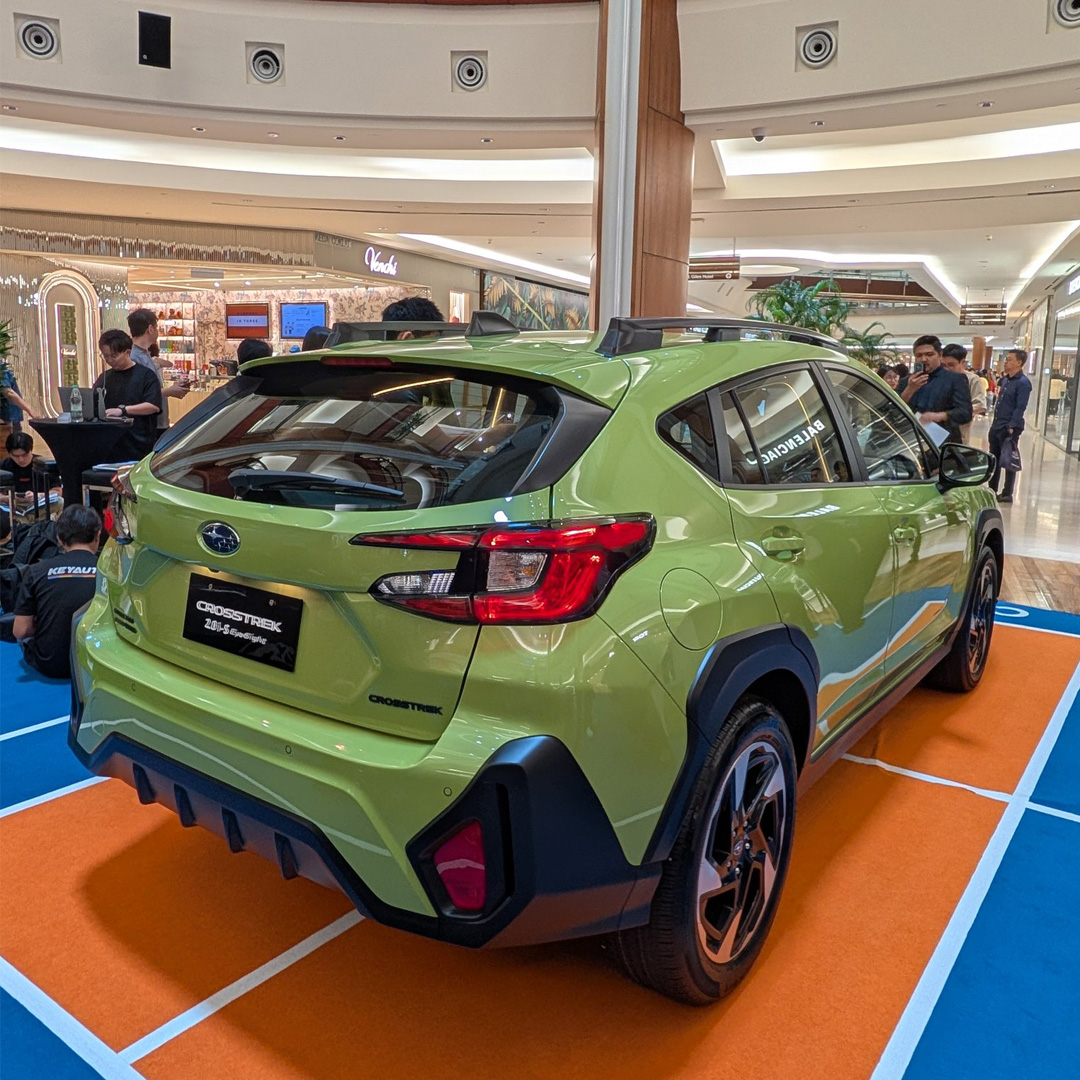
FOR MANY car buyers, Japanese marques carry the perceptions of reliability and good resale value based on decades of sound engineering know-how.
In recent times, brands from China have torn up the rule book with a focus on modern aesthetics and competitive pricing to disrupt the established hierarchy in the automotive industry.
This was precisely the thinking of car enthusiast Zac (@ZacZakirin13) who was somewhat bemused at what were the selling points of cars such as the Subaru Crosstrek in the Malaysian market.
It was surmised that Nipponese vehicles were being left behind by their Chinese counterparts in terms of interior design, space, technology and performance.
Moreover, this obvious China-car fan reckoned that maintenance, service and warranty of Japanese marques also lagged behind these Chinese upstarts.
The post has generated 238.8K views at time of publication with plenty of car fans chipping in with their opinions on what makes a vehicle worthy of a motorist’s hard-earned money.
There were plenty of defenders of the boxer-engine specialist marque though one commenter did warn to be prepared of big bills upon the warranty expiration.

Comparing the scenario to buying designer handbags, one fashion-conscious commenter argued that China marques still lagged far behind in terms of brand perception and long-term reliability.
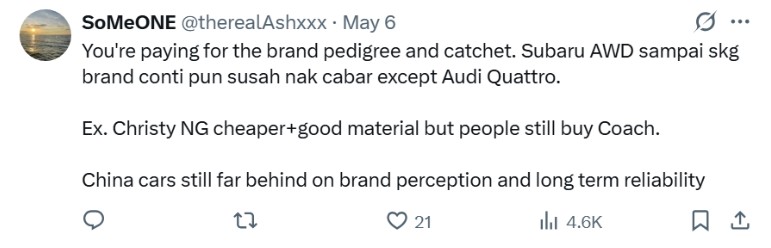
This sentiment was echoed by a few car enthusiasts who also point to the long-term durability and reliability of Japanese cars as key selling points.
It was claimed that problems in Chinese cars would crop up after six-eight years on the road. Pointing to the number of Toyota Vioses on the road, it was insinuated that this was proof of their bullet-proof engineering.

Another backed up this claim by arguing that though China-made automobiles were laden with features, it was Japanese marques that last longer.

The fact that many Chinese marques were newbies was also pounced upon by several car enthusiasts.
Describing these China brands as still being in their “honeymoon phase”, it was argued that there is some way to go yet for these newcomers to earn consumer trust. Japanese cars, if cared properly, would still be roadworthy after 10 or 20 years.
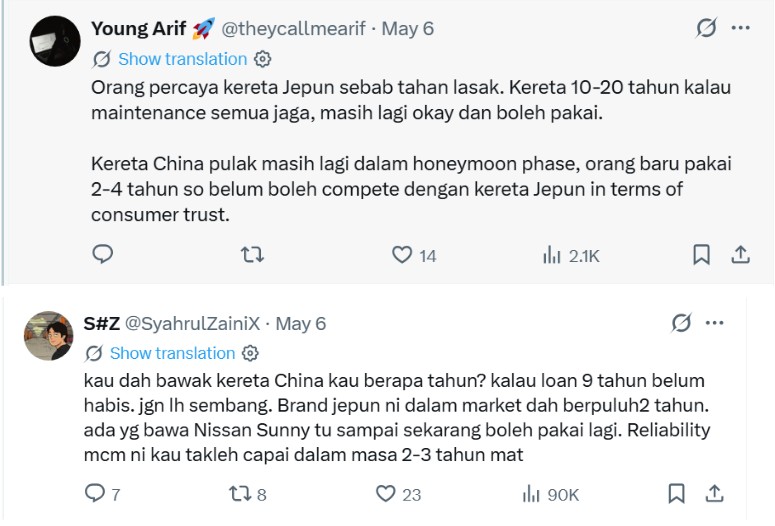
It was also stated that owning China-made cars was challenging and full of unseen surprises.
However, the poster argued that such challenges were also common in Japanese marques as seen from the many grouses in Facebook forums. His own ownership of a Chinese car has yet to throw up any nasty surprises.

One commenter injected a bit of humour claiming that Japanese brands like Honda were babe-magnets.
Those who opt for Perodua Axia or Proton Saga – even if brand new – were likely to be “met with phlegm from the ladies”.
This brought an equally-comedic retort from the poster who asked if the reason for being on receiving end of the said phlegm was perhaps his unattractiveness.
Doubling down, it was suggested that if he was handsome like former youth and sports minister Syed Saddiq Syed Abdul Rahman, driving an Axia would be no barrier to meeting members of the opposite sex.


Sex appeal aside, it would appear that the key determinant for many a driver is ease of maintenance, availability of spare parts and long-term reliability. On that count, Japanese marques still have the necessary cache. – Focus Malaysia

No comments:
Post a Comment
Note: Only a member of this blog may post a comment.