


Digital Minister Gobind Singh Deo has assured that issues involving temples or places of worship will now be managed according to a process determined by the cabinet last week.
He said the cabinet’s decision stipulates that resolving issues related to houses of worship requires cooperation at three levels of government: the federal, state, and local governments, according to their respective jurisdictions.
He emphasised that the established process involves several parties and is not a unilateral decision by any single agency.
“Land is under state jurisdiction. The registration of temples involves the Registrar of Societies (ROS), which is under the federal government.
“Meanwhile, construction aspects fall under the jurisdiction of the local government,” he explained.
“We need to see how we can ensure there is cooperation between all parties, so that we can resolve this problem and move forward,” he told reporters after attending a Mother’s Day celebration at the Dewi Sri Pathrakaliamman Temple on Jalan Masjid India, Kuala Lumpur, today.
Failing to obtain paperwork
The issue of unregistered temples is a long-standing challenge for the Hindu community in Malaysia, particularly amid rapid development in the urban areas of Selangor, Penang, and Johor.
Selangor’s Special Committee for Buddhism, Christianity, Hinduism, Sikhism, and Taoism (Limas) co-chairperson V Papparaidu previously said that as of April 16, only 285 of the 973 Hindu temples in the state were legally gazetted.
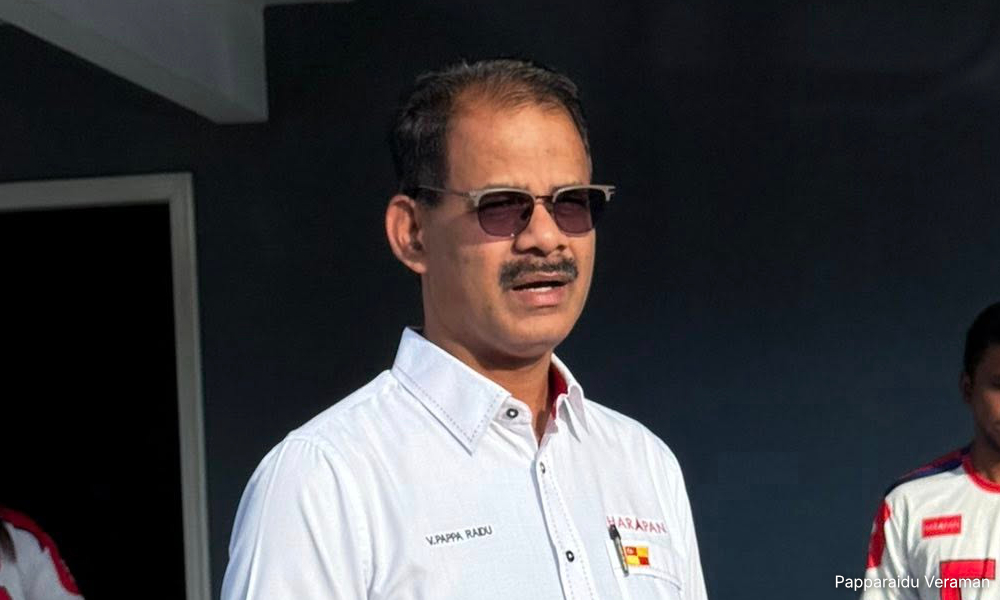
The Banting assemblyperson told the state legislative assembly on April 25 that 688 temples are operating without required permissions, with 433 located on government land and 255 on private land.
Among the main causes behind such houses of worship failing to obtain the necessary paperwork are a complicated land gazettement process, high costs to comply with building standards, and unclear land status due to urban development.
Many temples that have existed for decades were also built on private or government land before the country’s independence.
Gobind added today that at the state level, there are existing mechanisms, such as Limas in Selangor, which function as a platform to resolve temple-related issues.
“We have already resolved many matters through Limas. There are indeed many more to be settled, and we will work on it,” he said.
Concrete decisions needed
Malaysia Hindu Sangam (MHS) and the National Hindu Temples Steering Committee (NHTSC) previously questioned whether a moratorium would be placed on enforcement actions against Hindu temples pending the latter’s national plan.
They also queried whether existing evictions and relocations would be reviewed.
Several community leaders and politicians have further described discussions without concrete decisions as no longer sufficient to address the issue, which has occasionally ignited racial and religious tensions.
On April 23, it was announced that no new construction or extensions of non-Islamic places of worship in the federal territories will be permitted on government land without prior approval, and any breaches will be subject to enforcement action by local authorities.
The directive, announced by Minister in the Prime Minister’s Department (Federal Territories) Hannah Yeoh, marked a significant shift towards tighter oversight of religious structures in the federal territories. - Mkini

No comments:
Post a Comment
Note: Only a member of this blog may post a comment.