


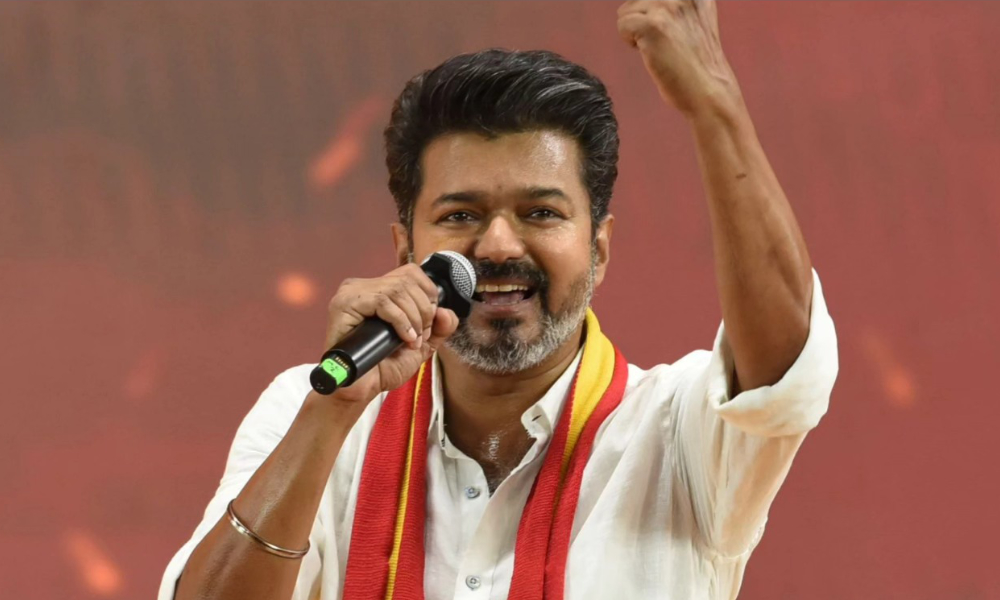
Can you imagine a non-Muslim prime minister in Malaysia? Yet Tamil movie superstar Joseph Vijay is a Christian whose party TVK won the election in a state where 87 percent of people are Hindu. He is poised to be the next Tamil Nadu chief minister.
What most impressed me is that he campaigned on “secular” social justice for all, unlike the anti-Muslim fear-mongering of Indian PM Narendra Modi’s “ketuanan Hindu” (Hindu supremacy) ideology.
“Ask everyone in your home… to elect good, trustworthy people who have not indulged in corruption. Don't get the idea of division based on caste and religion,” said Vijay last year.
In this sense, he was like our own “Bollywood” star Anwar Ibrahim, who repeatedly declared that the children of Malays, Chinese, Indians, Ibans and Kadazans “semua anak saya” (are all my children).
Yet many non-Malays are angry that the prime minister has failed to clamp down on vicious hate speech against them, despite their solid support for Pakatan Harapan. Instead of real punishments, racial provocateurs have only been slapped with short detentions, which feel like “wayang” (theatre).
People want real reform
Vijay’s TVK won a stunning 108 seats in its electoral debut, relegating rivals DMK and AIADMK into second and third place with 59 and 47 seats respectively.
One main factor is that people wanted change and reform, as the other two parties had taken turns holding power in Tamil Nadu for the past 50 years. Voters were fed up with stale politics and threw their support behind TVK as a “third force” to break the old duopoly.
There were allegations of corruption against the current ruling DMK party, and frustration that their promises to create jobs and protect women’s safety were unfulfilled.
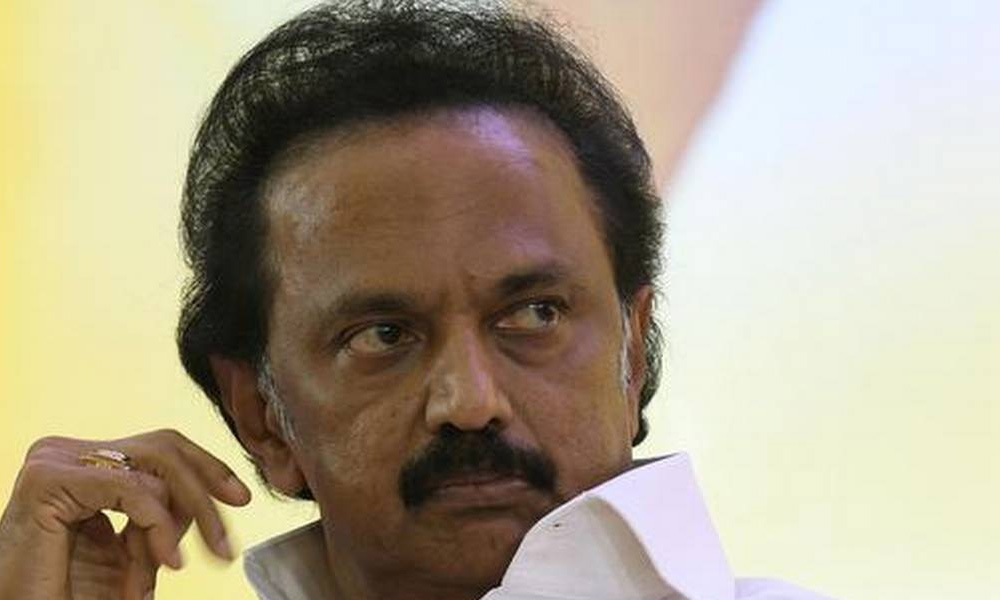
Charges of dynastic politics made things worse as Chief Minister MK Stalin elevated his son as his deputy. The obvious parallel is with Anwar Ibrahim manoeuvring his daughter to become PKR deputy president, leading to jibes that the acronym stands for “Parti Keluarga Rakyat” (People’s Family Party).
Christians are only six percent of Tamil Nadu’s population, with Muslims or “mamaks” making up another six percent. Vijay was careful to portray a non-sectarian image by visiting prominent temples and mosques, along with churches.
Of course, his 30-year stardom made him a household name. He also raised social justice issues in his movies. For example, in Mersal (2017), Vijay played a character who asked: “Why can’t India provide universal healthcare when we pay 28 percent GST, while Singapore can with only seven percent GST?”
Campaign strategies
His fame was carefully translated into solid ground support with 85,000 fan clubs with some two million active members. They became grassroots organisers who ran campaigns and charity events.
Vijay’s TVK ran a savvy social media campaign as if they were promoting the next movie blockbuster, with trailers, teasers etc. They used holograms, AI-generated content and held online virtual rallies.
His loyal followers then made videos go viral on WhatsApp groups and social media. In marketing language, this was “peer-driven communication” rather than direct political messaging.
Yet in September 2025, his campaign suffered a huge blow when a stampede at an overcrowded rally killed 41 people. But Vijay took personal responsibility, apologised and offered compensation. This was a rare move in a culture where politicians often dodge accountability.
Malaysia, of course, has higher standards, as the Putra Heights gas pipe explosion was officially blamed as an “Act of God”, sorry, I mean an “Act of Soil” subsistence. No politicians or developers were found guilty, even though there was construction work nearby.

Malaysian superstar?
So, which Malaysian has the star power to lead real change? For 25 years after 1998, it looked like Anwar had the oratorical skills and stage charisma with his dramatic battlecries of “reformasi!” and “lawan tetap lawan!” (we will keep fighting!).
But after gaining power in 2022, his shine has been tarnished, especially after his weird defence of former MACC chief Azam Baki, despite scandals like the “corporate mafia” allegation by Bloomberg. Yet Anwar had once claimed to emulate the Tamil movie hero Sivaji the Boss in fighting entrenched corruption.
In contrast to the vigorous, visionary campaign of Vijay, aged 51, we have three old men, all born in 1947 and close to 80, leading Harapan, Bersatu and PAS.
What about somebody younger? Rafizi Ramli is intelligent, hardworking and sincere. If his progressive group leaves PKR to form a new party, I believe it will breathe new “harapan” (hope) into our refor-basi (stale reforms).
But he has an image problem of being “too clever” and even arrogant. Even Lee Kuan Yew was seen as being haughty, but Rafizi’s podcasts can get overly intellectual. Is he reaching the crucial target group who live with simplistic mantras like “Melayu terancam” (Malays are threatened)?
In contrast, Vijay won in Tamil Nadu with a campaign of emotional appeal over policy discussions, with simple, repeated ideas that could be viralised easily.
The other youthful star in our politics is Syed Saddiq Syed Abdul Rahman, but his criminal charges for transferring RM120,000 from Bersatu Youth’s bank account into his own personal accounts have cast a shadow over him.
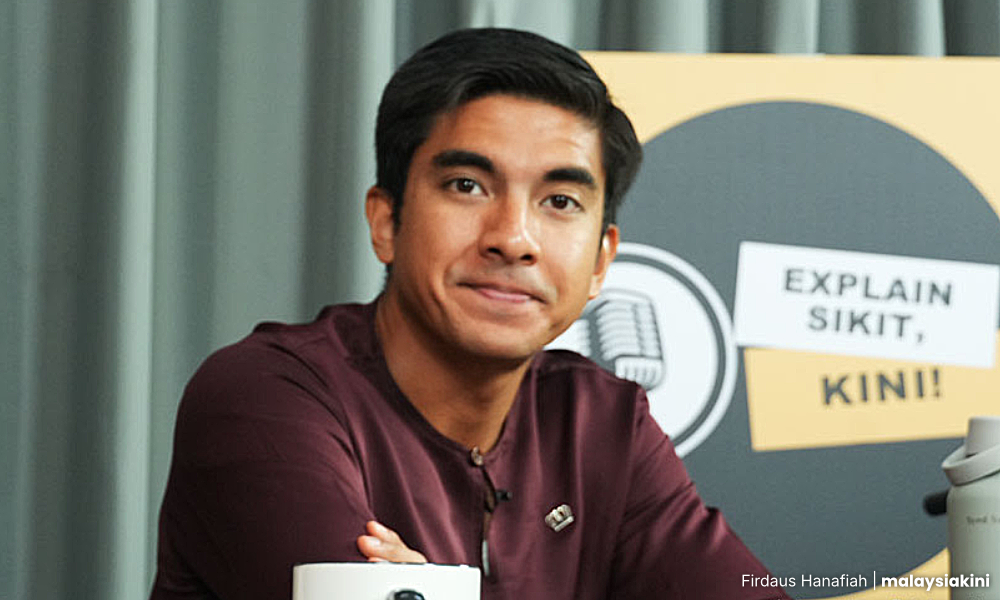
The Madani government is appealing his acquittal and the former leader of Muda has announced he will not contest the party election.
Obstacles to dreams
I sincerely hope that Vijay will live up to his promises. Or will he fizzle out like “Bollywood” Anwar? For one, the new Tamil leader will face obstacles from the state civil service, which has been “shaped, staffed and culturally captured” by the two parties that have held power over the past five decades.
In other words, the deep state of vested interests may be too entrenched and resist reform, just as in Malaysia.
Vijay’s TVK has promised 2,500 rupees (RM100) monthly for female household heads. I support this as mothers usually depend on their husbands’ funds to sustain their families, while husbands may fritter it away on nonsense “fun”.
Other promises include universal health insurance, pensions for the elderly, financial aid to prevent school dropouts and hiring 500,000 youths to deliver government services to people’s doorsteps.
In a country where dowry payments are a huge problem for marriage, TVK has also promised 8 grams of gold along with a silk saree for poor brides.
Some analysts have said all this welfare assistance will cost too much, but the flipside is that money for the poor will be spent on domestic consumption and thus boost the economy. Whereas “financial aid” to rich, crooked politicians leads to money being hidden overseas.
If the corruption “subsidy” can be slashed, perhaps Tamil Nadu, which is India’s second richest state, may be able to afford at least some of the campaign promises.
While traditional politicians “dream of bribes”, Vijay has promised to fulfil the people’s “dreams of a bribe-free” government. I don’t know if he can deliver on that, but I sure wish we had a superstar in Malaysia to inspire such visions. - Mkini
ANDREW SIA is a veteran journalist who likes teh tarik khau kurang manis. You are welcome to give him ideas to brew at tehtarik@gmail.com.
The views expressed here are those of the author/contributor and do not necessarily represent the views of MMKtT.

No comments:
Post a Comment
Note: Only a member of this blog may post a comment.