


In March 2025, Dewan Negara senator C Sivaraj urged the government to identify local recipients of funding from the United States Agency for International Development (Usaid), raising concerns about foreign interference and national sovereignty.
“Malaysia cannot be naive,” he said, warning that such funds could be used to “manipulate voters” and “destabilise the country”.
The language was familiar.
For years, claims that foreign funding could be used to “manipulate voters” or “destabilise the country” have circulated in political and online discourse. However, when such narratives are echoed by public officials, they gain a different level of visibility and legitimacy.
A recent cross-border investigation found that similar claims have been amplified globally, often built on real funding data but lack context and are presented as proof of hidden influence.
For Malaysiakini, these accusations have led to real-world consequences before.
A familiar accusation
Long before the recent scrutiny surrounding Usaid funding, Malaysiakini had already been the target of similar claims.
In 2016, a group of protesters gathered outside the independent news portal’s office, accusing it of being a “foreign agent” used by financier George Soros.
The demonstration was a rare instance when online claims turned into real pressure on a newsroom.
The accusations did not stop at just public accusations.
Both Malaysiakini and Bersih 2.0 were investigated over foreign funding allegations linked to Soros’ Open Society Foundations (OSF), under Section 124C of the Penal Code - which deals with activities deemed detrimental to parliamentary democracy.
Several activists and civil society figures, including former Bersih leaders, were called in for questioning during the probe.
Lawyers at the time criticised the investigations as intimidation, noting that receiving foreign funding was not, in itself, a criminal offence under local laws.
Then Malaysiakini’s editor-in-chief Steven Gan said such narratives originated much earlier.

“The ‘foreign agent’ label first surfaced during the (Dr) Mahathir (Mohamad) years. The easiest way to kill independent media was to cast doubt on its funding.”
Gan said the narrative weakened after Malaysiakini introduced subscriptions, shifting its reliance towards reader support.
“Each time we were attacked, our supporters stepped forward, proving that Malaysiakini’s survival rests not on foreign funds, but on Malaysians themselves.”
Lack of evidence by protester
Gan recalled the 2016 protest as a moment that demonstrated how quickly such narratives could escalate.
Despite police advice, Malaysiakini invited protest leader Jamal Yunos and his representatives into the office for discussion.
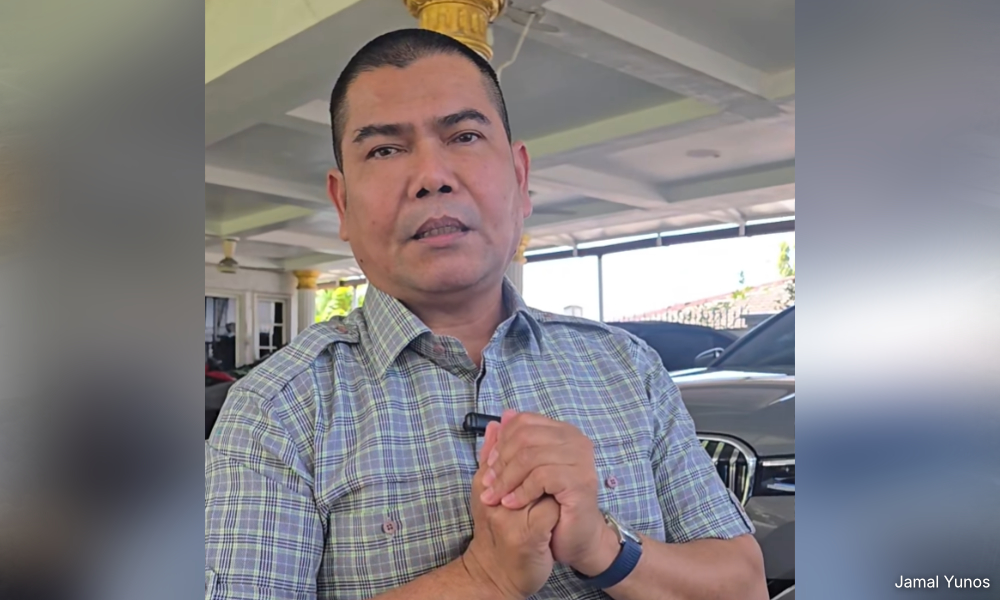
“Confronted directly, he produced no evidence - only a video on his mobile phone about Soros, which was unrelated to Malaysiakini.
“The episode revealed a simple truth: accusations shouted in the street rarely survive face-to-face scrutiny,” Gan said.
From local tactic to global pattern
The recent investigation, conducted by a group of Asian journalists, analysed hundreds of posts across X, TikTok, YouTube, and dozens of web articles over a five-month period.
It found that stories about Usaid being used for propaganda or foreign interference purposes were widely circulated across platforms, often relying on real funding data and public disclosures but presented without context.
In many cases, the same claims were repeated across languages and regions, forming what researchers described as a cross-platform “pipeline” of amplification.
The pattern was consistent: take publicly available information, simplify it, and frame it in ways that suggest hidden intent.
How the newsroom adapts
While Malaysiakini has not faced similar physical protests in recent years, such narratives have continued to shape how the newsroom operates.
Executive editor RK Anand said the organisation’s response has centred on maintaining credibility while engaging openly with public scrutiny.
“Malaysiakini has always been guided by an uncompromising commitment to integrity, across both our journalism and our business operations.”
He said transparency plays a central role in that approach, particularly during periods of heightened attention.

“Rather than retreating from criticism, we engage it, explain our decisions, and take responsibility where necessary.”
At an operational level, Anand said Malaysiakini maintains safeguards to protect editorial independence, such as enforcing a strict “no gifts” policy and firm guidelines on conflicts of interest.
He added that while editorial and commercial teams communicate to anticipate potential issues, editorial decisions remain entirely independent.
Anand said that in an era of partial or decontextualised narratives, accuracy alone is no longer enough.
“When faced with partial, misleading, or decontextualised information, we make it a priority to set the record straight.
“Providing context ensures that readers are equipped to distinguish between fact and fiction,” he said.
Meanwhile, Gan acknowledged that transparency itself can sometimes become a target.
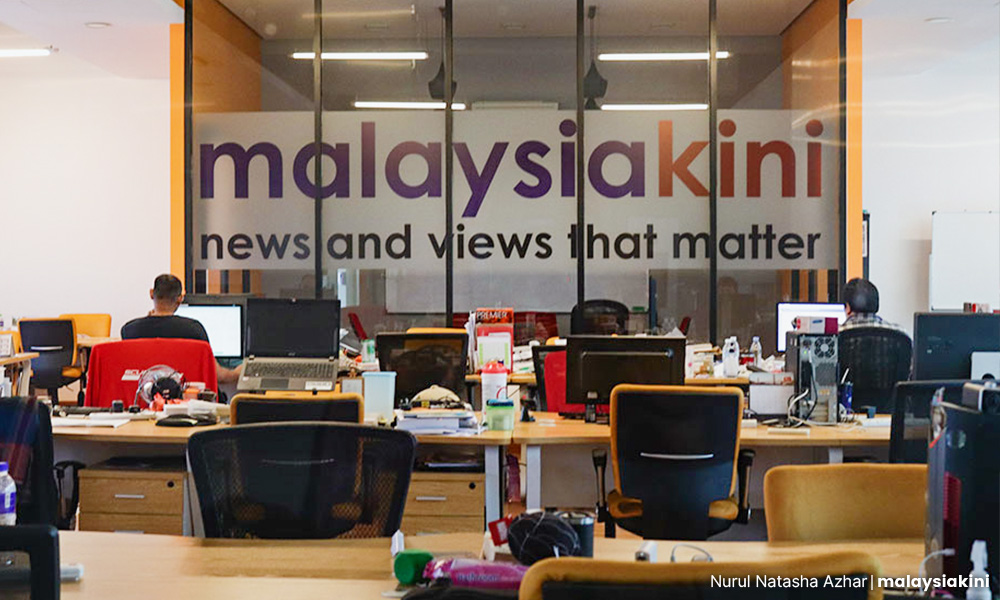
“Transparency is meant to build trust, but it can also be turned against you. The critics focus on the source, not the content.
Still, he said Malaysiakini continues to view openness as essential to maintaining credibility.
“Transparency is about trust, and trust is the foundation of journalism.”
Between scrutiny and suspicion
At the same time, concerns about foreign funding are unfolding alongside real disruptions on the ground.
A report by The Star on March 17 last year found that several local NGOs are facing layoffs, programme cuts and even potential shutdowns following the freeze in Usaid funding, with some groups reluctant to speak publicly due to fears of reprisal.
Activists argue that the fallout impacts sectors from refugees to healthcare, workers' rights and environmental conservation, pointing to the extent to which some programmes rely on external funding sources.
Concerns about foreign funding are not without basis.
Questions about influence, accountability and the potential for external actors to shape local agendas are part of broader debates about sovereignty, particularly in countries where political systems and media environments are still evolving.
Former Bersih 2.0 chairperson, Maria Chin Abdullah said such accusations are not new and have long been used against civil society organisations.

“Bersih 2.0 was accused of being anti-government, anti-Islam, even linked to foreign interests. But at some point, people no longer believed these accusations.
“Accusations about foreign funding are often used as a scare tactic to silence dissenting voices and erode public trust,” she said.
At the same time, Maria said scrutiny of funding sources remains legitimate and that organisations must remain accountable regardless of where funding originates.
“There is nothing wrong with accepting foreign funding as long as it does not dictate the direction or programmes of the organisation,” the former MP added.
She noted that many civil society groups rely on foreign funding due to structural constraints within Malaysia’s funding ecosystem.
“It is not easy for NGOs to raise funds locally, and there is very limited support from the government, especially for organisations seen as critical.
“What matters is transparency - organisations must be accountable about how funds are used, regardless of where they come from.”
A shift in where narratives appear
What distinguishes the current moment is not necessarily the existence of these narratives but how far they have travelled.
Rhetoric that was previously reserved for either partisan discourse or fringe corners of cyberspace is now making its way into more official settings, such as parliament.
As they move across platforms and institutions, they gain greater visibility and, in some cases, legitimacy.
For Malaysia’s independent media and civil society groups, this is no mere reputation attack.
In a landscape where public-interest journalism and advocacy work already face local funding and political pressure, narratives around "foreign influence" can deepen public suspicion.
As the investigation revealed, many of the claims posted online are built on fragments of truth - real grants, real disclosures, real partnerships - but presented without the broader context needed to understand how independent media and civil society organisations operate.
Even when they do not result in direct actions, the mere repetition of such narratives can gradually erode public trust and make it harder for independent media and civil society groups to operate freely.
This is Part 2 of a cross-border investigation by Philstar.com, PressOne.PH, Malaysiakini, DailyGuardian, and independent journalist Nica Hanopol.
Read the companion reports:
How USAID’s collapse quietly dismantled years of environmental and media work in the Philippines (DailyGuardian)
Asia's rights groups face old smear with new force after USAID collapse (Philstar.com)
Charging on: How independent media survives a funding freeze (Teka Teka / PumaPodcast)
Disclosure: This story is supported by the Indo-Pacific Media Resilience Program, an Internews initiative designed to contribute to the overall goal of strengthening the capacity of media outlets and journalists in the region. Internews had no input into the reporting or production of this report and its sidebar stories. - Mkini

No comments:
Post a Comment
Note: Only a member of this blog may post a comment.