


Azeem Abu Bakar says AI will force media companies to evolve into information powerhouses built on intelligence, ecosystems and trust.
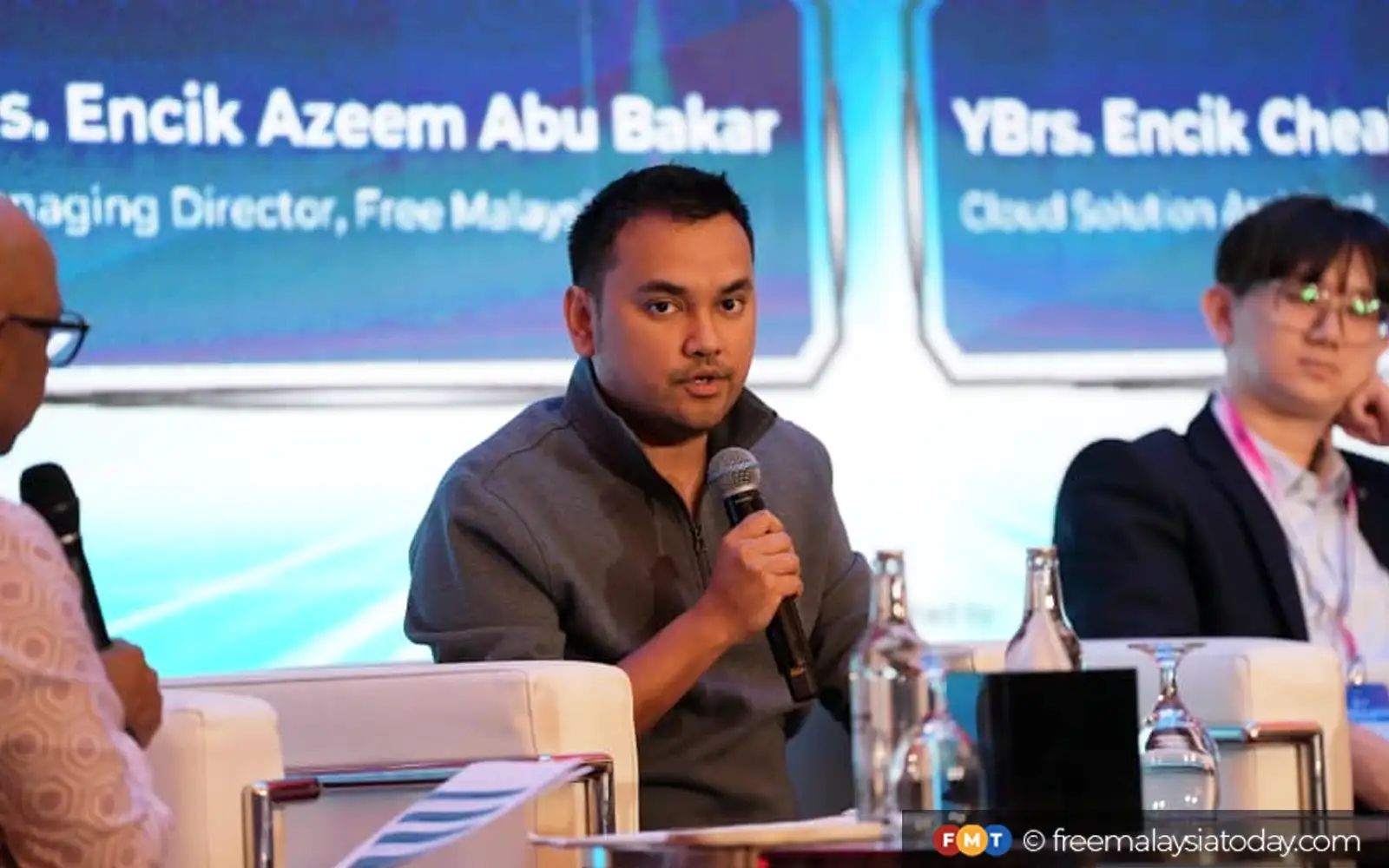
Speaking at a forum titled Shaping the Future of Malaysian Media in the Digital and AI Era during Hawana 2026, Azeem said media companies were now facing a second wave of disruption — after social media first dismantled traditional business models.
“Social media took over distribution and advertising revenue. We thought the worst was over, then AI came along,” he said.
Azeem said audiences are increasingly consuming information directly through AI assistants rather than visiting websites and social media platforms.
“Every morning people can ask AI what is happening today, and it will summarise information from every media company instantly.
“In the future, media brands may disappear behind AI interfaces unless users specifically ask where the information came from,” he said.
He warned that the standalone media business model is becoming increasingly unsustainable as major technology companies dominate digital advertising revenue globally.
“Big tech companies now control around 85% of digital advertising revenue worldwide, leaving every media company and content creator fighting over the remaining share,” he said.
However, Azeem argued that media itself would remain strategically valuable, even if conventional newsroom structures evolve dramatically.
“The next big media company will not look like media. It will look more like an information powerhouse,” he said.
He pointed to figures such as Amazon founder Jeff Bezos and Bloomberg founder Michael Bloomberg as examples of how media ownership increasingly serves strategic purposes beyond direct profitability.
“Washington Post reportedly loses money, yet Jeff Bezos still keeps it because media gives access, intelligence and positioning.
“Bloomberg does not merely make money from news. It monetises financial intelligence and data ecosystems,” he said.
Azeem said the future of media lies in building ecosystems around information, intelligence, analysis and strategic networks rather than relying solely on advertising.
Drawing from his own experience in leading FMT’s turnaround, he said the company has adopted a broader business and ecosystem-driven approach rather than functioning purely as a standalone news portal.
“When I came into media, I brought a business lens into the industry. I learned the editorial side from veterans like Jasbant Singh and entrepreneur Nelson Fernandez, while also thinking beyond the traditional media model,” he said.
Azeem said FMT has evolved by building partnerships with multiple media organisations, leveraging technology and creating broader strategic value around information flows and audience insights.
“We had to think out of the box. Media cannot survive today simply by selling banners and advertisements anymore,” he said.
He also stressed that AI should not be viewed as a threat to journalism, but as a tool that can elevate higher-value journalism.
“AI can automate breaking news, summaries and repetitive reporting. What AI cannot easily replicate are trusted relationships, insider conversations, pattern recognition and judgment,” he said.
Azeem described the future journalist as a “super journalist”, one who is capable of combining sources, understanding, pattern recognition, efficiency and reputation.
“Journalists who only rewrite press releases or social media posts are vulnerable to automation.
“But journalists who cultivate deep networks, sit down with decision-makers, understand context and connect the dots become far more valuable in the AI era,” he said.
He added that older journalists may become increasingly important because many developed these skills before the rise of the internet-driven reporting culture.
Azeem also argued that successful AI transformation within media organisations requires leadership that understands both technology and journalism.
He cited the example of the BBC appointing a technology-oriented leader from Google to help navigate the organisation’s digital transformation.
“The leader of the organisation must understand both worlds, technology and editorial, in order to converge them effectively,” he said.

The forum also featured Huawei Malaysia cloud solution architect Cheah Chern Eu and AI and digital transformation specialist Charles Gregory.
Gregory said many companies rush into AI adoption without first understanding their own workflows, culture and business objectives.
“People say they want automation and AI, but when you ask what exactly they want to automate, many cannot answer,” he said.
He also warned that algorithms and virality can increasingly be manufactured artificially, making trust and credibility even more important in the digital era.
“AI is not replacing people. More competent people will replace less competent people,” he said.
On regulation, Azeem said laws such as the Online Safety Act are important to combat scams, harmful content and misinformation, but cautioned that regulation should not become overly restrictive.
“At the end of the day, trust is still the foundation of media.
“If audiences no longer trust you, they stop reading you, and that is bad for business,” he said. - FMT

No comments:
Post a Comment
Note: Only a member of this blog may post a comment.