


LET me tell you about two names that will not leave me alone: Indira Gandhi and Teoh Beng Hock.
Seventeen years apart, their stories are etched into our national conscience—not as legal footnotes, but as enduring tests of whether Malaysia truly believes in justice, or merely speaks of it.
Indira Gandhi: A mother left in legal limbo
Go back to 2009. Indira Gandhi’s husband converts to Islam and then, without her knowledge or consent, converts their three children as well. He then disappears with their youngest child, Prasana Diksa. A mother is left devastated.
In 2010, the Ipoh High Court rules that custody of the child should be returned to Indira. The order is clear, but it is not enforced.
In 2013, the High Court also quashes the unilateral conversion of the children. Still, the situation remains unresolved. The father is found in contempt, and a warrant is issued, but reunification does not happen.
In 2016, the Court of Appeal further complicates the matter, highlighting jurisdictional tensions between the civil and Syariah systems.
In January 2018, the Federal Court delivers a landmark ruling: unilateral conversion of minors is invalid without the consent of both parents. It is widely seen as a victory for constitutional supremacy and minority rights.
Yet even after this ruling, Prasana has still not been returned to her mother. Authorities cite “complications”. A recovery order and warrant exist, but enforcement remains absent.
The uncomfortable reality is this: winning in court does not always translate into justice on the ground.
Teoh Beng Hock: A death without accountability
If Indira’s case is about a missing child, Teoh’s is about a missing truth.
On 15 July 2009, Teoh Beng Hock, a political aide, was taken in by Malaysian Anti-Corruption Commission (MACC) officers for questioning over alleged misuse of funds. He was interrogated overnight.
The following morning, his body was found on the rooftop of a building adjacent to the MACC office. He was 30 years old and was due to register his marriage. His fiancée was pregnant at the time.
The nation was shaken.
In 2011, a coroner returned an open verdict, concluding neither suicide nor homicide. The outcome satisfied no one.
A Royal Commission of Inquiry (RCI) later suggested he may have been driven to suicide by aggressive interrogation methods, though his family strongly disputed this conclusion.
In 2014, the Court of Appeal overturned the open verdict and ruled that “a person or persons unknown” were responsible for his death. This raised expectations of accountability.
However, in 2025, the Attorney-General’s Chambers reportedly closed the case with no further action or prosecution. No closure has been achieved.
A troubling pattern
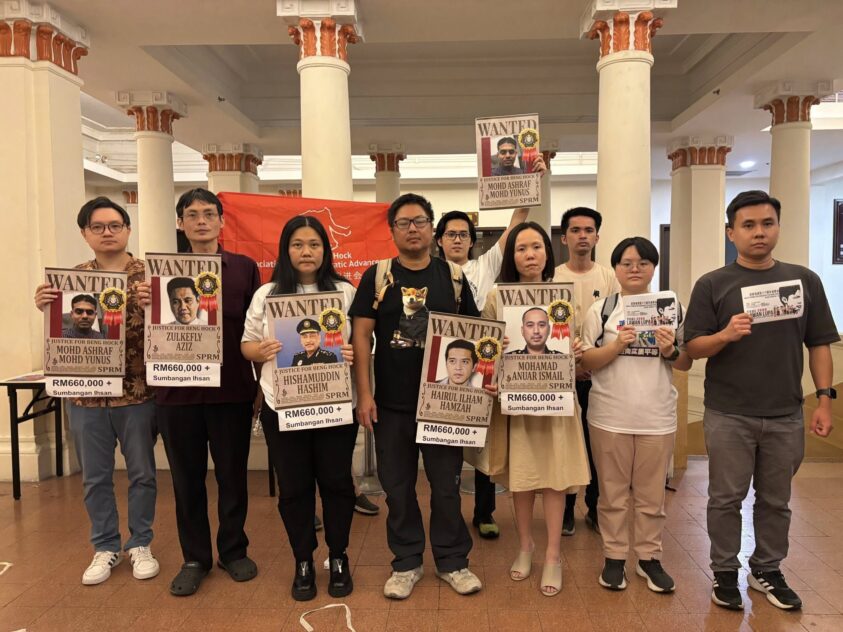
On the surface, these cases are different. One involves a child separated from her mother; the other, a young man who died after being questioned by authorities. But beneath the surface, a troubling pattern emerges.
In both cases, something deeply unjust occurred. Courts eventually intervened. Yet enforcement stalled, accountability faded, and time passed. What remains is not resolution, but erosion—of trust in institutions and confidence in the justice system.
Civil society groups have long warned that unresolved cases of this nature do not only harm families. They weaken public belief in the system itself.
So we must ask: is justice optional?
Malaysia has laws, courts, commissions and investigative bodies. Yet questions remain. Why is a Federal Court ruling still not fully enforced after years? Why does a death in custody remain unresolved over a decade later?
These are no longer purely legal questions. They are moral ones.
If justice cannot be delivered in clear, high-profile cases, what message does that send? That justice is negotiable? That delay is a form of resolution?
The cost of delay
Malaysians are not asking for miracles. They are asking for basic accountability: a child returned to her mother, and those responsible for a death in custody identified and prosecuted.
These are not extraordinary demands. They are the minimum expectations of a functioning justice system.
Until that happens, the gap between law and enforcement will continue to widen. And in that gap, public trust continues to erode.
In the end, justice delayed is not only justice denied. It is justice betrayed—and it leaves a mark that does not fade easily.
KT Maran is a Focus Malaysia viewer.
The views expressed are solely of the author and do not necessarily reflect those of MMKtT.
- Focus Malaysia.

No comments:
Post a Comment
Note: Only a member of this blog may post a comment.